In the world of indoor gardening, understanding light levels is essential for nurturing healthy plants. This guide presents a straightforward visual framework designed to help you navigate the complexities of indoor light conditions. By utilizing this system, you’ll be equipped with the knowledge to identify and categorize different light types that your plants may encounter.
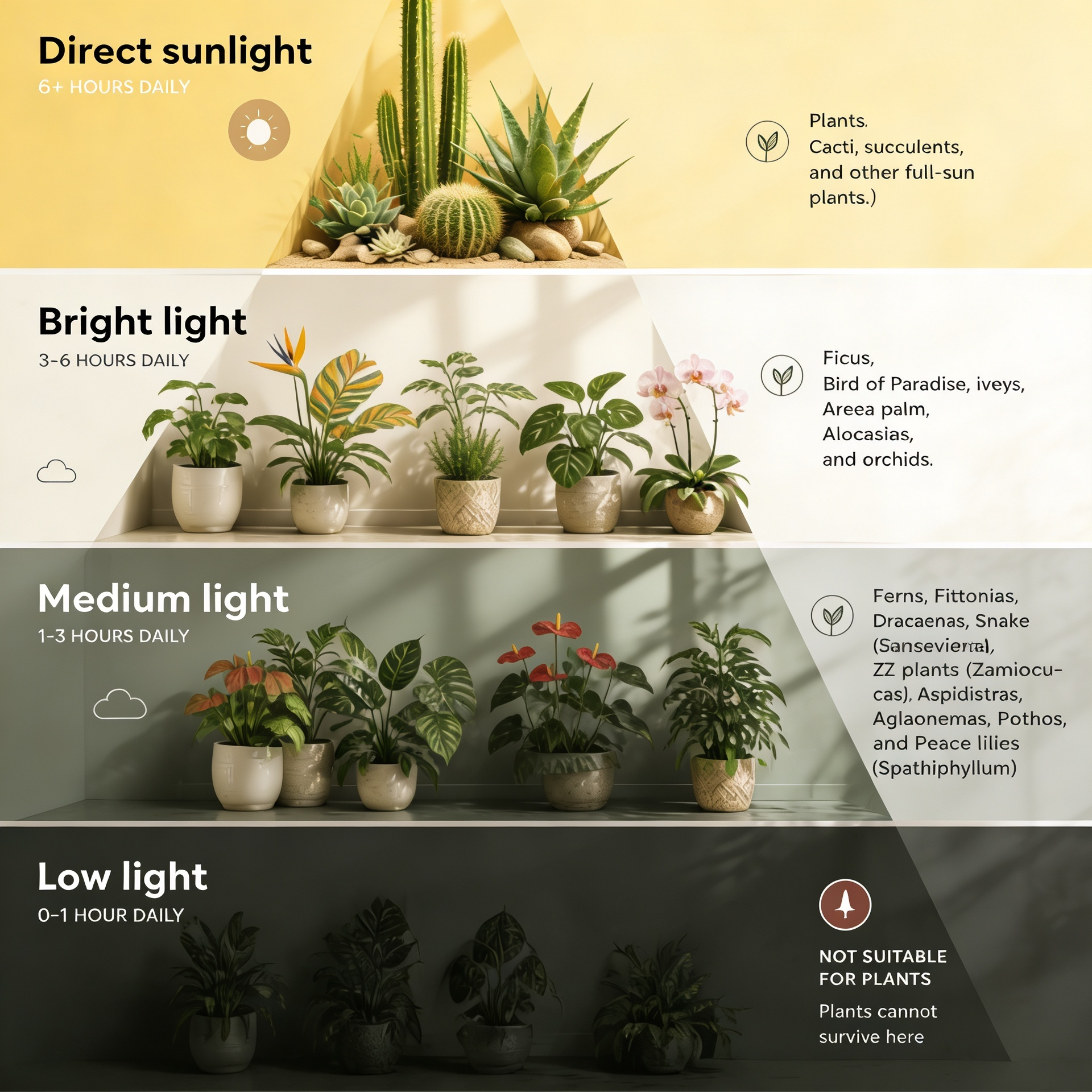
When it comes to indoor gardening, light is one of the most critical factors influencing plant health. The guide delineates four primary categories of light: Direct Sun, Bright Indirect Light, Medium Light, and Low Light. Each of these categories has distinct characteristics that significantly affect how plants grow and thrive. By recognizing these differences, you can make more informed decisions regarding plant care.
Light Categories and Their Impact on Plant Growth
Direct Sun is the most intense light type, providing full sun exposure, which is ideal for sun-loving plants. These plants flourish in environments where they can soak up as much light as possible, leading to robust growth and vibrant foliage. However, placement is key; too much direct sunlight can scorch sensitive leaves. Understanding which plants thrive under direct light conditions can transform your indoor garden.
Bright Indirect Light, on the other hand, is a softer illumination that comes from sunlight filtered through curtains or reflected off walls. Plants that prefer this type of light can grow well without the risk of sunburn. In this category, you will find a variety of houseplants that can adapt and thrive without direct exposure. This makes it an excellent choice for spaces that receive ample light but not direct sun.
Medium Light refers to spaces that receive less light than bright indirect light but more than low light. This category is suitable for plants that can tolerate some shade and still manage to flourish. These plants typically perform well in rooms with north-facing windows or areas that receive bright light for only part of the day. By learning to identify medium light conditions, you can select plants that will thrive in these environments.
Lastly, Low Light encompasses areas that are dimly lit and may receive only ambient light. While many plants can struggle in these conditions, there are several resilient species that can adapt to low light. It’s essential to understand that while these plants may not grow as vigorously as those in brighter settings, they can still survive and bring life to darker corners of your home.
Maximizing Growth through Strategic Placement
One of the most significant challenges indoor gardeners face is determining the optimal placement for each plant to ensure they receive the appropriate amount of light. This guide serves as a vital resource for making these decisions. By understanding the specific light preferences of your plants, you can create an environment that promotes their health and growth.
Strategic placement not only enhances the well-being of your plants but also beautifies your living space. For example, placing sun-loving plants in south-facing windows can maximize their exposure to direct sunlight, while shade-tolerant plants can be positioned in less illuminated areas. This thoughtful arrangement can lead to a more vibrant and lush indoor garden.
In addition to placement, consider seasonal changes that can affect light levels within your home. The angle of the sun shifts throughout the year, altering the intensity and direction of light in your rooms. Being mindful of these changes will help you adjust your plant placements accordingly, ensuring they receive the best possible care all year round.
Overall, the insights provided in this guide will empower you to create a thriving indoor garden. With a solid understanding of light levels and how they influence plant growth, you can confidently select and position your plants for optimal health. Download your free guide today and take the first step towards mastering plant placement and indoor gardening.