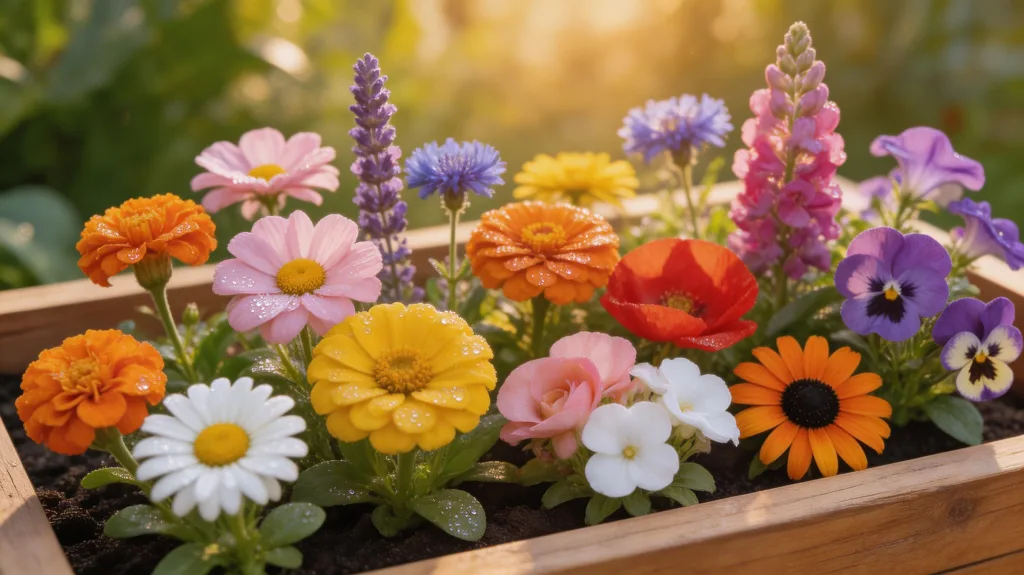
Your aspiration for a vibrant garden can be easily realized without overwhelming complexity. We’ve compiled a thoughtful selection of 15 straightforward flowers that promise success with minimal effort. This guide will introduce you to varieties suited for every nook, from sunlit borders to shaded pots. View this as your beginner’s blueprint to cultivate confidence and relish those initial blooms. Your journey toward a flourishing garden, even as a novice, is just around the corner.
How to Choose Your First Easy Flowers
When embarking on your gardening adventure, opt for flowers that are renowned for their resilience and adaptability, such as marigolds, zinnias, or sunflowers. These varieties are known for their capacity to thrive in various conditions and can provide a satisfying experience for new gardeners.
Before planting, always consult the label or seed packet of your chosen plants. You’ll come across terms like “direct sow” or “full sun,” which indicate the specific needs of each flower. Align these requirements with the conditions present in your space. For instance, if your balcony receives only four hours of sunlight, it’s best to avoid flowers that demand eight hours of direct sun.
Furthermore, consider what you aim to achieve with your garden. Are you looking for immediate bursts of color from annuals that bloom throughout the summer, or are you investing in perennials that will return year after year? By starting with plants that are well-suited to your environment, you can build your gardening confidence while avoiding early disappointments, paving the way for your first gratifying bloom.
5 No-Fail Flowers for Instant Gardening Wins
If you’re after immediate satisfaction, fast-growing and hardy annuals like nasturtiums and cosmos are your best bets. These flowers are incredibly easy to cultivate and ensure a quick turnaround from seed to bloom.
Simply scatter the large seeds directly onto your prepared soil after the last frost, covering them lightly, and keep the soil moist. You’ll witness sprouting seedlings within days, and blooms will follow in just a few weeks. Nasturtiums are particularly forgiving; they flourish even in poor soil and feature edible, peppery leaves and flowers.
Cosmos are nearly carefree, bouncing back from dry spells while producing continuous blooms. Another great option is zinnias, whose quick-sprouting seeds yield sturdy, colorful flowers that attract butterflies. Remember, these flowers prefer being planted directly outdoors, as they do not fare well with transplanting. Your primary tasks will be to thin seedlings if they become overcrowded and enjoy the beautiful display that follows.
Sun-Loving Flowers for Beginners
To kick off your gardening journey, focus on sun-loving flowers that can endure the heat with minimal care. Marigolds are an exceptional choice; they are hardy, bloom throughout the season, and are often left alone by pests.
Zinnias are another excellent option. Once you sow their seeds directly into the ground after the frost, they’ll grow vibrant, cheerful blooms. If you prefer plants that return annually, consider daylilies or coreopsis. These perennials are incredibly hardy once established.
For optimal growth, select a location that receives at least six hours of direct sunlight. When planting, enrich the soil with compost to give your flowers a robust beginning. Ensure you water them regularly following planting, but once they’re settled, they’ll be quite drought-tolerant. Just keep in mind, more sunlight typically yields more flowers for your enjoyment!
Easy Flowers for Pots and Small Spaces
You don’t need a sprawling garden to enjoy beautiful flowers; even a compact balcony or a sunny windowsill can be an ideal starting point. Choose compact flower varieties that are well-suited for container gardening. Ensure your pots have drainage holes and fill them with fresh, high-quality potting mix.
Regular watering is essential, but allow the top layer of soil to dry out slightly between waterings to prevent root rot. Here’s a handy table highlighting some top picks for your container garden:
Remember to provide your potted plants with liquid fertilizer every few weeks during the growing season to encourage robust growth and flowering.
Best Beginner Flowers for Shady Spots
If your garden is predominantly shaded, don’t fret; you can still cultivate striking blooms. For dry, shaded areas beneath trees, consider tough, spreading perennials like hardy geraniums or hostas, which are known for their stunning foliage.
If your shady spot boasts moist, rich soil, impatiens are unbeatable for providing continuous summer color; just be sure to keep them well-watered. For an early spring burst of color, plant cheerful violas or pansies; they handle cooler temperatures and light shade exceptionally well.
Coleus is another fantastic choice, celebrated for its vibrant, patterned leaves and its ability to thrive without direct sunlight. Always check the plant tags for specific terms like “partial shade” or “full shade” to ensure you match them appropriately to your gardening conditions. You might be surprised at the colorful options available to you.
Grow Sunflowers for Dramatic, Easy Height
If you’re eager to make a bold statement in your garden, few plants rival the drama and simplicity of sunflowers. Their towering stems and large, cheerful faces grow at an astonishing pace.
To get started, sow seeds directly into a sunny location after your last frost. Plant each seed about an inch deep in well-drained soil and give them a thorough watering. Once established, sunflowers require minimal care.
Select a variety that fits your space, ranging from compact versions to giants that reach over ten feet tall. For the best results, thin seedlings to about a foot apart, ensuring each plant receives ample sunlight and nutrients. Before long, you’ll have a breathtaking display that feels highly rewarding to cultivate.
Plant Marigolds for Pest Control and Nonstop Color
As you enjoy your towering sunflowers, consider planting marigolds alongside them to protect your garden while adding continuous color. These cheerful flowers are incredibly beginner-friendly, thriving in full sun and requiring little fuss regarding soil quality.
Start marigold seeds indoors a few weeks before the last frost, or sow them directly into the garden. What sets marigolds apart is their natural ability to repel many pests, such as nematodes and certain beetles, making them excellent companions for your vegetable plants. To keep them blooming from spring until fall, regularly deadhead spent flowers.
How to Grow Zinnias for a Summer of Blooms
Zinnias are a reliable choice for those seeking vibrant summer gardens with minimal effort. You can sow seeds directly in a sunny spot after the last frost, as these flowers thrive in heat.
For ongoing blooms, adhere to a few uncomplicated steps. These flowers are not only beautiful but also attract pollinators, adding life to your garden. Water seedlings consistently, but keep in mind that established plants are drought-tolerant and thrive with minimal intervention.
To encourage continuous flowering throughout the season, simply snip off the spent blooms; this deadheading prompts the plant to produce more buds, ensuring your garden remains colorful and lively.
Grow Fragrant Sweet Peas From Seed
If you desire a flower that combines stunning blooms with delightful fragrance, sweet peas are an ideal choice for novice gardeners starting from seed. These flowers thrive in cooler weather, making them perfect for early planting.
Soak the seeds overnight to soften their tough outer coats before sowing them directly in a sunny location about an inch deep. It’s crucial to provide a sturdy support structure like a trellis or twine for them to climb. Keep the soil consistently moist for optimal growth.
To enjoy a prolonged blooming period and beautiful displays, make sure to regularly pick the flowers. This practice encourages the growth of new blossoms. Don’t hesitate to bring some indoors; the sweet scent is truly worth it!
Add Edible Beauty With Easy Nasturtiums
Nasturtiums are not only a cheerful addition to your garden but also offer an edible treat, featuring vibrant flowers and round leaves that add a peppery kick to salads. These flowers are simple to grow and often thrive in less-than-ideal soil conditions.
They prefer sunny spots and require minimal care. For success, sow the seeds directly into the ground after the last frost. Their colorful blooms will brighten your garden and provide culinary delights.
Cool-Weather Color With Hardy Pansies
For a reliable splash of color even when temperatures dip, hardy pansies are your go-to choice. These cheerful flowers flourish in the cool conditions of spring and fall, often blooming when other plants struggle.
You can plant pansies early in the season, as soon as the soil is workable. Select a location with full sun to partial shade and ensure the soil is well-drained. Space your plants about six to eight inches apart to allow them to fill in nicely.
Regular watering is essential, particularly right after planting, but be sure to let the soil dry slightly between waterings. There’s no need for expert knowledge; simply pinch off spent flowers—a technique known as deadheading—to encourage more blooms for weeks on end.
Plant Cosmos for Effortless Airy Blooms
Elevate your garden with effortless, airy blooms by planting cosmos. These hardy annuals are incredibly low-maintenance and reward you with delicate, daisy-like flowers on slender stems from early summer until frost.
You’ll appreciate their carefree growth, as they are perfect for filling spaces with graceful color while attracting pollinators to your garden. Cosmos thrive in a sunny spot and require minimal care once established, making them a fantastic choice for beginner gardeners.
Foolproof Care for Hardy Geraniums
Moving from the light and airy cosmos, consider adding hardy geraniums to your garden for another low-maintenance option that provides reliable color year after year. These plants do well in full sun to partial shade but thrive best with morning light.
They are not picky about soil, as long as it drains well; just avoid overly soggy conditions. Water them deeply during prolonged dry spells, as hardy geraniums are drought-tolerant once established.
After the first big bloom, a light trim will encourage a fresh flush of flowers and help keep the plants tidy. You won’t need to fuss over deadheading individual blooms, as they will spread gracefully to fill any space. Dividing clumps every few years in spring or fall can also help maintain their vigor.
Grow Bountiful Petunias in Sun
Channel your gardening energy into sunny spots filled with colorful petunias. These flowers flourish with at least six hours of direct sunlight, rewarding you with abundant blooms from spring to frost.
Growing petunias is quite straightforward, and following a few simple tips can ensure your success. Water them at the base to keep foliage dry and prevent disease. With proper care, you’ll be surrounded by vibrant, long-lasting colors.
Low-Maintenance Color With Daylilies
For a low-maintenance, reliable flower that returns every year, you can’t go wrong with daylilies. Despite their name, each bloom lasts just a day, but each stalk produces many buds, providing weeks of continuous summer color.
Simply plant their fleshy roots, known as tubers, in a sunny area with decent drainage. Water them generously during their first growing season to establish roots; afterward, they become incredibly drought-tolerant.
Daylilies don’t require fancy fertilizers or constant deadheading to thrive. Every few years, you can dig up and divide the clumps in early spring or fall to create additional plants for free, ensuring a dependable, colorful display with minimal effort.
Frequently Asked Questions
Yes, you can absolutely grow flowers even without traditional garden space. Use pots, window boxes, or even repurpose old containers on a balcony or sunny windowsill. Choose easy flowers like marigolds or pansies, and with just water, sunlight, and a touch of care, you’ll be successful.
The Only Tools You Need for a Thriving Garden 🌱
You don’t need special soil; many flowers thrive in regular, well-draining garden soil. Consider enriching it with compost or potting mix for containers. Check the plant tags for specific requirements.
Can I Grow Flowers if I Have No Garden Space?
Water your flowers when the soil feels dry about an inch down. Typically, you’ll need to water once or twice a week. Avoid overwatering; it’s easier to revive a dry plant than to fix a soggy one.
Do Flowers Need Special Soil to Grow Successfully?
It’s common for some perennials or bulbs not to bloom in their first season. Don’t worry; they’re likely focusing on building strong roots. Maintain proper care—ensuring they receive adequate sunlight, water, and fertilization—and they often reward you with beautiful blooms in the following season.
How Often Should I Water My Beginner-Friendly Flowers?
Many easy annuals, like marigolds, bloom for months, while in warmer climates, perennials such as lantana can flower nearly year-round with just sun and occasional watering. You can enjoy continuous color in your garden!
What if My Flowers Don’t Bloom the First Year?
Now that you have your list of easy flowers, select a few that suit your sunny pot or shaded corner and give them a try. Sow those large seeds, water the soil, and snip off the old flowers. That’s really all there is to it. Start small, embrace the straightforward steps, and you’ll be astonished at the vibrant colors you can cultivate. Happy gardening!