Creating a garden that caters to pollinators is far from a niche endeavor; rather, it is about strategically selecting the right plants to enhance the natural beauty of your outdoor space. Bees, butterflies, hoverflies, and moths are drawn to the same floral characteristics that appeal to human aesthetics: a rich variety of flowers, an extended blooming season, and a diversity of plant species that provide essential nectar and pollen from spring through autumn. Thus, gardening for pollinators and cultivating a visually stunning garden often go hand in hand.
15 Garden Ideas to Attract Bees and Butterflies
The ideas presented below take into account various scales of pollinator gardening, ranging from a single potted lavender plant on a balcony to an extensive garden redesigned to serve as a pollinator habitat. Each idea comes with a cost estimate and practical growing advice to help you maximize the ecological contributions of each chosen plant.
1. A Dedicated Pollinator Border
Budget: $80 – $300
Creating a border exclusively filled with pollinator-friendly plants is considered the most impactful action a home gardener can take to support the local pollinator population. Opting for single-flowered varieties instead of double blooms, and choosing native or near-native plants, is essential for maintaining a continuous nectar supply from April to October. This consistent food source is far more valuable than merely maximizing the number of species included.
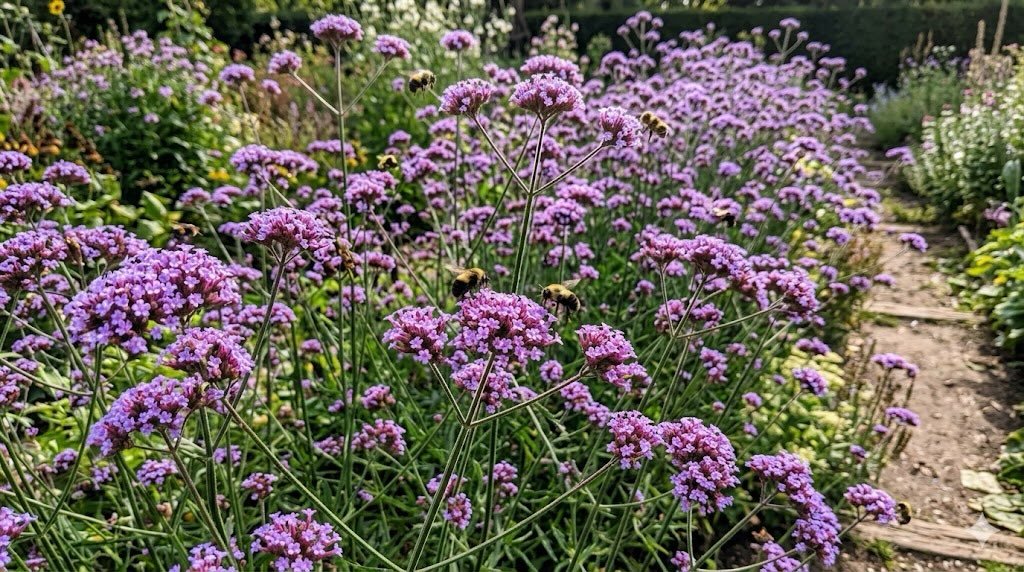
A well-thought-out pollinator border can feature plants such as nepeta ($6–$12), salvia nemorosa ($6–$14), echinacea ($7–$15), agastache ($6–$12), verbena bonariensis ($5–$10), rudbeckia ($6–$12), and sedum ($5–$12). Together, these seven species can provide overlapping nectar availability from May through October with minimal maintenance required after initial planting and a simple cutback in late winter.
Growing Tip: Always prioritize single-flowered varieties in your pollinator border. Double flowers, bred for extra petals, often lack the necessary nectaries and stamens that pollinators rely upon. A classic double rose, for example, provides very little sustenance for pollinators, while its single-petalled counterpart can support dozens of visiting insects daily. Single flowers should be the standard choice in any pollinator-focused planting.
2. A Lavender Hedge for Bees
Budget: $50 – $200
A blooming lavender hedge, especially during a warm summer morning, serves as one of the most densely populated habitats for pollinators in any garden. The audible hum of bees buzzing around is a clear indicator of the extraordinary variety of bee species taking advantage of this rich nectar source during sunny July days. Notably, no other commonly available hedge plant offers such substantial pollinator value per linear meter.
Plants like Lavender Hidcote or Munstead typically cost between $4 and $10 each, and they should be spaced 25–30 cm apart to create a lush hedge effect. For a 3-meter hedge, expect to invest about $40–$120 for ten to twelve plants. This hedge will bloom from June through August, with the dried flower spikes still attracting insects in smaller numbers through September. A single trim post-flowering helps maintain the compact shape of the hedge; otherwise, lavender can become open and woody within three years.
Growing Tip: Ensure your lavender is planted in full sun and in the leanest, most well-drained soil possible. Lavender thrives in harsher conditions, producing more fragrant flowers and nectar when grown in less fertile, drier soil. Conversely, rich, moist soil leads to excessive leafy growth that diminishes both the nectar quality and the aromatic appeal for humans.
3. A Wildflower Patch for Butterflies
Budget: $5 – $20
Butterflies are most reliably attracted to native wildflowers, and plants such as knapweed, field scabious, marjoram, ragged robin, and bird’s-foot trefoil are among the most popular choices. These species can be easily grown from direct-sown seed in a cleared section of the garden at minimal expense. A small wildflower patch of just 2 square meters can provide significant butterfly habitat and create a stunning display over the summer months.
A native wildflower seed mix specifically designed for butterflies generally costs between $5 and $15 per packet and can cover around 5 square meters when sown at the recommended rate. It’s best to sow these seeds onto bare soil in either spring or autumn, as wildflowers prefer unobstructed ground rather than established grass or weeds for successful germination. Position the patch in a warm, sheltered area with full sun, allowing butterflies to bask peacefully on the flowers without interference from wind.
Growing Tip: Incorporate at least one larval food plant alongside the nectar sources in your butterfly wildflower patch. Butterflies require both nectar for energy and specific plants to lay their eggs on, as well as food for their caterpillars. For instance, nettles attract small tortoiseshell and peacock butterflies, while bird’s-foot trefoil supports common blue and wood white butterflies. This combination enhances the patch’s role from merely a feeding station to a genuine butterfly habitat.
4. A Bee-Friendly Herb Garden
Budget: $20 – $80
An herb garden that is allowed to flower rather than being continually harvested before blooming becomes a rich habitat for bees. Plants such as borage, thyme, marjoram, chives, rosemary, sage, and hyssop produce abundant flowers that are frequented by bumblebees, honeybees, and various solitary bee species throughout the summer. Notably, these herbs remain entirely usable even while they are flowering.
Herb plants typically range in cost from $2 to $6 each at local garden centers. A collection of six flowering herbs could cost between $12 and $36. It is advisable to permit at least one-third of each herb plant to flower at any time, as the blooms are a peak ecological contribution to the garden ecosystem, rather than signs of the plants bolting and becoming useless.
Growing Tip: Borage stands out as the single most valuable bee plant in any herb or vegetable garden. Its striking blue star-shaped flowers are consistently visited by bumblebees from the moment they open, and the plant produces new flowers continuously from June through October. Borage also self-seeds freely once it has been established, costing only $2 to $4 for a seed packet that can provide an ongoing supply of plants from its first season’s growth.
5. Planting for Moth and Evening Pollinator Activity
Most gardeners tend to focus on daytime pollinators, overlooking the rich and crucial world of moth pollination that occurs after dark during the summer. White and pale-flowered plants that emit fragrance at dusk, such as evening primrose, night-scented stock, white tobacco plant, and sweet rocket, are essential for supporting a range of moth species, which are just as vital to the garden ecosystem as bees.
Night-scented stock seeds can be found for $2 to $4 per packet, while white Nicotiana (tobacco plant) typically ranges from $3 to $6 per plant. Evening primrose grows from seed at $2 to $4 per packet and self-seeds profusely once established. Sweet rocket (Hesperis matronalis) costs between $5 and $10 per plant. It is best to position these evening-scented plants near main seating areas so that their fragrance can be fully appreciated, making a moth garden a sensory delight in the summer.
Growing Tip: To enhance the success of your moth garden, keep outdoor lighting off or directed downwards during summer evenings. Artificial light can significantly disrupt moth navigation and feeding behavior, thus reducing the number of moths visiting your garden and the overall effectiveness of your evening pollinator habitat. A garden that remains dark after sunset will prove to be significantly more beneficial to moth populations than one that is brightly lit.
6. A Butterfly Border in Hot Colours
Budget: $70 – $250
Butterflies are particularly drawn to flowers in shades of pink, purple, and yellow. Plants such as buddleja, verbena, echinacea, rudbeckia, asters, and helenium are consistently popular among butterfly visitors. By planting them together in a border that peaks from July through September, when butterfly populations are at their most abundant, you can create a stunning display of butterfly activity on warm, calm summer days.
The buddleja davidii, commonly known as the butterfly bush, can cost between $10 and $25 and is renowned for attracting more butterfly species at once than nearly any other garden plant. Verbena bonariensis costs $5 to $10 and features tall, airy purple flower heads that entice almost every butterfly species found in temperate gardens. Echinacea usually runs $7 to $15, while asters cost $7 to $15 each and help extend the butterfly season well into September and October. A complete butterfly border featuring six species can be established for approximately $50 to $120.
Growing Tip: Each March, be sure to cut back the buddleja hard to about 30 cm above ground level. Buddleja flowers on the current season’s growth, and without proper pruning, untrimmed plants can become tall and unwieldy, with flowers concentrated at unreachable heights. Hard pruning keeps the plants compact, with blooms positioned at eye level from July onward, allowing for a more enjoyable butterfly observation experience.
7. A Solitary Bee Nesting Bank
Solitary bees, including mason bees, mining bees, and leafcutter bees, are among the garden’s most significant yet often overlooked pollinators. Unlike honeybees, they do not live in hives, produce honey, or display aggressive behavior. Instead, they nest in small tunnels, bare soil, and hollow stems, making it essential to create nesting habitats alongside the food sources provided by your pollinator garden.
Commercial solitary bee hotels can range from $15 to $60, depending on their size and construction quality. Alternatively, a DIY version made from a bundle of bamboo canes of varying diameters, costing about $5 to $10 in materials, can offer equivalent or even superior nesting opportunities at a fraction of the price. Place the nesting structure in full morning sun, facing south or southeast, and position it 1 to 1.5 meters above the ground to protect it from moisture and predation.
Growing Tip: Position your bee hotel within 10 meters of the pollinator food plants in your garden, rather than in a distant corner or on a shed wall. Solitary bees do not travel long distances for foraging; thus, the closer their nesting habitat is to the food sources, the more efficiently they can utilize both resources. This proximity also increases the likelihood that the hotel will be occupied in its first season.
8. A Spring Pollinator Border for Early Bees
Budget: $40 – $150
In February and March, bumblebee queens emerge from their winter hibernation and face a critical food shortage. The period between their emergence and the main flowering season in spring is particularly perilous for pollinator populations. Establishing a border specifically designed to provide nectar during early spring—using plants like hellebores, pulmonaria, crocus, muscari, and single-flowered hyacinths—offers food at a time when it is desperately needed and often scarce in gardens.
Hellebore orientalis typically costs between $8 and $20 each, blooming from January through April, making them one of the earliest nectar sources in temperate gardens. Pulmonaria costs $6 to $14 and begins flowering in February. Crocus bulbs are available for $0.30 to $1 each and are particularly crucial for hairy-footed flower bees (Anthophora plumipes) that emerge before most solitary bee species. Establishing a spring pollinator border can be achieved for $60 to $120, ensuring vital food from January through April.
Growing Tip: Incorporate a patch of single-flowered snowdrops (Galanthus nivalis) at the front of your spring pollinator border. Snowdrops are among the very first nectar sources available for emerging bumblebee queens, and their significance in the early pollinator food calendar far exceeds their modest size. A clump of 25 snowdrops costs about $5 to $10 as in-the-green bulbs and can naturalize freely into an expanding colony each year.
9. A Nectar-Rich Lawn
Budget: $5 – $30
Allowing your lawn to grow a little longer and overseeding it with clover, self-heal, and bird’s-foot trefoil transforms what is often the most ecologically barren surface in gardens—a monoculture of intensively mowed ryegrass—into one of the richest and most valuable habitats for pollinators. This transition requires nothing more than mowing less frequently and scattering seed, enabling dozens of bee and butterfly species to thrive during the summer months.
A clover and wildflower lawn mix generally costs between $8 and $20 for a 100g packet, which can cover approximately 10 square meters. Mow to a height of 7 to 10 cm rather than the usual 3 to 4 cm, allowing existing flora such as self-heal, clover, plantain, and daisies to develop fully. Most lawns contain these existing nectar plants that have been stunted by regular close mowing; reducing the mow height and frequency can finally allow these flowers to bloom.
Growing Tip: Consider leaving a patch of lawn completely unmown through June and July to specifically support bumblebees that nest underground. Ground-nesting bumblebees, including the white-tailed bumblebee, often establish their colonies in undisturbed turf, and the colony may be present without the gardener ever realizing it. An unmown patch of just 1 square meter during the summer nesting season allows any established colony to complete its annual cycle uninterrupted.
10. A Pollinator-Friendly Climbing Plant on Every Wall
Budget: $30 – $120
Utilizing climbing plants on garden walls and fences significantly increases the area available for nectar and pollen without requiring additional ground space. Climbing plants such as honeysuckle, climbing roses with open single flowers, flowering ivy, and climbing hydrangea all contribute valuable pollinator food while transforming otherwise barren surfaces into lush green habitats.
Lonicera periclymenum, or native honeysuckle, typically costs between $10 and $25 and is one of the richest and most fragrant nectar sources for both daytime bumblebees and nighttime hawk moths. A single-flowered climbing rose may range from $15 to $40 and offers pollen-rich flowers from June through October. Flowering ivy—when allowed to bloom on mature plants from September to November—serves as one of the most important late-season nectar sources, crucial for queen bumblebees as they build their winter fat reserves.
Growing Tip: Avoid cutting ivy in September or October while it is in bloom. Ivy flowers provide essential late-season nectar for pollinators preparing for winter, and removing it during this critical time destroys a vital food source when it is needed most by numerous pollinator species.
11. A Pollinator Garden in Containers
A balcony, courtyard, or paved terrace can still serve as a significant pollinator habitat through a carefully planned container garden. Plants such as lavender, agastache, thyme, catmint, verbena, and single-flowered pelargoniums thrive in containers and produce nectar that draws in bees, butterflies, and hoverflies. A terrace containing six to eight well-selected pollinator plants in pots can attract and nourish pollinators just as effectively as a modest ground-level border.
Lavender in a 2-liter pot usually costs between $5 and $12, while agastache of a similar size can range from $6 to $14. Catmint (Nepeta) also falls within the $6 to $12 bracket. All these plants are drought-tolerant, long-flowering, and excellent for pollinators when grown in pots. It is advisable to group the containers together on the terrace rather than spreading them out, as a cluster of pollinator-friendly plants forms a concentrated food source that is more easily spotted by foraging pollinators.
Growing Tip: Use a low-nitrogen, high-potassium fertilizer to feed your container pollinator plants, instead of a balanced or high-nitrogen feed. High nitrogen levels lead to excessive leafy growth at the expense of flowering, which diminishes the nectar production and ultimately reduces the plant’s value to visiting pollinators. A high-potassium feed, costing $8 to $15 per bottle, encourages abundant flowering throughout the season, enhancing the ecological contribution of each container in the pollinator garden.
12. A Late-Season Pollinator Border
August through October marks the most critical period for pollinator food in most gardens. As summer’s main flush of blooms wanes, temperatures drop, and insects begin to build their winter reserves, the need for nectar becomes urgent. Establishing a border specifically designed to peak during this time—featuring asters, sedum, helenium, rudbeckia, single dahlias, and Japanese anemone—fills a gap that many gardens leave unaddressed, providing sustenance precisely when it is most needed.
Asters (Symphyotrichum) typically cost between $7 and $15 each and are among the most important late-season plants for butterflies and bees; the diversity of pollinator species visiting asters in September is often the highest of any garden plant throughout the year. Sedum Autumn Joy costs about $5 to $12 and is continuously visited by butterflies while in bloom. Single-flowered dahlias, such as Dark Angel, Bishop of Llandaff, and Roxy, can be purchased for $4 to $10 per tuber and provide pollen-rich flowers from July through October.
Growing Tip: It’s beneficial to leave the late-season border standing throughout winter rather than cutting it back until late February. The dried stems of asters, sedums, and single dahlias offer overwintering habitat for beneficial insects and provide food for seed-eating birds during the cold months. A border managed for maximum ecological value in winter can be cut back once in late February, allowing it to regrow fully by May—this winter standing time requires no additional maintenance while delivering substantial ecological benefits.
13. A Native Plant Pollinator Garden
Budget: $60 – $250
Native plants—species that have co-evolved with local pollinator fauna over thousands of years—offer nectar and pollen in forms that native pollinators are uniquely adapted to utilize. A garden predominantly planted with native species supports a notably wider range of pollinator species than one filled with cultivated or exotic varieties. Many native bees and butterflies have specific plant relationships that cultivated varieties simply cannot fulfill.
Key native UK pollinator plants include field scabious (Knautia arvensis, $5–$10), knapweed (Centaurea nigra, $4–$8), ox-eye daisy (Leucanthemum vulgare, $4–$8), wild marjoram (Origanum vulgare, $4–$8), and teasel (Dipsacus fullonum, $3–$6). For North American gardens, consider native coneflowers (Echinacea purpurea), native asters, wild bergamot (Monarda fistulosa), goldenrod (Solidago), and black-eyed Susan (Rudbeckia hirta), all of which serve as powerful native pollinator plants in their respective regions.
Growing Tip: Whenever possible, source native plants from specialist native plant nurseries rather than general garden centers. Native-looking varieties found in regular garden centers often consist of cultivated selections with modified flower forms that diminish their pollinator value. A native field scabious purchased from a specialist supplier will produce the same flower as its counterpart found in a wild meadow, while a cultivated scabious from a general garden center may have a double flower form that significantly reduces its accessibility to native pollinators.
14. A Pond and Wetland Pollinator Habitat
Budget: $50 – $300
Establishing a garden pond serves dual purposes for pollinators: it provides a water source for bees and butterflies while the surrounding marginal and aquatic plants contribute nectar from a variety of species that would otherwise be unavailable in a dry garden. Plants such as water mint, purple loosestrife, meadowsweet, and yellow flag iris are all marginal plants that can attract numerous pollinators while enhancing the beauty of a lush water garden.
A small preformed garden pond can be purchased for $30 to $80, creating an immediate water habitat for both pollinators and other wildlife like frogs, newts, and aquatic invertebrates. Water mint (Mentha aquatica) typically costs between $5 and $10 and is one of the most heavily visited bee plants available for pond margins. Purple loosestrife (Lythrum salicaria) costs $6 to $12 and produces tall, eye-catching pink flowers from July through September, drawing in a wide range of bumblebees, honeybees, and butterflies.
Growing Tip: Ensure there is a shallow entry point to your garden pond—such as a gently sloping stone ramp or submerged rock that sits 2 to 3 cm below the water’s surface—so that bees and butterflies can safely drink without the risk of drowning. Pollinators need water for survival but can easily drown in ponds with steep sides and no shallow access. A single flat stone placed at the pond’s edge at water level costs nothing but can save countless insect lives every summer.
15. A Complete Pollinator Garden Scheme
Budget: $200 – $800
A fully realized pollinator garden—a spring border for emerging bees, a summer border with uninterrupted nectar from May through October, a late-season border for autumn visitors, a wildflower patch for butterflies, a nectar-rich lawn, a pond with marginal planting, solitary bee nesting habitats, and climbing plants on every wall—creates a vibrant ecosystem that serves as wildlife habitat throughout the year, significantly supporting a richer pollinator community than any traditionally planted garden of similar size.
Establishing this comprehensive pollinator scheme can be achieved over two to three seasons rather than all at once, with an estimated investment of $200 to $600 for plants, seeds, and habitat structures spread over the establishment period. Each component enhances the others; for example, a bee hotel is more effectively utilized when food plants are nearby, and the value of a late-season border increases when the spring border has sustained the population during the vulnerable early period. The cumulative effect of the entire scheme is always much greater than the sum of its individual parts.
Growing Tip: Keep a record of which species visit each section of your pollinator garden and the timing of their visits. A simple notebook or even photos taken weekly during the summer can provide valuable insights into which plants attract the most visitors in your particular garden, guiding future planting decisions more accurately than generic advice. A well-observed pollinator garden will invariably become more effective in its subsequent seasons compared to one that is merely planted and left to fend for itself.
Planting with pollinators in mind is one of the rare gardening decisions that yields immediate benefits while continuing to provide returns year after year as mature plants grow larger, self-seeding species spread through the space, and the local pollinator population responds to a consistent food source.
The investment required is modest, maintenance is minimal, and the ecological impact is genuinely significant—making this one of the most rewarding pursuits a gardener can take on with any available space.
Begin with lavender for attracting bees, verbena bonariensis for butterflies, and a patch of clover for the lawn. These three simple adjustments can collectively cost under $30 and immediately transform your garden into a haven for every pollinator species in the area. From there, you can expand as the season and your garden evolve. The pollinators will guide you in understanding what works best; all you need to do is observe.