Understanding Companion Planting and Its Mechanisms
Companion planting is an age-old technique that involves strategically placing different plants in proximity to one another to improve growth, health, and yields. This method is based on the idea that certain plants have complementary relationships that can enhance each other’s growth. The synergy created through these plant partnerships can lead to healthier crops and more bountiful harvests.
At its core, companion planting works by utilizing the unique characteristics of various plants. For example, taller plants can provide shade for smaller ones, while some species can protect more vulnerable neighbors from pests. This holistic approach not only maximizes the use of space but also creates a more resilient ecosystem within your garden.
One common example of companion planting is the pairing of sunflowers with cucumbers. The sunflowers act as a natural trellis, allowing the cucumbers to climb higher while receiving adequate sunlight. Meanwhile, the strong aroma of certain plants, like onions, can mask the scent of more susceptible crops, helping to deter pest insects.
Additionally, legumes such as beans are known for their ability to fix nitrogen in the soil, thereby enriching the nutrient levels available for neighboring plants like corn. This interdependence fosters not just individual plant growth but supports the entire garden ecosystem, making it more robust against diseases and environmental stressors.
Benefits of Plant Partnerships in Your Garden
Creating a garden filled with plant buddies can significantly improve overall health and productivity. By grouping compatible plants, you can reduce the likelihood of pest infestations, diseases, and nutrient deficiencies. This natural system fosters a living support network, where plants help each other thrive.
For instance, aromatic herbs such as mint and rosemary can deter harmful insects while simultaneously enhancing the flavor of neighboring vegetables. The beneficial effects of companion planting extend beyond mere pest control, as plants can also share nutrients and create favorable conditions for one another.
Moreover, taller crops can provide essential shade for heat-sensitive plants, preventing them from bolting too early. The cooperative nature of companion planting leads to stronger plants that are more resistant to stress and disease, ultimately increasing your chances for a successful harvest.
Additionally, the practice of companion planting encourages biodiversity in your garden. By incorporating a variety of plants, you create a vibrant ecosystem that attracts beneficial insects and pollinators, further enhancing the health and productivity of your garden.
Classic Vegetable Pairings for Maximum Yield
When it comes to classic vegetable companions, certain combinations have stood the test of time, proving to be effective in maximizing growth and minimizing pests. These partnerships can simplify care while enhancing yields. A popular example is the “Three Sisters” combination of corn, beans, and squash, which has been utilized by Indigenous peoples for centuries.
The tall corn provides a natural support structure for climbing beans, while the beans enrich the soil with nitrogen, benefiting the corn. Squash, with its broad leaves, helps to shade the soil, suppressing weeds and retaining moisture for the trio. This harmonious relationship not only optimizes growth but also creates a self-sustaining environment.
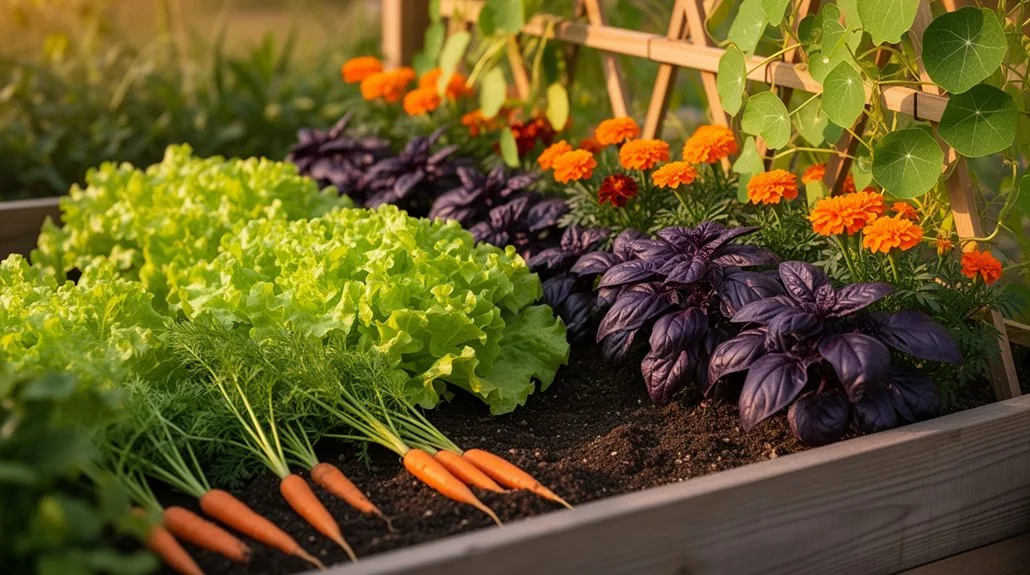
Another effective pairing is tomatoes with basil. The aromatic basil not only repels common pests but is also believed to enhance the flavor of the tomatoes, creating a win-win situation for gardeners. Similarly, planting carrots alongside onions can deter carrot flies thanks to the strong scent of the onions, which masks the carrots from potential threats.
By experimenting with these proven combinations, you can create a thriving garden that yields more crops while requiring less maintenance.
Herbs That Enhance Your Garden’s Vitality and Taste
Herbs are not only essential for culinary delights; they can also significantly improve the health and flavor of your garden. By interspersing herbs among your vegetables, you can create a natural defense system that bolsters growth and deters pests.
Take basil, for example. When planted near tomatoes, it’s known to repel harmful insects like whiteflies and aphids while also enhancing the tomatoes’ overall taste. Chives are another excellent choice, as they deter aphids and can help prevent scab on apple trees when planted nearby.
Herbs like rosemary and sage are also effective in keeping cabbage moths at bay when placed near broccoli or cabbages. Furthermore, dill and cilantro not only enhance the flavor of your dishes but also attract beneficial insects, such as ladybugs and parasitic wasps, which prey on common garden pests.
By integrating these flavorful herbs into your garden, you create a multi-functional space that works to protect your crops while enriching your culinary experience.
Flowering Allies for a Productive Vegetable Patch
In addition to herbs, flowers also play a crucial role in companion planting, offering various benefits to your vegetable garden. Many flowering plants attract pollinators and beneficial insects while helping to deter pests, contributing to a healthier garden environment.
For example, marigolds are known for their ability to repel nematodes around tomato plants due to their pungent roots. Nasturtiums serve as trap crops, luring aphids away from more vulnerable plants like beans, ensuring they remain healthy and productive. Incorporating sunflowers and zinnias can also draw in bees and butterflies, enhancing pollination rates in your vegetable patch.
These floral companions not only add beauty to your garden but also play a vital role in creating a balanced ecosystem that supports growth and vitality.
Plants to Avoid: Foes in Companion Planting
While many plant combinations are beneficial, it’s equally important to recognize which plants should be kept apart. Certain pairings can hinder growth or create conditions conducive to disease and pests. For instance, potatoes and tomatoes should never be planted together as they are both susceptible to blight, which can devastate your crops.
Additionally, beans should not be planted near onions or garlic, as these can stunt the beans’ growth. Carrots should be kept away from dill, as dill can inhibit carrot development. Sunflowers, while beneficial in many ways, can become overly dominant if planted too close to other crops, overshadowing them.
It’s essential to give these plant foes ample space to thrive separately; maintaining at least a few feet between them can prevent competition and conflict, ensuring a more productive garden.
Plants That Naturally Deter Pests
Incorporating plants that repel pests is a fantastic way to create a natural defense system in your garden. These plants release strong scents or chemicals that insects find off-putting, creating a protective barrier around more vulnerable crops. You can plant them as borders or intermingle them throughout your garden beds.
Examples of these botanical guardians include marigolds, which deter nematodes, and lavender, whose scent confuses and repels various insect pests. Additionally, plants like garlic and chives emit a sulfurous odor that can ward off aphids and Japanese beetles.
By utilizing these natural defenses, you can reduce the need for chemical pesticides and promote a healthier growing environment for your plants.
Enhancing Soil Nutrients with Companion Planting
To improve soil health without relying on commercial fertilizers, you can incorporate plants that naturally boost nutrient levels. Legumes, such as peas and beans, are excellent choices as they host bacteria that fix atmospheric nitrogen, making it available to other plants.
Deep-rooted dynamic accumulators, like comfrey and borage, bring essential minerals from the subsoil to the surface. When you cut these plants and allow their leaves to decompose, they release valuable nutrients back into the topsoil, creating a self-renewing fertilizer system.
By choosing plants that actively improve soil fertility, you can build a sustainable garden ecosystem that thrives on its own while minimizing your workload.
Attracting Pollinators and Beneficial Insects
To further enhance your garden’s health, focus on attracting pollinators and beneficial insects. These allies are crucial for ensuring successful pollination and controlling pest populations. By planting flowers and herbs with small, accessible blooms, you can create a haven for these important creatures.
Alyssum and borage are excellent early bloomers, while allowing herbs like cilantro and dill to bolt can create valuable insect habitats. By providing food and shelter for beneficial insects, you’ll see a noticeable decline in pest pressure as they establish themselves within your garden.
Creating Your Companion Planting Layout
Once you’ve chosen your companion plants, it’s time to map out your garden layout. Start by sketching the dimensions of your garden on paper, using symbols for each plant and considering their mature sizes.
Position taller crops, like corn, on the north side to avoid shading smaller plants. Intermingle repellent plants, such as marigolds, throughout your beds to confuse pests. Group nitrogen-fixers like beans near heavy feeders like corn for optimal nutrient sharing.
Ensure that you account for spacing, avoiding overcrowding. Draw successive planting rows and note where you’ll rotate crops in the coming seasons. This visual plan creates a cohesive ecosystem that supports each plant’s growth and contributes to a thriving garden.
Addressing Common Companion Planting Challenges
Even with careful planning, you may encounter challenges such as poor growth or persistent pests in your companion planting scheme. Begin by assessing the health of your soil and nutrient levels, as some plants may outcompete their companions for resources.
Adjust your plant groupings or amend your soil to address these issues. If pests continue to be a problem, it could be due to the placement or quantity of your repellent plants. Take the time to re-evaluate your layout and consider adding new beneficial insect attractors.
Common issues often arise from a few key mistakes, such as overcrowding, incompatible needs, poor timing, or ignoring plant families. Observe your garden closely and be prepared to thin plants or relocate problematic pairings.
Companion Planting in Small Spaces and Containers
Even if you’re limited to a balcony or small garden plot, you can still reap the benefits of companion planting. Focus on vertical pairings and thoughtful container selections to maximize your growing space.
For example, pair a tall plant like pole beans with a low-growing companion such as spinach at its base, which will appreciate the shade. In a single deep pot, consider combining tomatoes with basil to enhance flavor while deterring pests. Opt for compact varieties like patio tomatoes or bush cucumbers that thrive in confined spaces.
Ensure your container is adequately sized for all root systems and has good drainage, as small spaces can dry out quickly. Regular feeding is essential, as nutrients can deplete rapidly in limited soil.
Frequently Asked Questions
As you delve deeper into companion planting, you may have some common questions. One frequent inquiry is whether companion planting works in square foot gardening. The answer is a resounding yes! You can mix beneficial plants within your square foot grids, grouping basil with tomatoes and marigolds with carrots to maximize space while still providing pest deterrence.
Another question is whether companion planting can be applied in hydroponic systems. Absolutely! You can carefully manage plant spacing and nutrient demands, pairing basil with lettuce to deter pests or mint with herbs to enhance their vigor and flavor.
Many gardeners also wonder if the benefits of companion planting extend to fruit trees. Yes, they do! You can enhance pest control with plants like nasturtiums and improve pollination rates while boosting soil health with nitrogen-fixers. Just be sure your companions don’t compete with the trees’ root systems.
Lastly, some may question whether companion planting reduces the need for watering. It can indeed! Groundcover companions function like living mulch, shading the soil and slowing evaporation. Taller plants also create cooling shade, reducing the frequency of watering in hot, dry conditions.
The Essential Tools for a Flourishing Garden 🌱
To maximize your gardening experience, having the right tools is essential. Whether you’re a weekend gardener or someone who tends to plants daily, well-chosen tools can make every session faster, easier, and more satisfying.
Strategically pairing plants can significantly enhance health, deter pests, and improve yields naturally. Utilize aromatic herbs and flowers to repel common pests, and include nitrogen-fixing plants to enrich the soil for neighboring heavy feeders.
Attract pollinators and beneficial insects by planting small-flowered herbs and blooms, and plan your layout to prevent incompatible pairings while managing space for plant needs. These simple yet effective strategies can create a flourishing garden.
Companion Planting with Square Foot Gardening
Companion planting is highly compatible with square foot gardening. You can easily match beneficial plants within your square foot grids, grouping companions close together for maximum efficiency. For instance, place basil with your tomatoes to enhance flavor and deter pests, while marigolds can be interspersed with carrots to keep aphids at bay.
This method allows for a well-organized and productive approach to gardening, ensuring that each square foot of your garden is utilized effectively while maintaining a healthy balance among plants.