Table of Contents
Explore our comprehensive guide to transforming your shaded outdoor spaces into vibrant, lush gardens. From understanding the types of shade to innovative design ideas, you’ll find everything you need to create a stunning shade garden.
First Things First: What Kind of Shade Are You Actually Dealing With?
Before diving into the design process, it’s crucial to assess the type of shade your garden receives. Understanding whether your space is in full shade, partial shade, or dappled light is essential for making informed decisions about plant choices. Each type of shade presents unique challenges and opportunities for gardeners.
Full shade typically refers to areas receiving less than 2 hours of direct sunlight each day. In contrast, partial shade indicates spaces that enjoy 2 to 6 hours of sunlight daily. Dappled shade, characterized by filtered light that breaks through tree canopies, allows for a wider variety of plant options.
To get a clear picture of your garden’s light conditions, spend some time observing how sunlight moves through your yard at different times of the day. With a warm cup of coffee in hand, you’ll be able to identify the specific areas where growth is possible and where it may be more challenging.
20 Shade Garden Ideas Worth Stealing
Now that you’ve assessed your light situation, it’s time to explore some innovative shade garden ideas. From layering plants to creating inviting pathways, these concepts will help you unlock the full potential of your shaded spaces.
Each idea has been crafted to enhance the beauty and functionality of your garden, ensuring that even the dimmest corners can become vibrant focal points. Let’s dive into these exciting design concepts that can breathe new life into your shade garden.
Shade Garden FAQs
In this section, we’ll address some of the most frequently asked questions about shade gardening. Whether you’re a novice or an experienced gardener, these insights can help clarify common concerns and inspire your gardening journey.
Understanding the nuances of shade gardening will empower you to make informed decisions about plant selection and garden design. Let’s tackle these questions one by one.
1. Layer Like a Forest Floor
One of the most effective ways to create depth and interest in a shade garden is to mimic the natural layers found in a forest. Begin with a taller element, such as a small ornamental tree or a tall shrub, to establish a canopy. This can be complemented with medium-height plants like ferns or astilbe, which fill in the middle layer, and finally, ground covers such as ajuga or sweet woodruff to create a lush carpet at the base.
This layered approach not only adds visual intrigue but also fosters a sense of harmony and balance within the garden. By varying the heights and textures of your plants, you’ll create an environment that feels alive and dynamic, inviting visitors to explore every nook and cranny.
Consider selecting plants that have complementary foliage colors and textures for added contrast. A combination of broad-leafed hostas alongside delicate ferns can create a striking effect that draws the eye and enhances the overall aesthetic of your shade garden.
2. Go All-In on Hostas
If there’s one plant that consistently shines in shade gardens, it’s the hosta. These versatile perennials come in a wide array of sizes, colors, and leaf shapes, making them a foundational element for many shade garden designs. From the petite, blue-green varieties to the grand, gold-edged specimens, hostas bring boldness and character to any low-light setting.
To achieve a captivating display, consider mixing different hosta varieties together. For instance, pairing a deep green ‘Halcyon’ with a striking gold-edged ‘Frances Williams’ can create a visually appealing contrast that elevates the entire garden. The unique textures and colors of hostas contribute to a layered look that feels both organized and natural.
When planting hostas, remember to take their mature size into account to avoid overcrowding. This will ensure that each plant has ample space to thrive, allowing their distinct characteristics to shine through.
3. Add a Winding Shade Garden Path
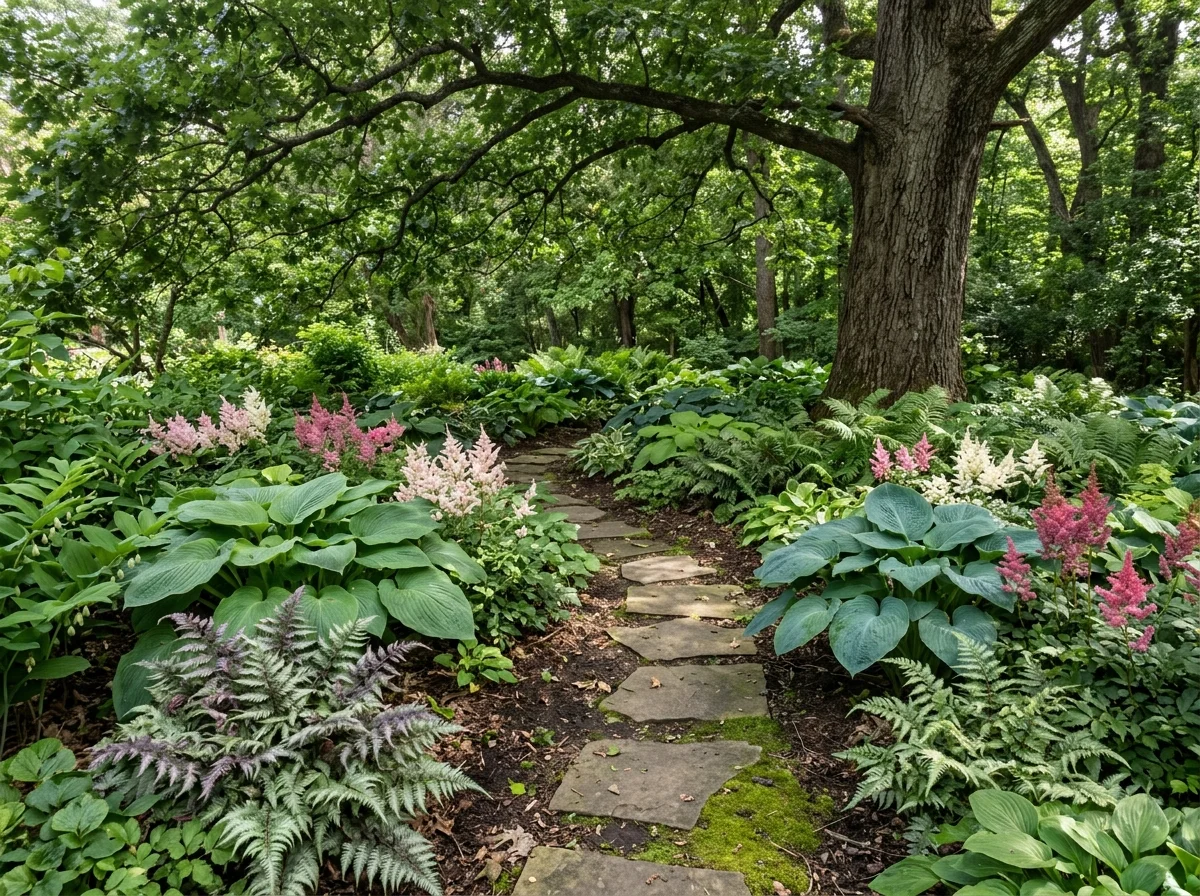
The inclusion of a winding path in your shade garden serves a dual purpose: it provides practical access and enhances the overall aesthetics of the space. Consider using flat stepping stones interspersed with ferns, or gravel bordered by vibrant hostas, to create a visually engaging pathway that invites exploration.
One effective design tip is to incorporate gentle curves into your path. Straight paths can often feel too rigid, while a winding route brings a sense of whimsy and organic flow to your garden. This subtle difference can make your space feel more intentional and thoughtfully designed.
If your garden layout is limited or presents unique challenges, a winding path can also help maximize the space you have. It encourages visitors to meander through the garden, taking in the beauty of each section along the way.
4. Plant a Dry Shade Garden That Actually Survives
Gardening in dry shade can be particularly challenging due to both low light and competition for moisture from nearby tree roots. However, it’s not impossible to create a thriving garden in these conditions. The key lies in selecting plants that are well-adapted to dry shade environments.
To improve your chances of success, enrich the soil with plenty of compost during planting and apply a generous layer of mulch. While this won’t eliminate the challenges of dry shade, it will help establish your plants and retain moisture in the soil.
Plants like epimedium, hellebores, and wild ginger are excellent choices for dry shade areas. These resilient species have evolved to thrive despite the harsh conditions, ensuring that your garden remains vibrant, even in less-than-ideal circumstances.
5. Use Ferns for That Lush, Woodland Feel
Ferns are the epitome of woodland charm, adding a lush and inviting feel to your shade garden. Their graceful fronds sway gently in the breeze, creating a soothing atmosphere that can transport you to a tranquil forest setting. Mixing different types of ferns can yield a stunning display, especially when paired with other shade-loving plants.
Some popular ferns for moist shade gardens include the ostrich fern and Japanese painted fern. These varieties not only bring a touch of elegance but also thrive under the right conditions, creating a thriving ecosystem in your garden.
To amplify the visual appeal, consider combining ferns with flowering perennials like astilbe or bleeding heart. This classic woodland pairing not only looks beautiful but also creates a low-maintenance garden that thrives on its own.
6. Create a Shade Border Along a Fence
A shaded fence line often goes overlooked, but it can be transformed into one of the most visually striking areas of your garden. By creating a shade border garden along a north-facing fence, you can breathe new life into an otherwise neglected spot.
Start by planting taller species like astilbe or ornamental grasses at the back of the border, and gradually work your way down to ground covers at the front. This layered effect adds depth and dimension, making the area feel lush and inviting.
For an extra pop of color, consider incorporating plants like impatiens or begonias in spots that receive a few hours of sunlight. These vibrant blooms can contrast beautifully with the greenery and create a lively display throughout the growing season.
7. Try a Shade Container Garden
When planting directly in the ground isn’t feasible due to tree roots or compacted soil, shade container gardens offer a clever solution. By utilizing pots and containers, you can create a vibrant display of plants without needing to amend the existing soil.
Container gardens allow for great flexibility, enabling you to experiment with various plant combinations and arrangements. Consider pairing colorful foliage plants like coleus with trailing varieties such as bacopa for a dynamic presentation that changes throughout the season.
Moreover, the ability to move containers means you can adjust their placement based on changing light conditions or your personal preferences, ensuring that your garden remains visually captivating year-round.
8. Add a Water Feature
Incorporating a water feature into your shade garden can enhance the sensory experience of the space. The sound of trickling water, whether from a small fountain or a bubbling rock, adds a layer of tranquility and movement that can transform a static garden into a lively sanctuary.
Water features also attract birds and beneficial insects, enriching the ecosystem and bringing additional life to your shaded area. You don’t need a large pond; even a modest tabletop fountain nestled among hostas can create a focal point that draws attention and provides a serene soundscape.
Consider the placement of your water feature carefully, ensuring it is integrated seamlessly into the overall design of your garden. This thoughtful inclusion can elevate the ambiance and charm of your shade garden.
9. Go Moody With a Witchy Woodland Corner
Embrace the darker side of shade gardening by creating a moody corner that feels like it belongs in a gothic novel. Using deep hues and unique textures, you can craft a space that exudes mystery and intrigue.
Incorporate dark-leaved plants like heucheras, black mondo grass, and hellebores to establish a rich color palette. Add elements like mossy rocks and twisted driftwood to enhance the atmospheric feel. This design approach creates an enchanting space that beckons visitors to explore its depths.
Fragmented light in this corner can create dramatic shadows and highlight certain features, making it a captivating area to enjoy during the day and a magical retreat at night. Leaning into the shadows can create a unique ambiance that stands out from more traditional garden designs.
10. Plant Ground Cover to Ditch the Bare Soil Problem
Shady spots often struggle with bare soil, which can be unsightly and prone to weed growth. One of the best solutions is to cover this area with a carpet of low-growing ground cover plants that act as living mulch.
Ground covers not only suppress weeds but also help retain moisture in the soil, making them a practical choice for shade gardens. Once established, many low-maintenance ground covers require little to no attention, allowing your garden to flourish with minimal effort.
Options like ajuga and vinca minor are excellent choices for shady areas, as they spread quickly and create a lush, green carpet. By planting these ground covers, you’ll eliminate the bare soil problem and enhance the overall aesthetic of your shade garden.
11. Use Flowering Shade Perennials for Seasonal Color
Who says shade gardens can’t bloom? With the right selection of flowering perennials, you can enjoy vibrant colors from early spring to late fall. A well-planned sequence of blooms can give your garden continuous interest throughout the growing season.
Consider planting various perennial species that flower at different times, such as bleeding heart in spring, followed by astilbe and foxgloves in early summer, and ending with Japanese anemones in the fall. By layering these plants strategically, you ensure that there’s always something in bloom, keeping your garden lively and colorful.
This plant diversity not only enhances the visual appeal but also supports pollinators and beneficial insects, promoting a healthy ecosystem within your shade garden.
12. Add a Shade Garden Bench or Seating Area
Creating a dedicated seating area in your shade garden is an often-overlooked concept that can enhance the space’s functionality. If you have a reasonably sized shady patch, consider installing a bench or a couple of chairs to create a cozy nook.
Frame the seating area with tall hostas or a small ornamental tree like a Japanese maple to provide a sense of enclosure and intimacy. This designated seating spot encourages you to spend time in your garden, enjoying nature’s tranquility while sipping your morning coffee or reading a book.
By transforming your shade garden into a destination, you foster a deeper connection with your outdoor space, inviting relaxation and reflection amidst the greenery.
13. Build a Shade Garden Around a Tree
Planting around trees in shaded areas can be tricky, but it’s a rewarding endeavor when done correctly. Instead of digging deep, which could damage surface roots, focus on building up with a thin layer of soil and compost for planting.
Select shallow-rooted species that can compete with the tree’s roots and thrive in the challenging conditions. Keeping the planting circle at a safe distance from the trunk will allow the tree to flourish while creating a diverse ecosystem around it.
Over time, this method can yield a naturalistic look that integrates the tree into your overall garden design, creating a harmonious blend of plants that coexist beautifully.
14. Create a Dappled Shade Garden With Ornamental Trees
Dappled shade is often regarded as the ideal condition for shade gardening because it offers a plethora of planting options. To create this effect, consider planting ornamental trees with open canopies, such as Japanese maples or birches, which allow filtered light to reach the ground.
Underneath these trees, layer a mix of shade-tolerant perennials, ferns, and ground covers that thrive in the shifting light. This strategy not only diversifies your plant selection but also adds depth and dimension to the garden as the trees grow and mature.
This design concept is an investment in the future of your garden, as it will evolve and become more stunning with each passing season.
15. Design a Shade Garden That Brightens Itself
Incorporating bright colors and reflective elements into your shade garden can help counteract the darkness. Using plants with white flowers, yellow-green foliage, and variegated leaves can make a shaded space feel lighter and more open.
Strategically placing these bright elements among darker foliage creates a beautiful contrast that adds vibrancy to your garden. Consider planting white astilbe or variegated Solomon’s seal alongside deeper-colored hostas to achieve this effect.
This clever use of color can help draw attention to specific areas of your garden and create a sense of balance, ensuring that even shaded spaces exude warmth and charm.
16. Try a Moss Garden for Effortless Elegance
If your shaded area is consistently damp and cool, consider embracing moss as a primary design element. A moss garden, complete with rocks, paths, and maybe even a stone lantern, can create a serene and captivating design.
Moss requires minimal maintenance and thrives in low-light conditions, making it an ideal choice for shade gardens. Once established, it doesn’t need fertilization or frequent watering, allowing you to enjoy its beauty without the hassle.
This elegant design choice can impart a sense of tranquility and timelessness to your garden, making it a stunning focal point that contrasts beautifully with traditional plantings.
17. Add Lighting for Evening Ambience
Incorporating lighting into your shade garden can dramatically enhance its beauty during the evening hours. Low-voltage LED path lights, uplighting on key features like ferns or ornamental trees, or even a simple string of warm lights strung between trees can extend the usability of your garden well into the night.
When selecting lighting, opt for warm white tones, as they highlight the rich colors of foliage and create an inviting atmosphere. Thoughtfully placed lights can illuminate pathways and create a magical ambiance that transforms your garden into a nighttime wonderland.
Strategically placed lighting can also highlight unique features or focal points in your garden, ensuring that every corner is appreciated, even after sunset.
18. Build a Living Wall or Trellis in Shade
A living wall or trellis adorned with shade-tolerant climbing plants is an excellent way to introduce vertical interest to a low-light space. Plants like climbing hydrangeas, ivy, and Virginia creeper can thrive in shaded conditions, providing lush greenery and coverage.
This approach is particularly useful for creating privacy in shaded seating areas or covering unsightly fences with beautiful, green foliage. Choose climbing plants that complement your overall design theme and ensure they are suited for the light conditions of your garden.
The verticality of a living wall can draw the eye upward, creating a sense of height and space in your garden, while adding texture and interest to previously overlooked areas.
19. Design a Partial Shade Garden Along a Path
Designing a garden along a path that receives partial shade can yield stunning results with a wide array of plant options. Many plants thrive in environments that receive 2 to 4 hours of direct sunlight coupled with dappled shade, allowing for a vibrant display.
This approach not only enhances the aesthetic appeal but also encourages exploration and engagement with your outdoor space, making it a journey of discovery.
20. Create a Corner Shade Nook
Transforming a shaded corner into a cozy nook can elevate your garden into a delightful destination. To achieve this, frame the space with tall shrubs or arching ferns, add a comfortable seat or bench, and lay down stepping stones to guide visitors into the area.
This shaded corner can become a delightful retreat, a place to unwind and enjoy nature. By incorporating a few potted plants or flowers, you can add a touch of color and life to the area, enhancing its charm.
What is a shade garden?
A shade garden is defined as any planted area that receives limited direct sunlight, typically less than 6 hours per day. These gardens are designed using plants that thrive in low-light conditions, and they can range from simple ground cover plantings to intricate multi-layer woodland gardens.
The key to a successful shade garden lies in selecting plants that are well-suited to the specific light conditions in your space. Hostas, ferns, astilbe, hellebores, heuchera, and bleeding heart are all excellent choices for shade gardening.
By understanding your garden’s light conditions and choosing appropriate plants, you can create a thriving shade garden that is both beautiful and functional.
What plants grow best in a shade garden?
Several plants are well-known for their resilience and beauty in shade gardens. Hostas, ferns, astilbe, hellebores, heuchera, bleeding heart, epimedium, ligularia, and impatiens are all proven performers in low-light conditions.
When selecting plants, it’s essential to consider whether your garden is in full shade, partial shade, or dry shade. Each category demands different plant choices to ensure successful growth.
Taking the time to identify your shade type and selecting the right plants will set the foundation for a flourishing and vibrant shade garden.
How do I design a shade garden?
Designing a shade garden begins with identifying the type of shade in your space—full, partial, or dappled. Once you have determined the light conditions, you can plan your layout in layers: position taller shrubs or small trees at the back, medium perennials in the center, and ground cover at the front.
Incorporate pathways, hardscape features, and seating areas to enhance the overall design. By utilizing a layered approach and including varied plant heights, your shade garden will have depth and visual interest.
A well-thought-out design will create a harmonious and inviting environment, encouraging exploration and enjoyment of your outdoor space.
What is the difference between full shade and partial shade?
The distinction between full shade and partial shade significantly impacts plant selection. Full shade refers to areas receiving less than 2 hours of direct sunlight daily, while partial shade indicates spaces that enjoy 2 to 6 hours of sunlight.
Understanding these differences is crucial for choosing plants that will thrive in your garden. Selecting species specifically adapted to each shade type will ensure successful growth and a vibrant garden.
By taking the time to assess your garden’s light conditions, you can make informed decisions that will lead to a flourishing shade garden.
How do I make a dry shade garden work?
Creating a successful dry shade garden involves selecting plants that are naturally adapted to thrive in such challenging conditions. Options like epimedium, hellebores, and sweet woodruff are excellent choices for dry shade areas.
To enhance the soil quality, incorporate compost at the time of planting and maintain a layer of mulch to retain moisture. Accept that dry shade can be a difficult environment, and choose plants that are resilient enough to flourish despite the odds.
By selecting the right plants and employing smart gardening techniques, you can create a thriving dry shade garden that is both beautiful and resilient.
What can I plant under trees in shade?
Planting beneath trees can be tricky due to the competition for moisture and nutrients. However, it’s entirely possible to create a beautiful garden in these conditions. Focus on shallow-rooted species that can thrive in the limited light.
Consider planting epimedium, hellebores, wild ginger, and pachysandra, which are all well-suited to shaded areas with tree roots. Avoid digging deep to protect surface roots; instead, build up with a thin layer of soil and compost.
With careful planning, you can create a naturalistic and flourishing garden beneath the tree canopy.
How do I brighten a shady garden?
Brightening a shady garden can be achieved through strategic plant selection and thoughtful design. Use light-colored flowers, yellow-green foliage, and variegated leaves to reflect light and create a sense of openness.
Incorporating these bright elements among darker plants not only adds contrast but also enhances the overall brightness of the space. Consider using gold or chartreuse hostas, white impatiens, and silver heuchera varieties to bring luminosity to the garden.
This clever use of color can create a vibrant and inviting atmosphere, ensuring your shade garden feels lively and welcoming.
What hardscape features work well in shade gardens?
Incorporating hardscape features into your shade garden can add structure and visual interest. Elements like winding stone paths, boulders, wooden benches, and water features can enhance the overall design.
Low-voltage lighting also plays a crucial role in illuminating shaded spaces, making them more functional and visually appealing after dark. These hardscape features not only provide structure but also complement the natural beauty of your garden.
A well-designed combination of plants and hardscapes will create a cohesive and engaging garden experience.
How do I maintain a shade garden?
Maintaining a shade garden is generally less labor-intensive compared to sunny borders. Key tasks include annual mulching, dividing hostas and ferns every few years, and removing dead foliage in late winter.
Top-dressing with compost in the spring can also help keep your plants healthy and thriving. With a focus on these essential maintenance tasks, your shade garden will flourish and continue to provide beauty for years to come.
Ultimately, the most important takeaway is to see shade as a design asset rather than a limitation. With the right plants and thoughtful design, you can create a shade garden that is serene, atmospheric, and rich in texture—qualities that are difficult to achieve in full-sun gardens.