1. Contemporary Wooden Keyhole Herb Garden Featuring a Sculptural Centerpiece
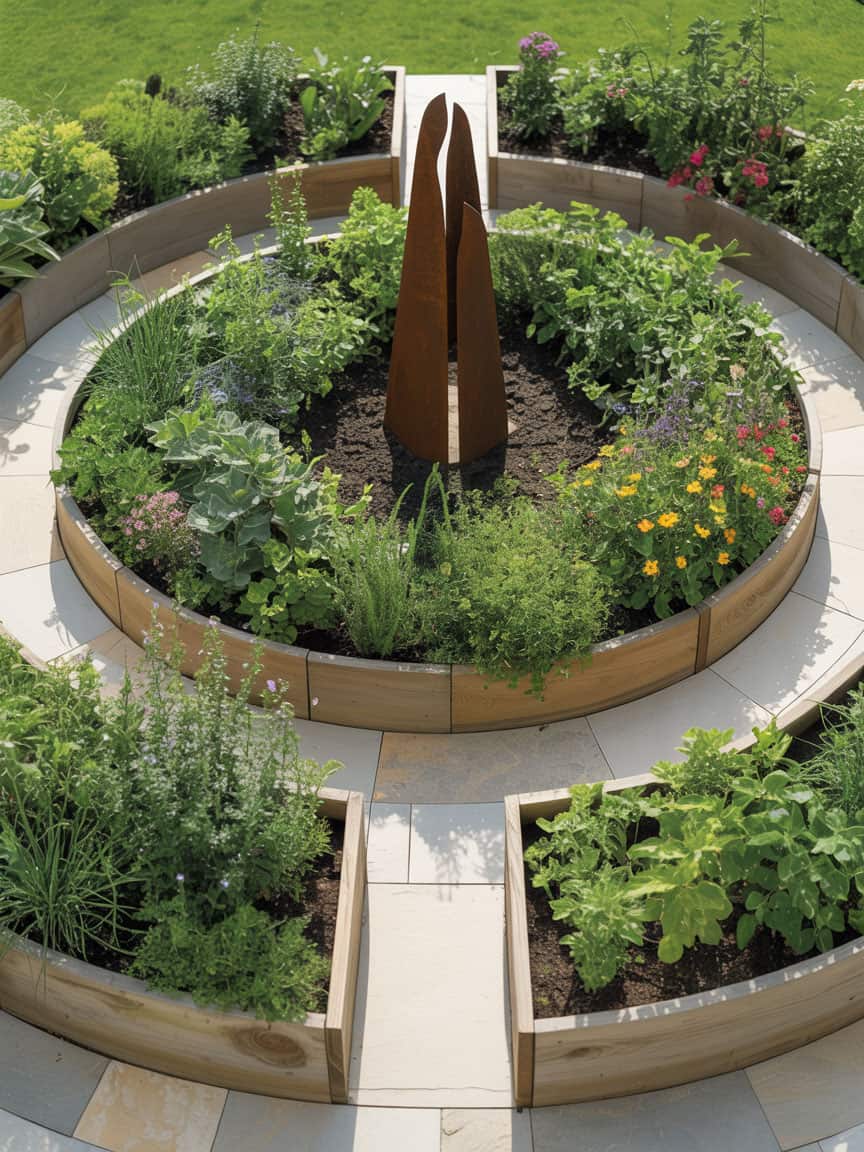
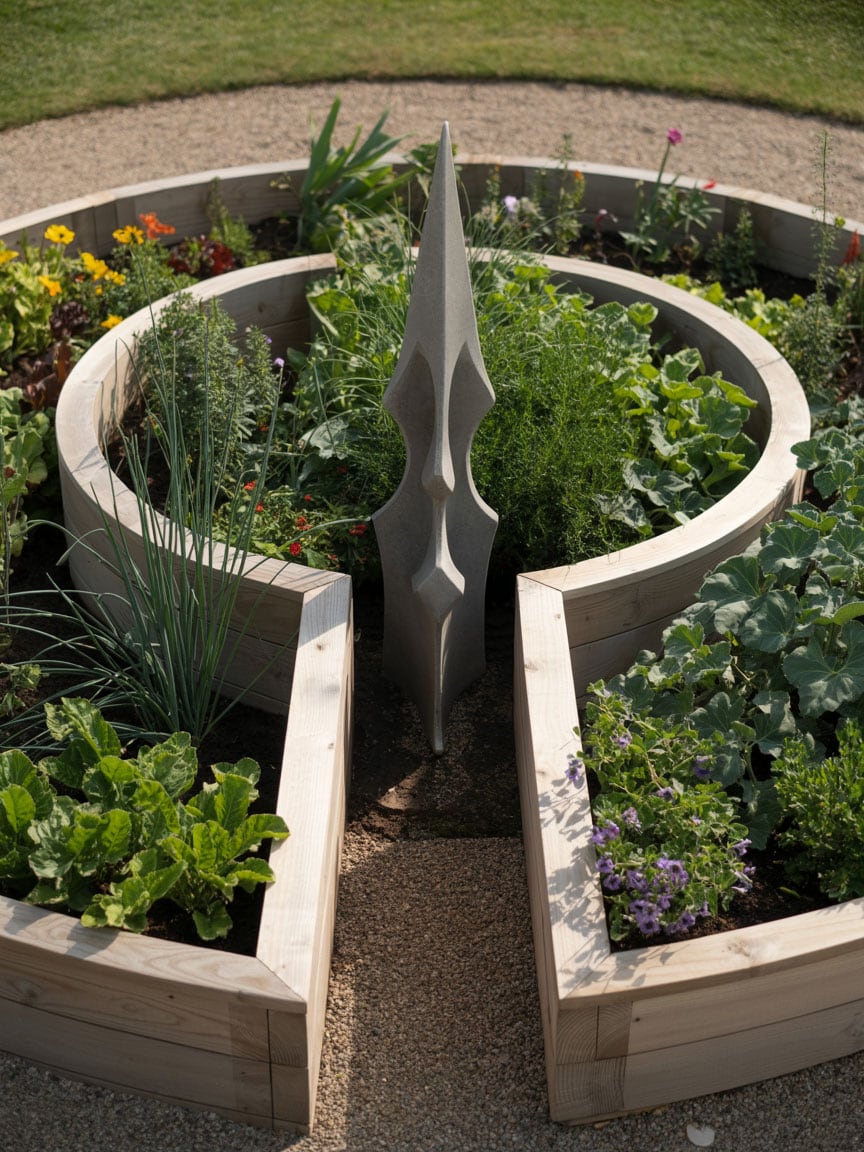
This design transforms the traditional perception of a keyhole herb garden. The smooth wooden walls create a refined circular shape, while the pathway leading to the garden feels intentional and thoughtfully placed, rather than a mere afterthought. Instead of a compost pile in the center, a striking sculptural feature takes its place, making the garden resemble an outdoor living space rather than just a functional area.
What captivates me in this design is the elegance and restraint it exhibits. The herbs are kept low and well-managed, allowing the unique shape and central feature to take center stage. This keyhole herb garden is perfect for placement near modern patios or contemporary homes, where design continuity is as important as the practicality of harvesting fresh herbs.
2. Elevated Stone Keyhole Herb Garden Accompanied by a Woven Compost Tower
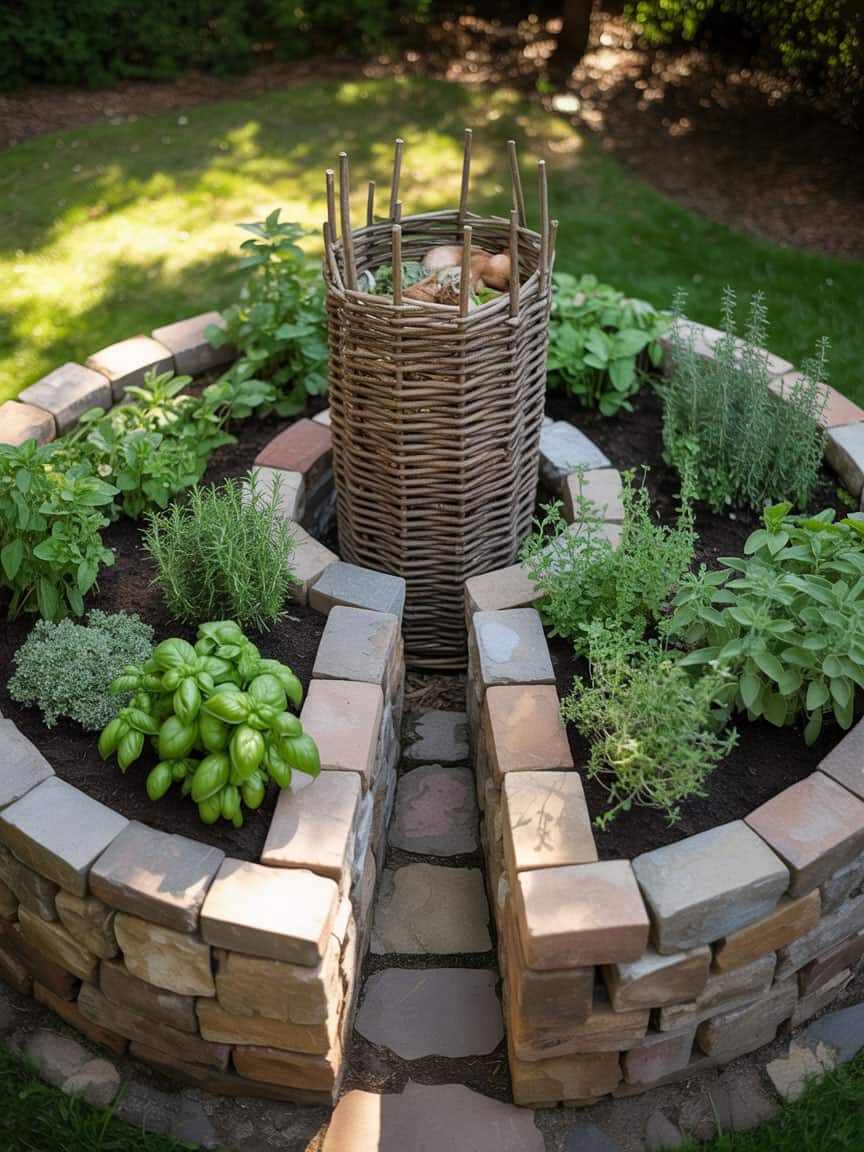
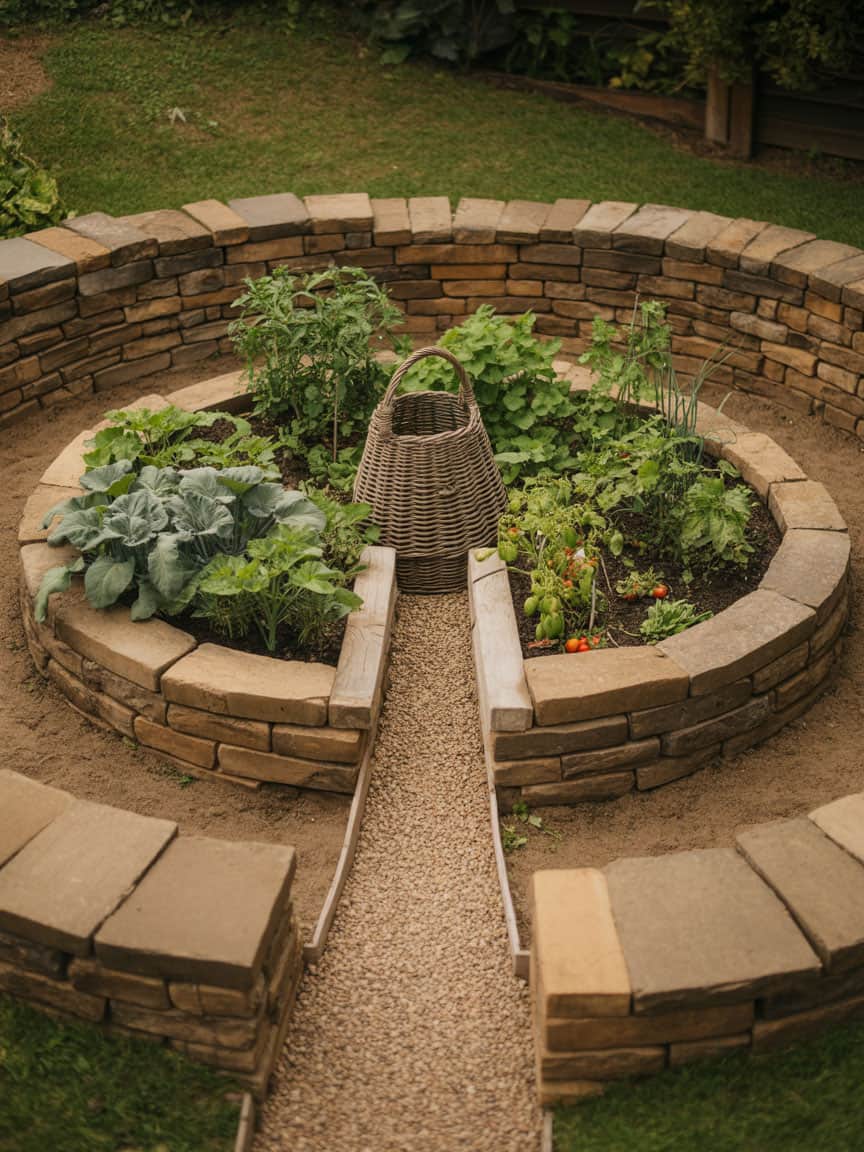
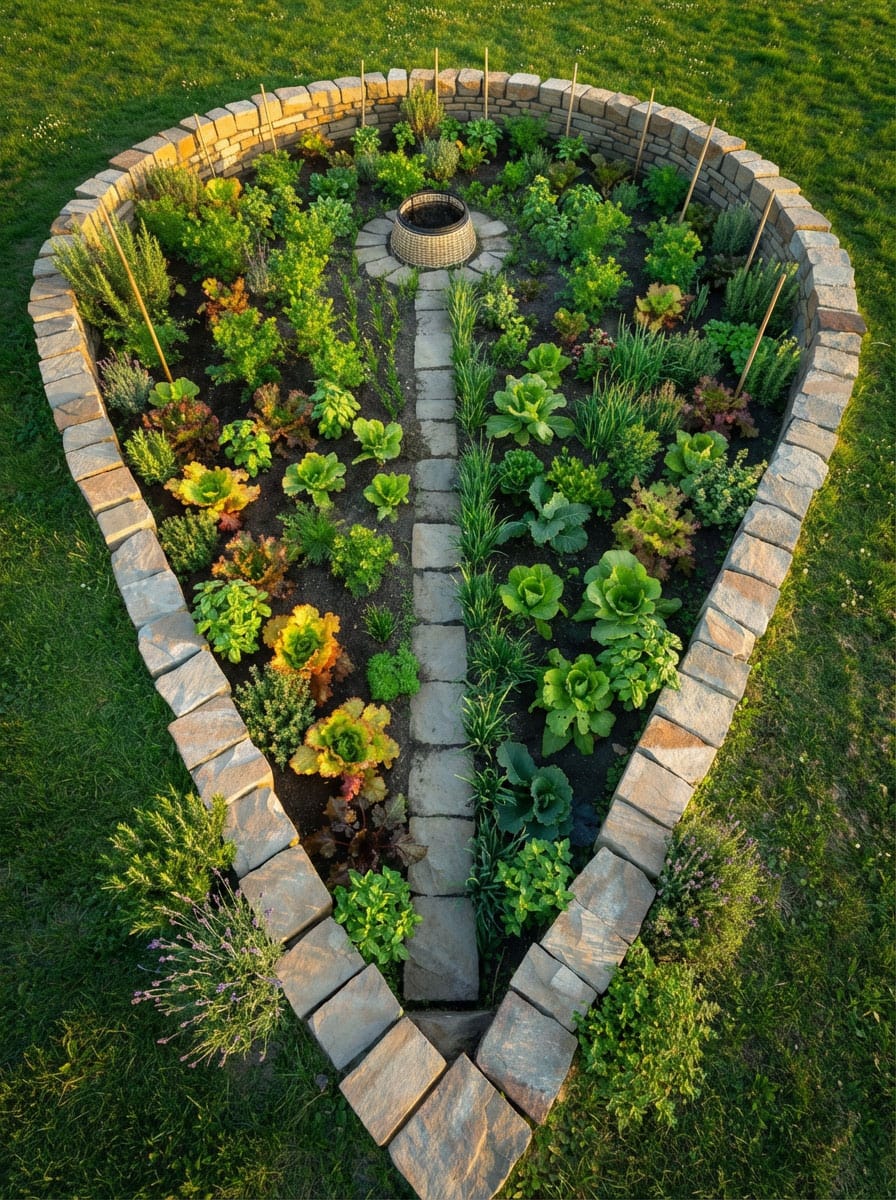
This design is often the first that comes to mind when discussing keyhole herb gardens, and it’s easy to see why. The raised stone walls impart a sense of permanence and stability, making the garden not only visually appealing but also comfortable to work within. The woven compost tower serves as both a practical and aesthetic anchor for the garden.
I particularly appreciate the texture balance in this design. The rugged stone provides a solid foundation, while the woven compost center introduces a softness that balances the overall look. With ample space for herbs to be planted generously, the compost system ensures that plants receive consistent nourishment throughout the growing season.
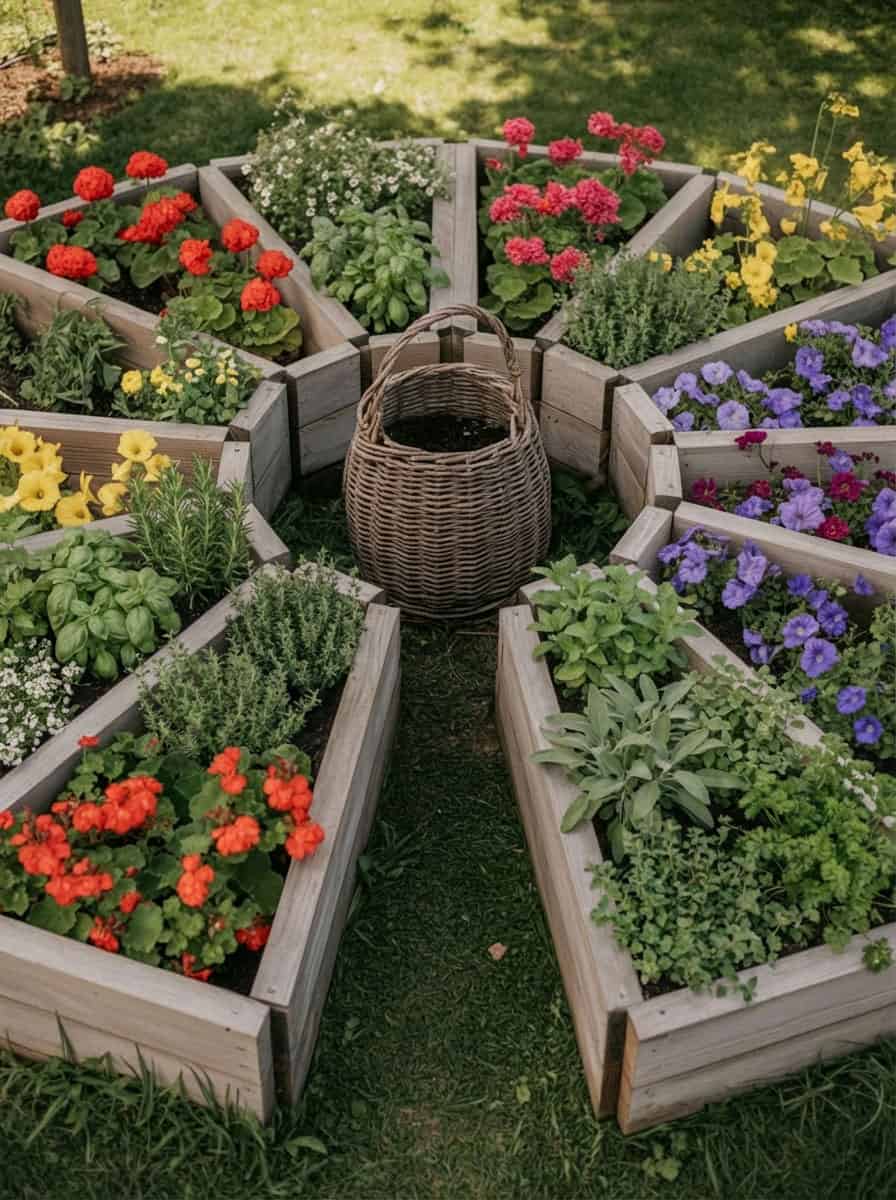
3. Modular Wooden Keyhole Herb Garden With Radial Planting Sections
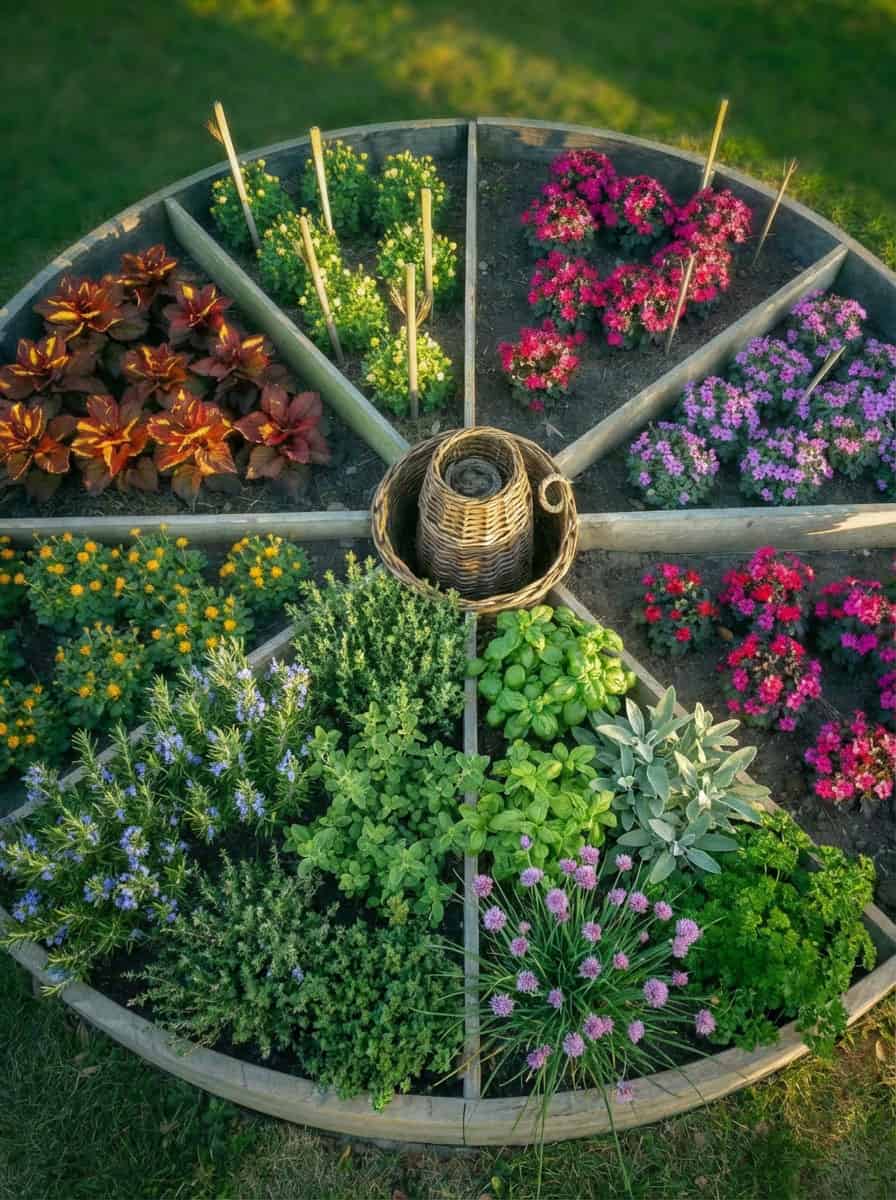
This innovative design moves away from a traditional circular layout, breaking it into distinct wedges that feel purposeful. Each section can be seen as a mini-garden in its own right, allowing for organized herb cultivation. I find this particularly beneficial for managing various herbs, enabling you to segregate robust woody herbs from more delicate varieties or group them by flavor.
The modular design also simplifies maintenance. One wedge can be refreshed or replanted without disrupting the others, promoting a sustainable gardening practice. Visually, the symmetry of the layout maintains clarity, even as plants grow at varying rates.
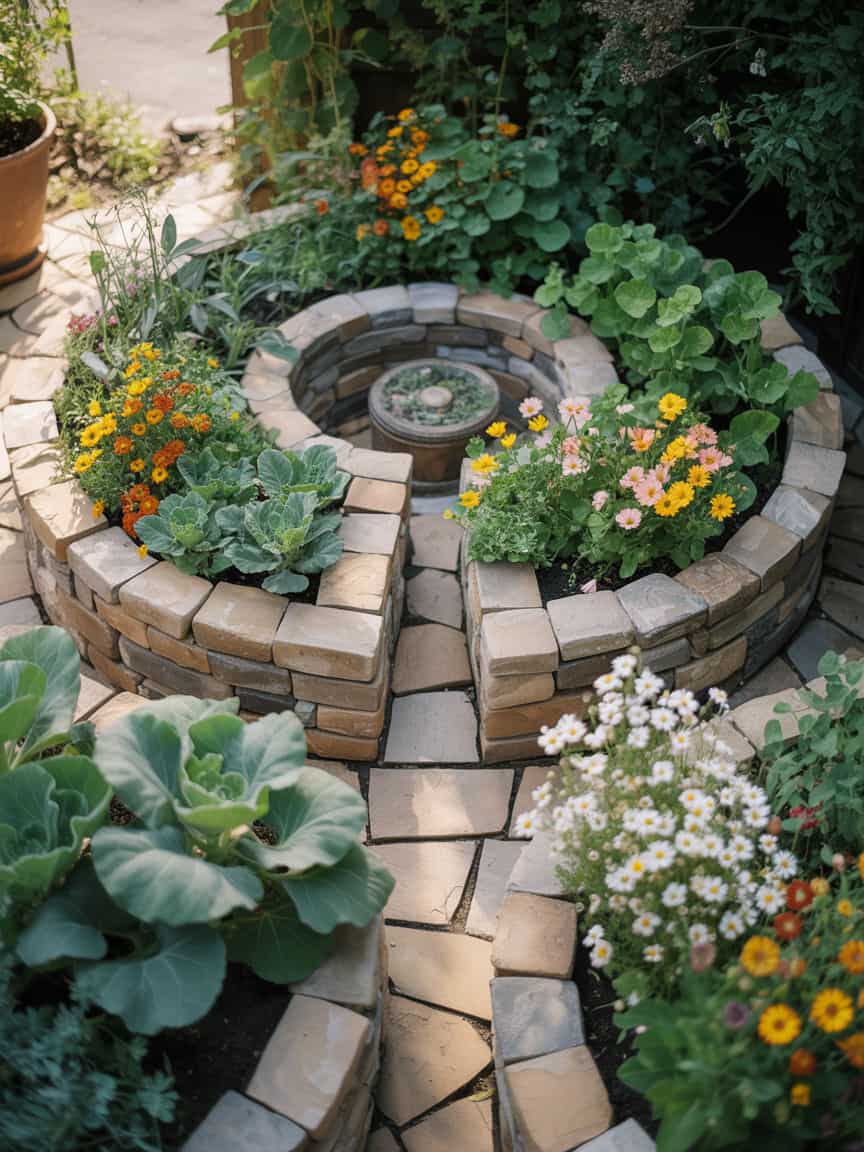
4. Cottage Brick Keyhole Herb Garden Blending Flowers and Vegetables
In this design, the rigidity of the keyhole herb garden softens. The brick walls show their age, and imperfections in the curves provide a charming character. Herbs coexist harmoniously with flowers, creating a relaxed atmosphere despite the clear structural outlines.
This style resonates with gardeners who appreciate a more natural approach, allowing plants to self-seed and mingle freely. Annuals like calendula and nasturtiums can intertwine with herbs, creating a vibrant garden that evolves with each passing season, yet maintains its foundational structure.
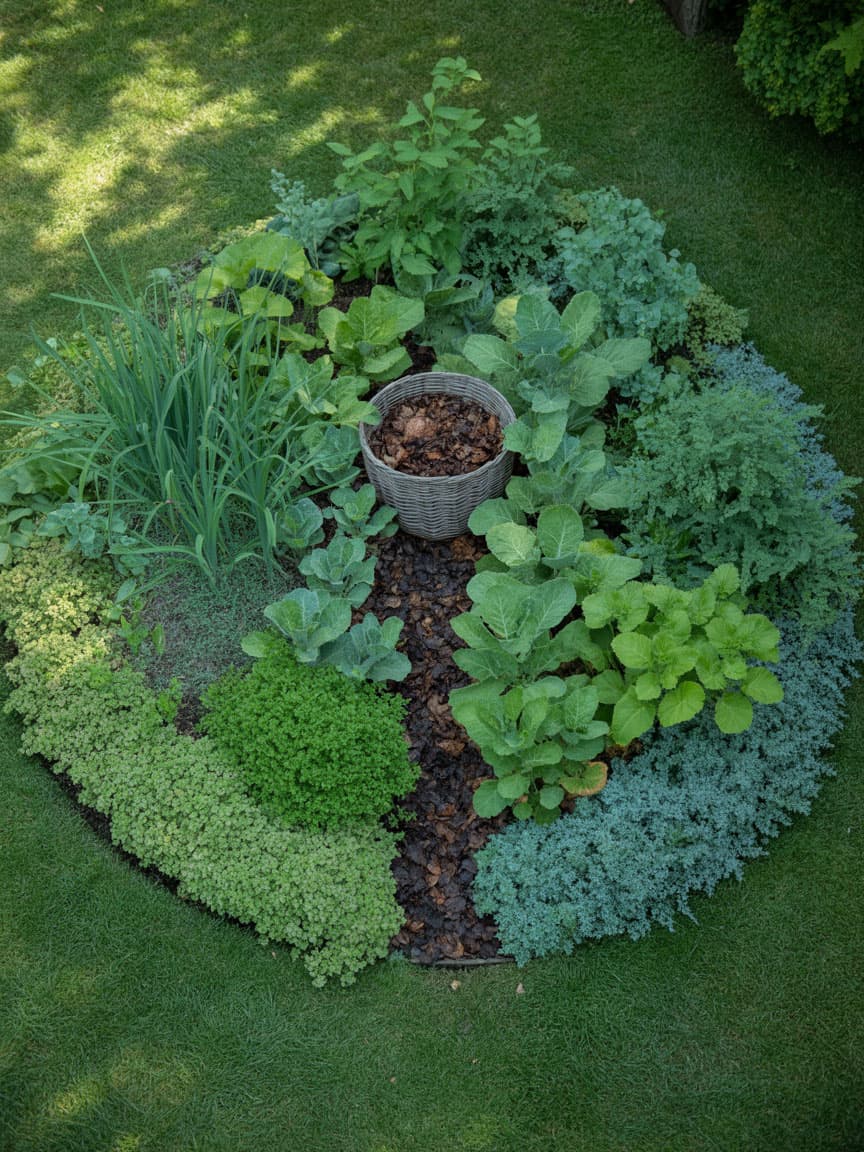
5. Ground-Level Keyhole Herb Garden Featuring Soft Edged Planting
This version of the keyhole herb garden forgoes traditional walls, instead relying on the plants themselves to define the shape. A narrow pathway leads inward, filled densely with herbs that blur the edges into the surrounding lawn, creating a naturalistic feel.
This design feels very approachable and forgiving, making it easy to adapt and change as needed. It provides the benefits of a keyhole layout without the commitment to permanent materials, perfect for gardeners seeking flexibility in their gardening practices.
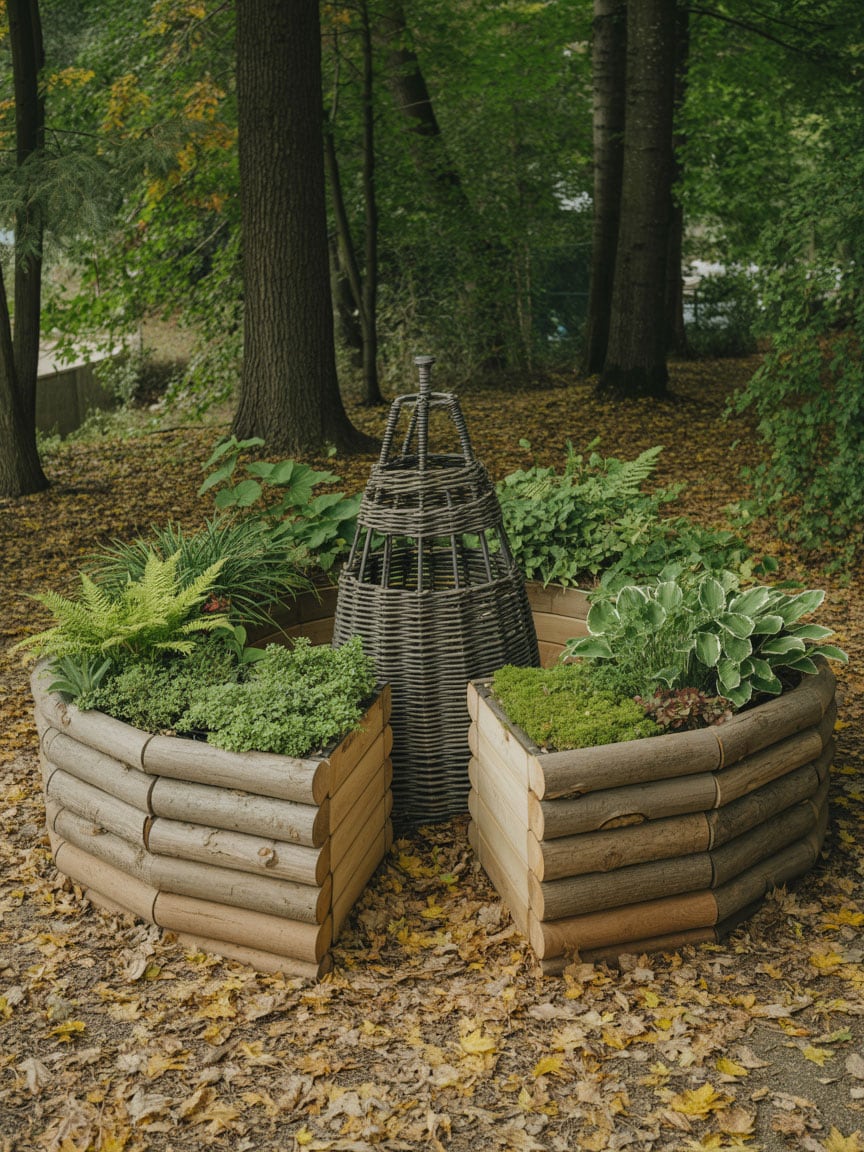
6. Woodland Keyhole Herb Garden With Log Walls and Woven Compost Structure
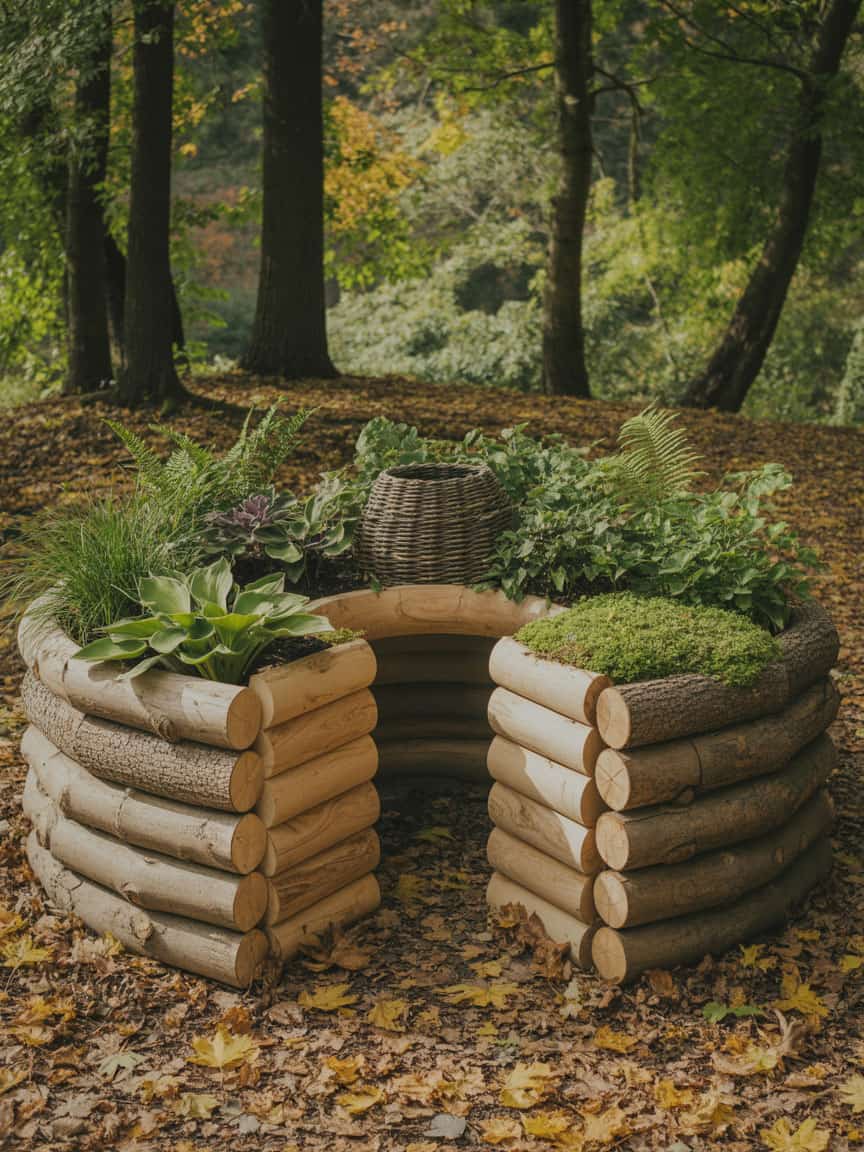
Nestled among trees, this keyhole herb garden appears to belong to the forest environment. The log walls resonate with the natural surroundings, while shade-tolerant herbs are thoughtfully arranged within the space. The woven compost structure integrates seamlessly, enhancing the garden’s rustic charm.
This design excels in utilizing limited sunlight, as herbs like mint, chives, lemon balm, and parsley flourish in the shade. It proves that a keyhole herb garden can be productive even without full sun exposure, making it an excellent choice for woodland settings.
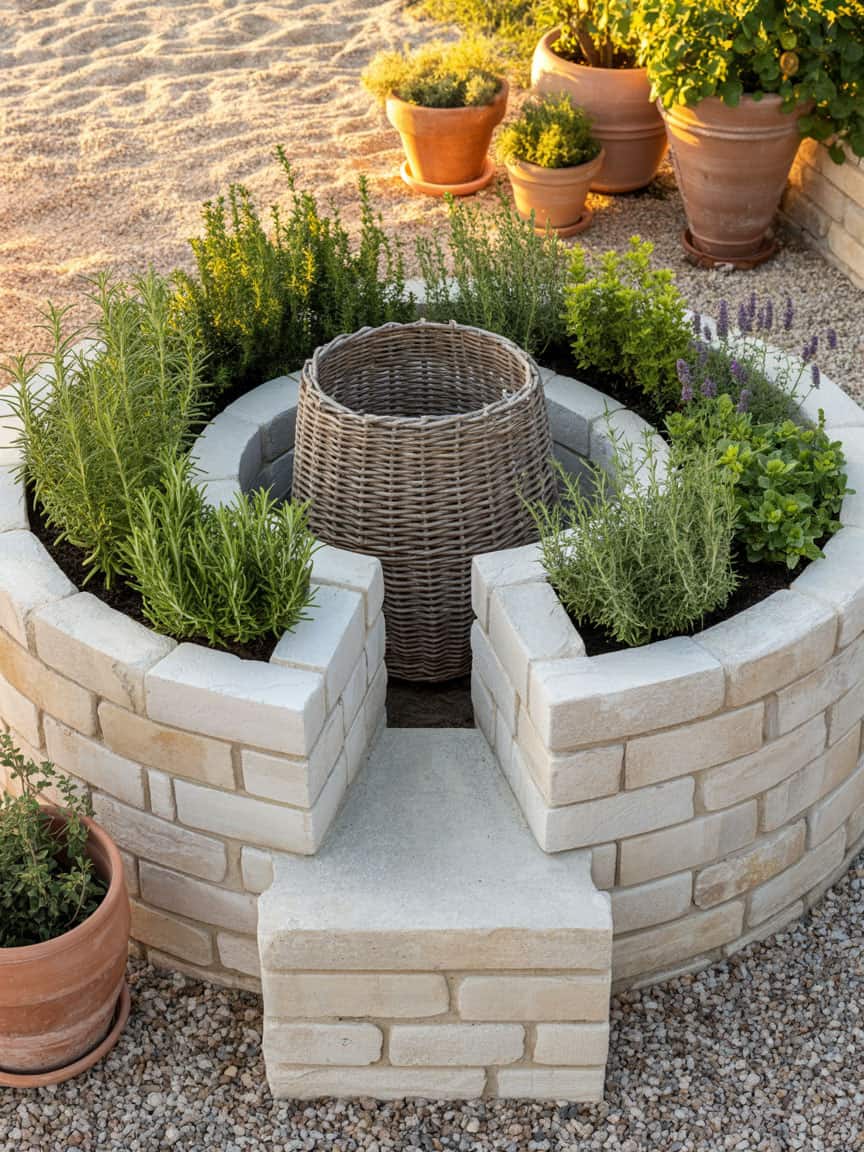
7. Mediterranean Stone Keyhole Herb Garden Filled With Culinary Herbs
This layout features pale stone paths and gravel underfoot, creating an inviting space for sun-loving herbs. The design functions as a practical courtyard, perfect for regular harvesting and ensuring adequate airflow around the plants. Varieties like rosemary, thyme, oregano, and lavender thrive in this open and airy setting.
The thoughtful placement of herbs enhances usability. Taller herbs are positioned towards the back, while shorter varieties hug the edges, creating an efficient layout that caters to the way these herbs are typically used in culinary applications.
8. Water-Centered Keyhole Herb Garden With an Integrated Pond Feature
By substituting compost with a small pond at the heart of the garden, the ambiance shifts entirely. The water feature reflects light beautifully, attracts wildlife, and introduces a soothing element to the garden. Herbs are arranged to frame the water, creating a serene atmosphere rather than competing with it.
This design is especially delightful in warmer climates, where the pond moderates temperature and fosters a microclimate beneficial to nearby plants. It encourages gardeners to take their time, inviting them to engage with the space rather than simply rushing to harvest.
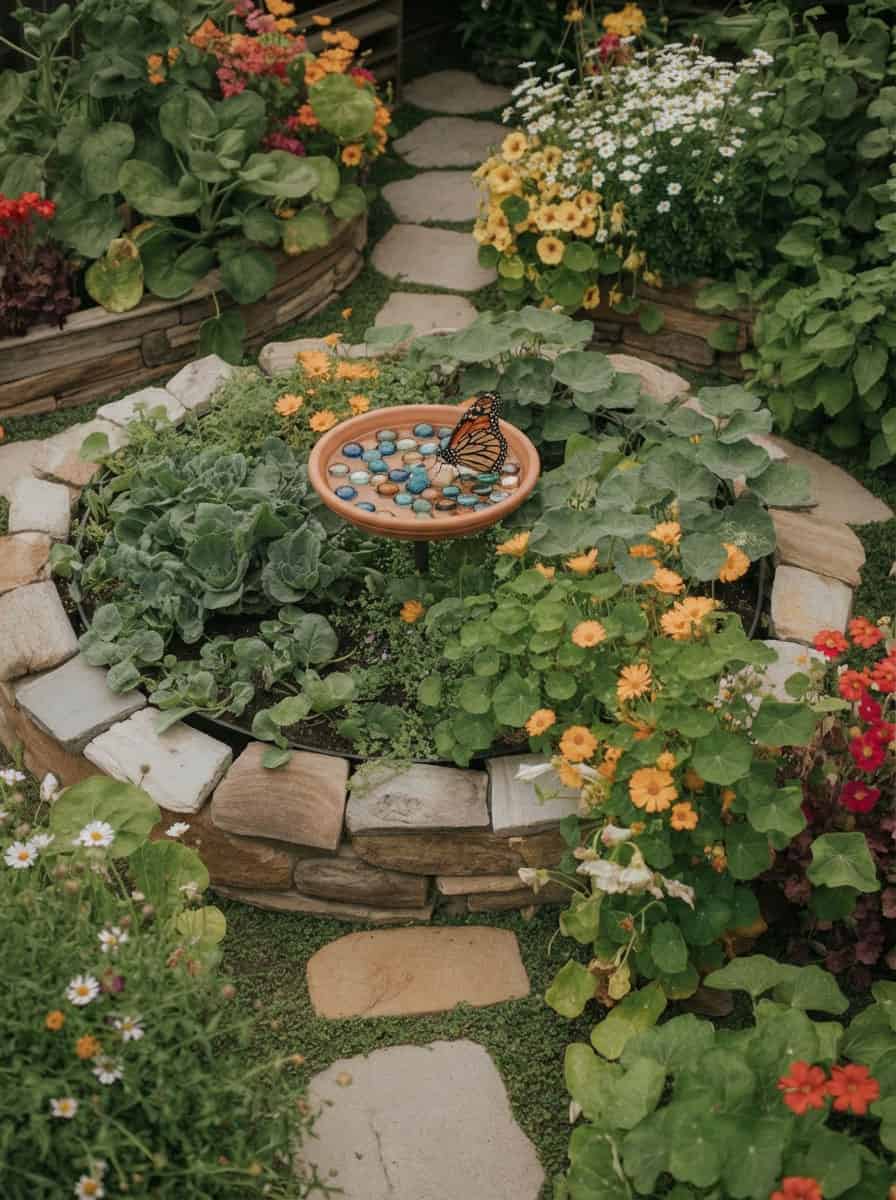
9. Pollinator-Friendly Keyhole Herb Garden Featuring a Central Bird Bath
This garden design prioritizes life and movement. A shallow bird bath sits at the center, attracting birds and beneficial insects, while flowering herbs and companion plants surround it, enriching the ecosystem. The keyhole shape maintains accessibility for gardeners without disturbing wildlife visitors.
I admire how the layering of plants creates depth in the garden. The herbs form a structured backdrop, while the flowers introduce rhythm and beauty. The water feature supports the entire ecosystem, making the garden not just productive but also inviting a plethora of life.
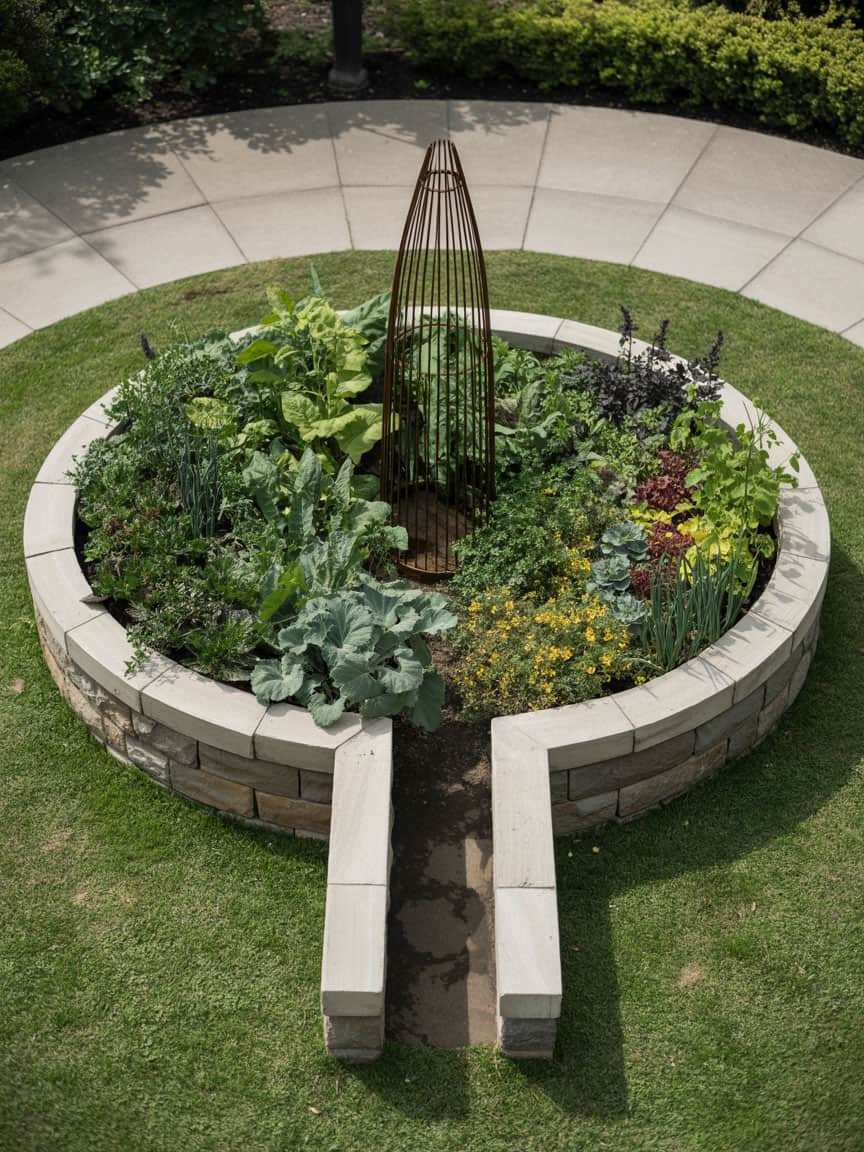
10. Architectural Stone Keyhole Herb Garden With a Sculptural Vertical Feature
In this design, geometry takes precedence. Smooth stone walls form a precise circular shape, while a vertical feature adds height without cluttering the garden. Herbs are planted with care, allowing the structure to breathe and making the layout feel open and organized.
This keyhole garden thrives on simplicity. By limiting the variety of plants, the focus shifts to texture and form, creating a space that feels calm, ordered, and confidently designed.
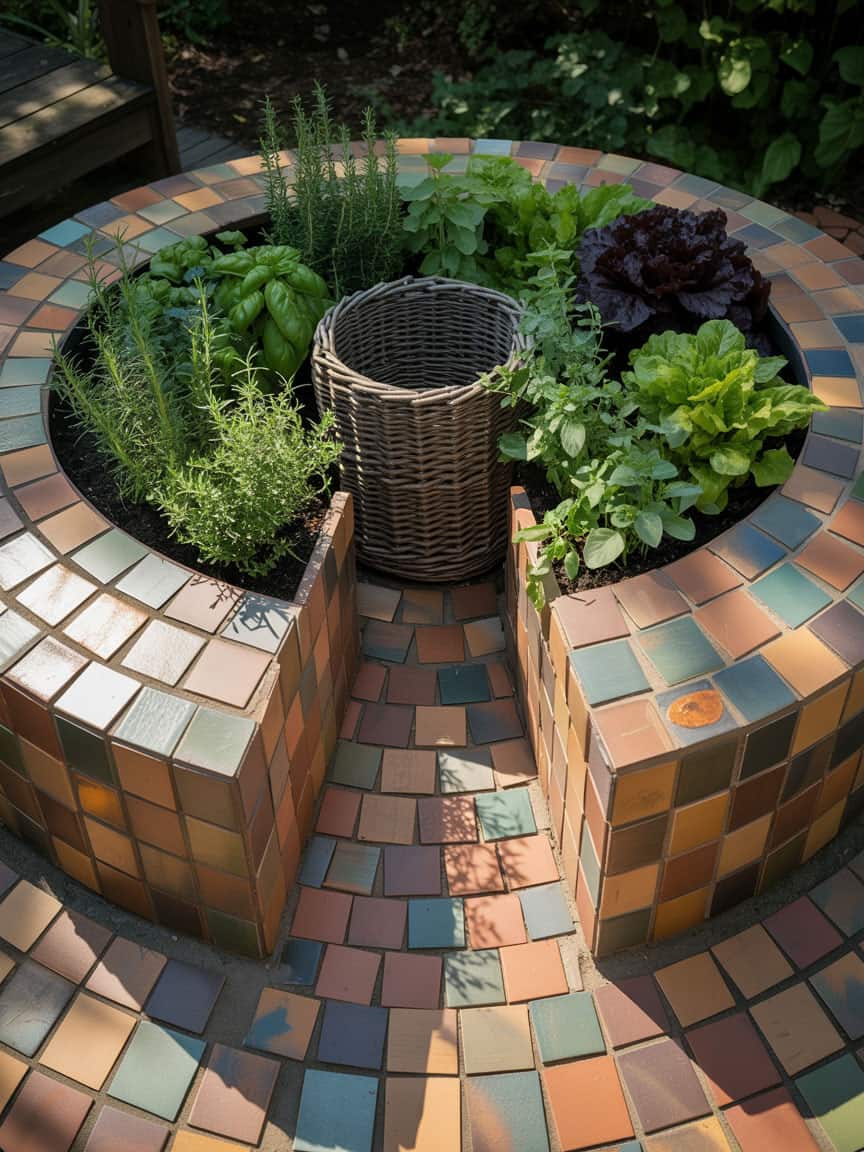
11. Mosaic Tile Keyhole Herb Garden Featuring Culinary Herbs
Artistry comes alive in this design, where mosaic tiles adorn the walls and pathways, transforming the garden into a sensory experience. While herbs remain practical, the intricate surface details weave a story that draws gardeners and visitors alike into the space.
This style encourages a more deliberate interaction with the garden. The patterns underfoot, the interplay of light on glazed tiles, and the soothing presence of herbs invite an appreciation for the details, making it both functional and deeply personal.
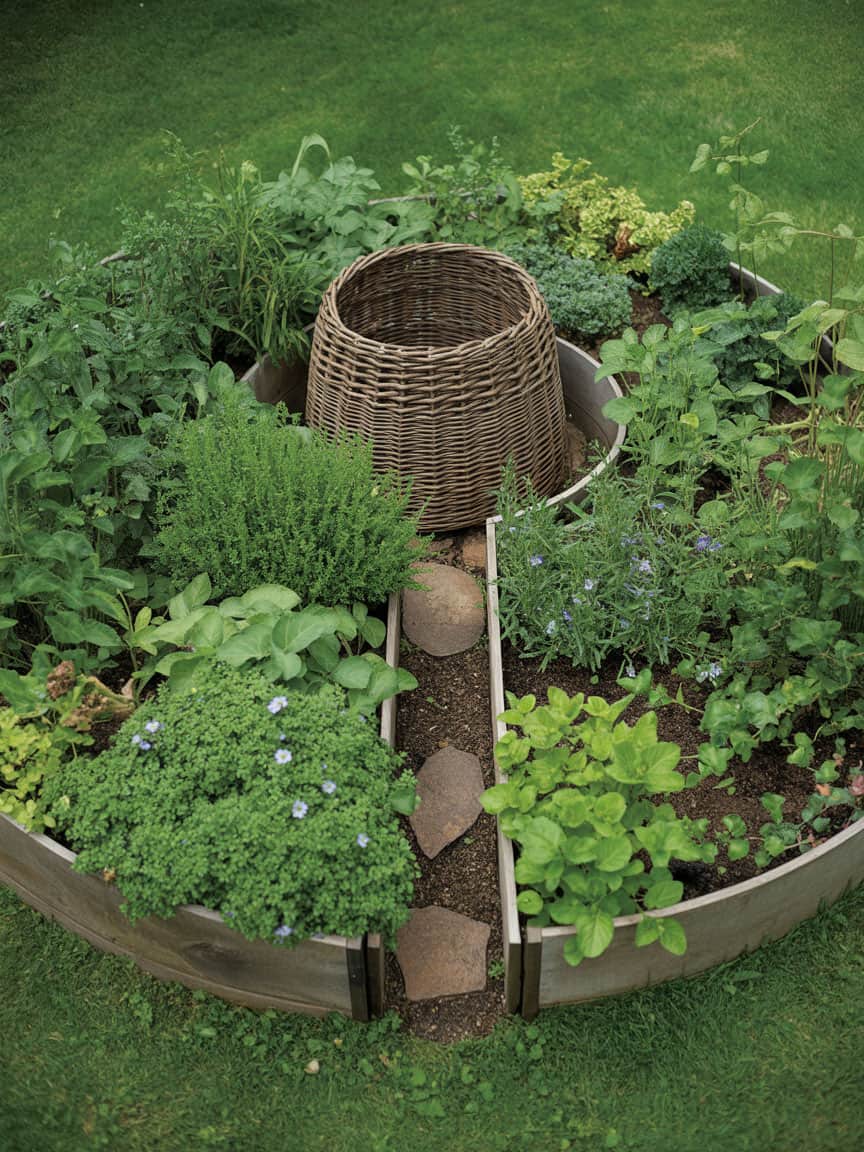
12. Compact Wooden Keyhole Herb Garden With Dense Edible Planting
This garden design is tailored for limited spaces, maximizing every inch available. Curved wooden walls encase densely planted herbs, and a narrow path leads to the central compost basket.
The vertical thinking here is intriguing; taller herbs rise at the back with low-growing varieties filling the front. This layout proves that limited space does not equate to a lack of variety or yield, showcasing an efficient use of available resources.
13. Sculptural Wooden Keyhole Herb Garden With a Minimalist Center Feature
This layout embraces negative space effectively. A central feature stands quietly, surrounded by herbs that frame it rather than overpowering it. The selection of plants is intentional, and spacing is meticulously planned to create a harmonious environment.
I admire how this garden feels purposeful without being sterile. It invites focus and encourages gardeners to appreciate each individual plant rather than being overwhelmed by a mass of greenery.
14. Large Stone Keyhole Herb Garden Designed for High-Yield Harvests
Scale plays a significant role in this keyhole herb garden. With ample space, herbs can be planted in generous clusters, allowing for easy and frequent harvesting. The straight path ensures straightforward access to the central compost system, making it practical for serious gardeners.
This design embodies a sense of planning and routine. It supports activities like preservation, drying, and regular culinary use, making it ideal for dedicated herb growers looking to maximize their harvests.
15. Traditional Raised Stone Keyhole Herb Garden Featuring Productive Zones
This garden strikes a harmonious balance between familiarity and efficiency. The raised stone walls offer structure, while designated planting zones allow for flexibility in herb rotation. This adaptability is essential, as it enables herbs to be tailored to seasonal needs.
The approachable design does not impose a specific aesthetic, making it suitable for a variety of landscapes and gardening preferences. It feels welcoming to both novice and experienced gardeners alike.
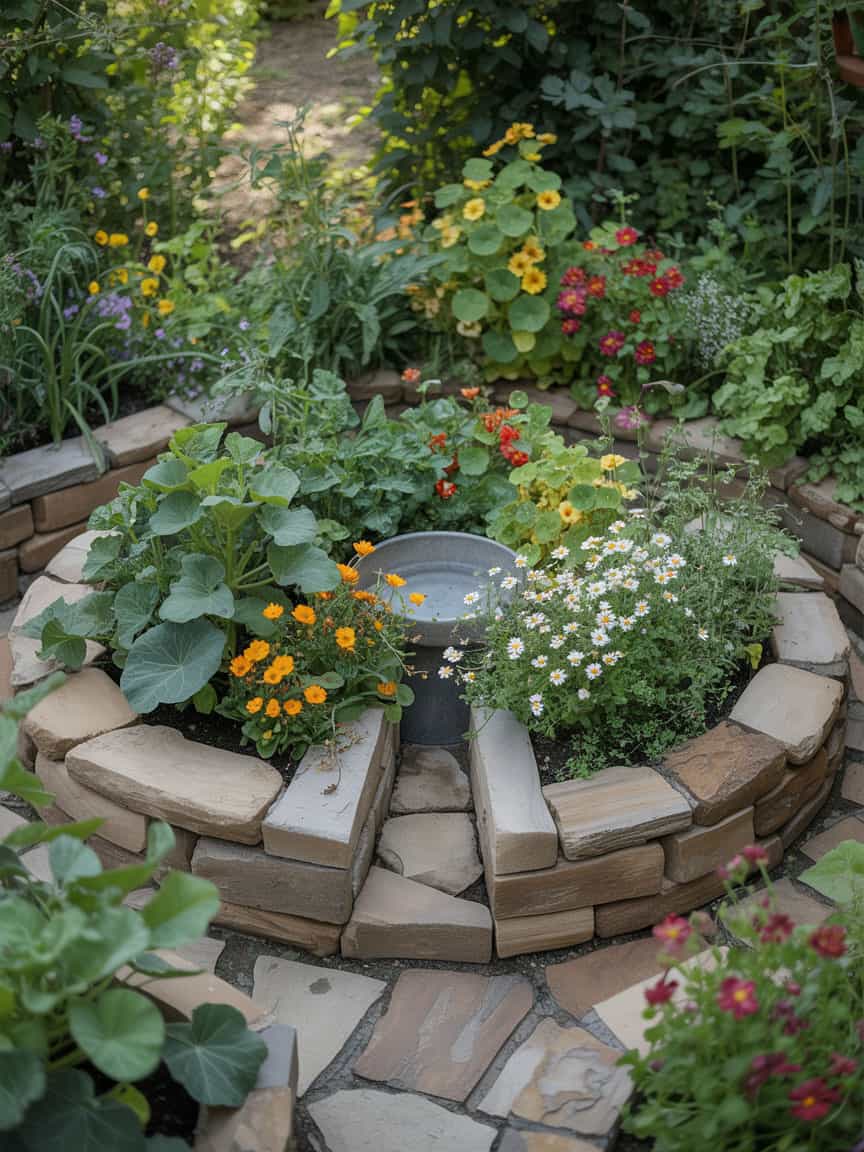
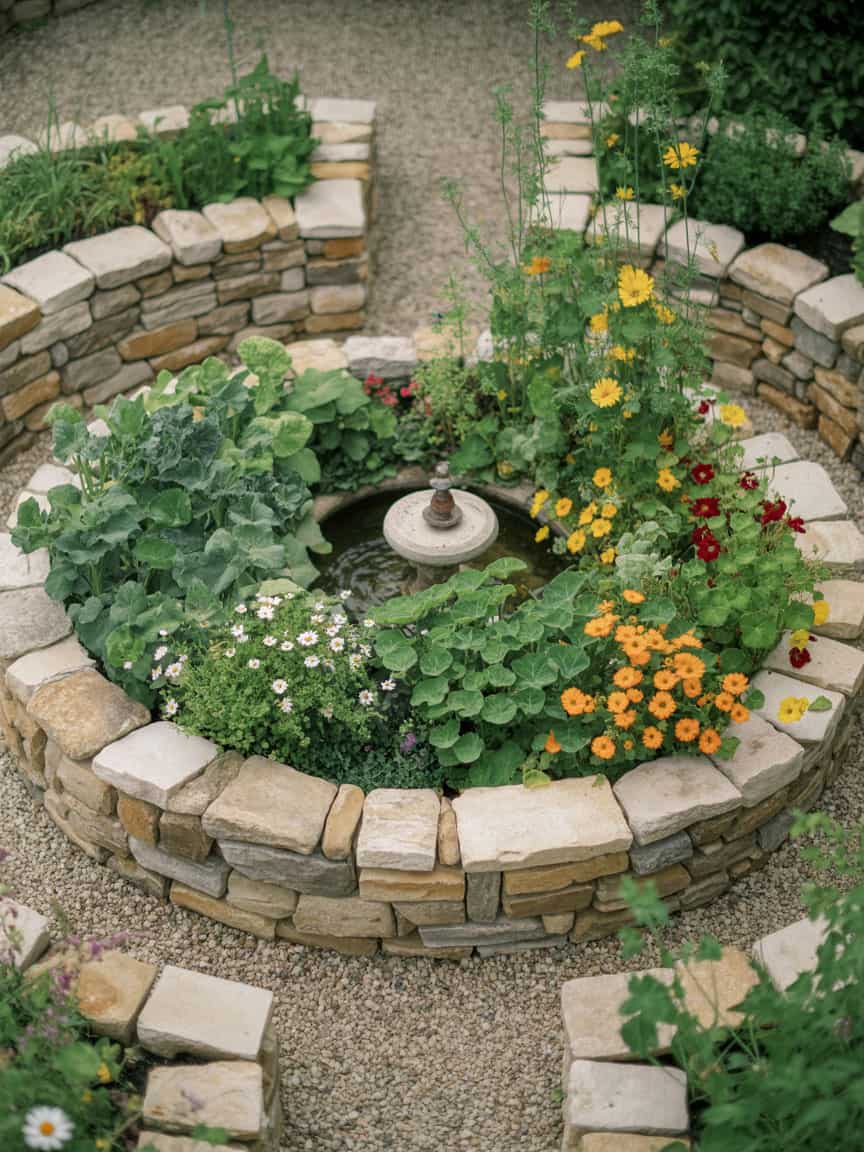
16. Cottage Stone Keyhole Herb Garden With a Central Water Fountain
Introducing a fountain infuses the garden with a sense of ambience. The gentle sound of flowing water transforms the space, encouraging visitors to linger rather than rush through the harvesting process.
Herbs coexist with flowering plants, softening the sharp edges of the stone walls and creating a serene environment. It feels like an inviting space for pausing, where one can casually harvest a handful of leaves and take a moment to enjoy the tranquility of the garden.
17. Woodland Log Keyhole Herb Garden Featuring Shade-Loving Plants
This design highlights the rustic charm of round log walls, creating a tactile boundary for the garden. Inside, shade-tolerant herbs thrive, while fallen leaves naturally integrate into the design rather than becoming a nuisance.
This approach is particularly forgiving, embracing seasonal changes and aligning with natural cycles rather than resisting them. It fosters a sense of harmony with the surrounding environment.
18. Radial Wedge Keyhole Herb Garden With Color-Themed Planting
In this layout, color becomes the guiding principle. Each wedge displays a distinct color palette, making the garden visually engaging and easy to navigate. Herbs are grouped not only by their growth habits but also by their hues, creating a cohesive design.
This design strikes a playful balance between structure and creativity, making it ideal for gardeners who appreciate visual order alongside botanical diversity.
19. Pollinator-Focused Keyhole Herb Garden With a Shallow Water Dish
A low water dish at the center of this garden invites pollinators while maintaining accessibility for gardeners. The harmonious blend of herbs and flowers produces a layered, loose appearance that feels inviting and productive.
What stands out in this design is the balance between productivity and ecological harmony. The garden remains practical while supporting a vibrant ecosystem that enhances the overall health of the space.
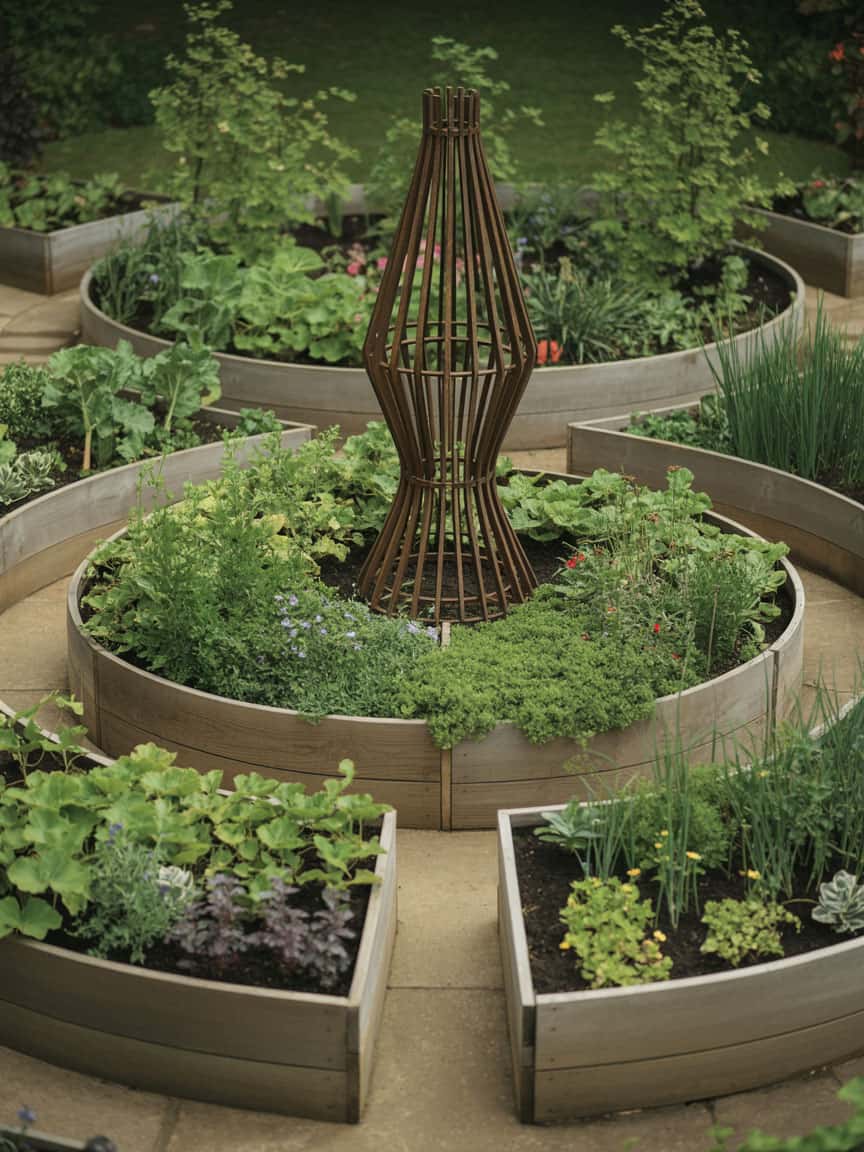
20. Contemporary Multi-Bed Keyhole Herb Garden Featuring a Sculptural Centerpiece
Repetition in this design creates a sense of cohesion, with multiple circular beds echoing the keyhole shape. The sculptural centerpiece ties the entire garden together, enhancing its visual appeal.
This intentional approach allows for adaptability; you can expand or contract the system without compromising clarity, making it suited for evolving gardening projects.
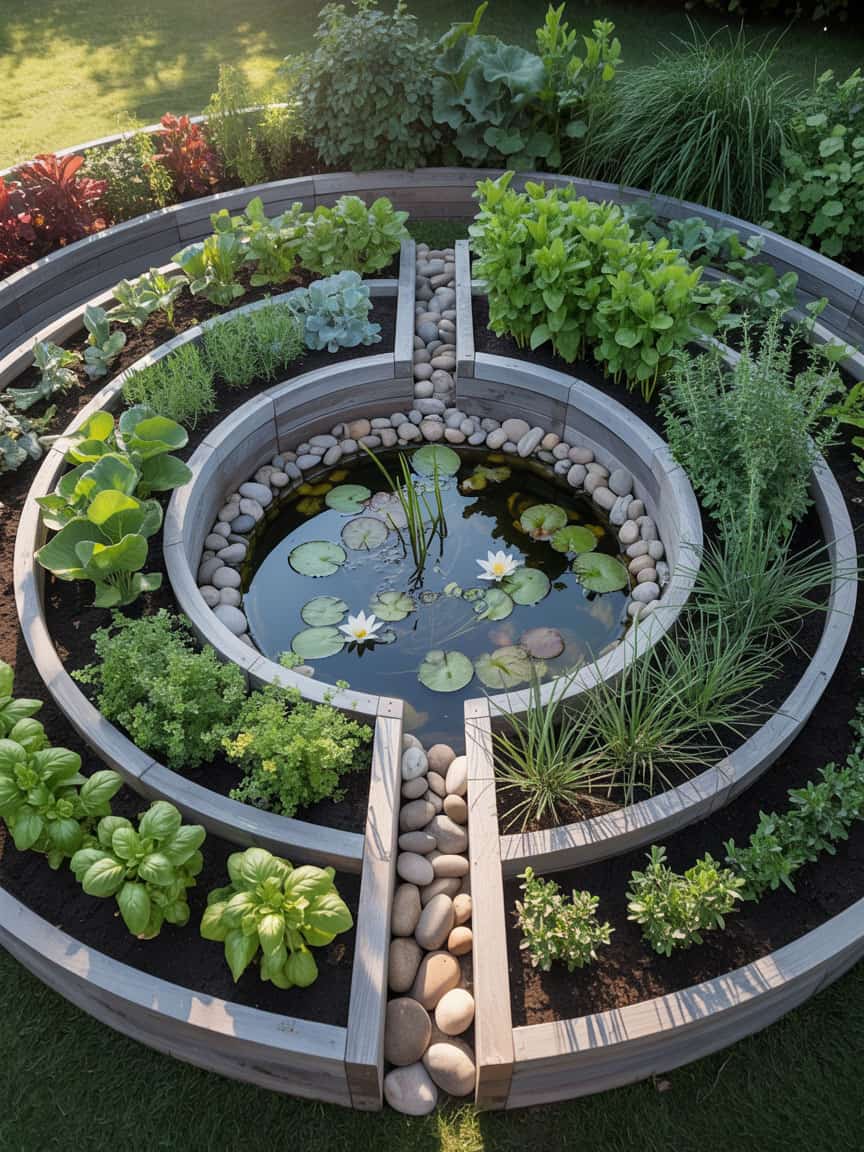
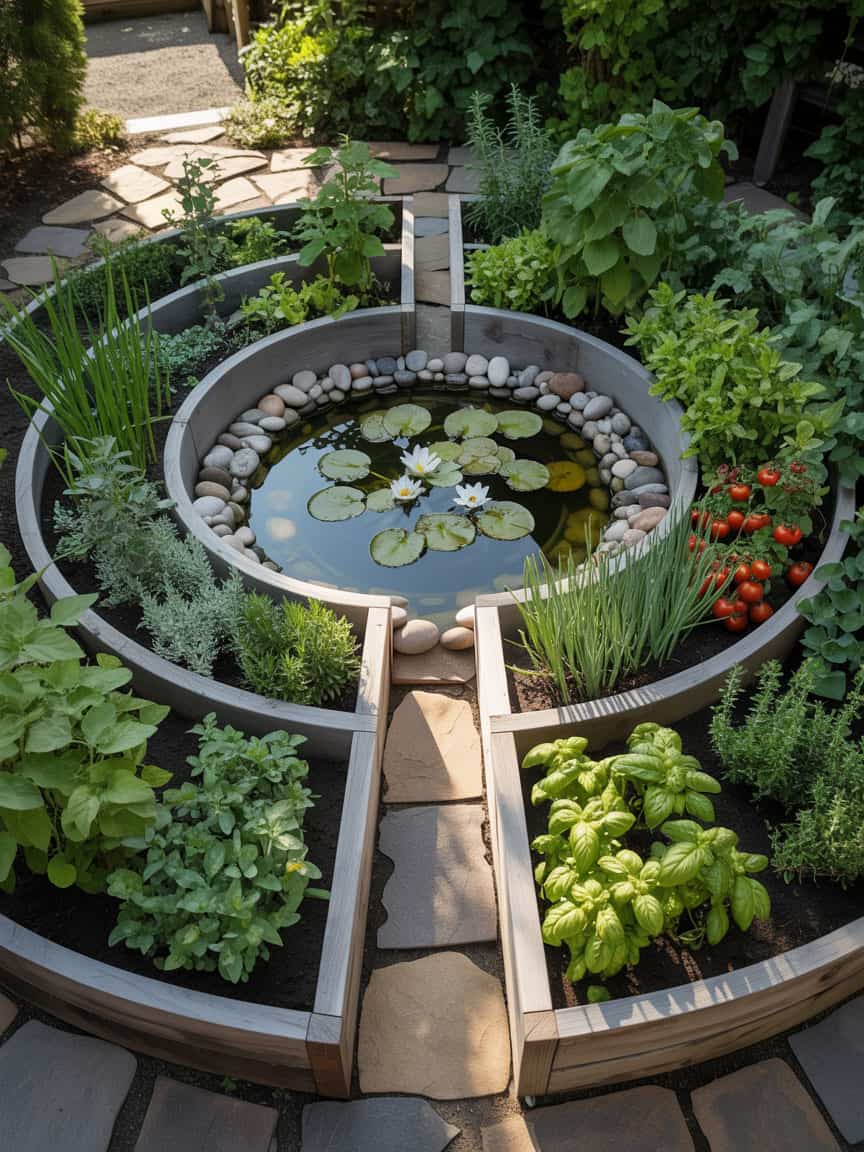
21. Water-Lily Keyhole Herb Garden Surrounded by Edibles and Herbs
Ending with water brings the concepts of this design full circle. A pond filled with water lilies serves as the focal point, with herbs and edible plants surrounding it in a harmonious arrangement.
This layout maintains a clear path for access while supporting a blend of utility and tranquility. The design beautifully merges the purpose of harvesting with the calm of reflection, creating a well-rounded garden experience.
Ultimately, what resonates most about keyhole herb gardens is their remarkable flexibility. They can embody boldness or subtlety, be productive or contemplative, and exist in a permanent or evolving state. The shape offers a framework that is entirely open to personal expression.
Regardless of whether you choose stone, wood, water, or simple plants, a keyhole herb garden prompts you to consider how you navigate your space and interact with your growing landscape. Over time, these gardens transition from merely providing herbs to becoming cherished places that invite you back, season after season, with intention.