Table of Contents
Explore these essential ideas to transform your dining room into a modern masterpiece. From color palettes to furniture choices, each section is designed to provide you with inspiration and practical tips for creating a stylish and functional dining area.
1. Soft Neutral Color Palette
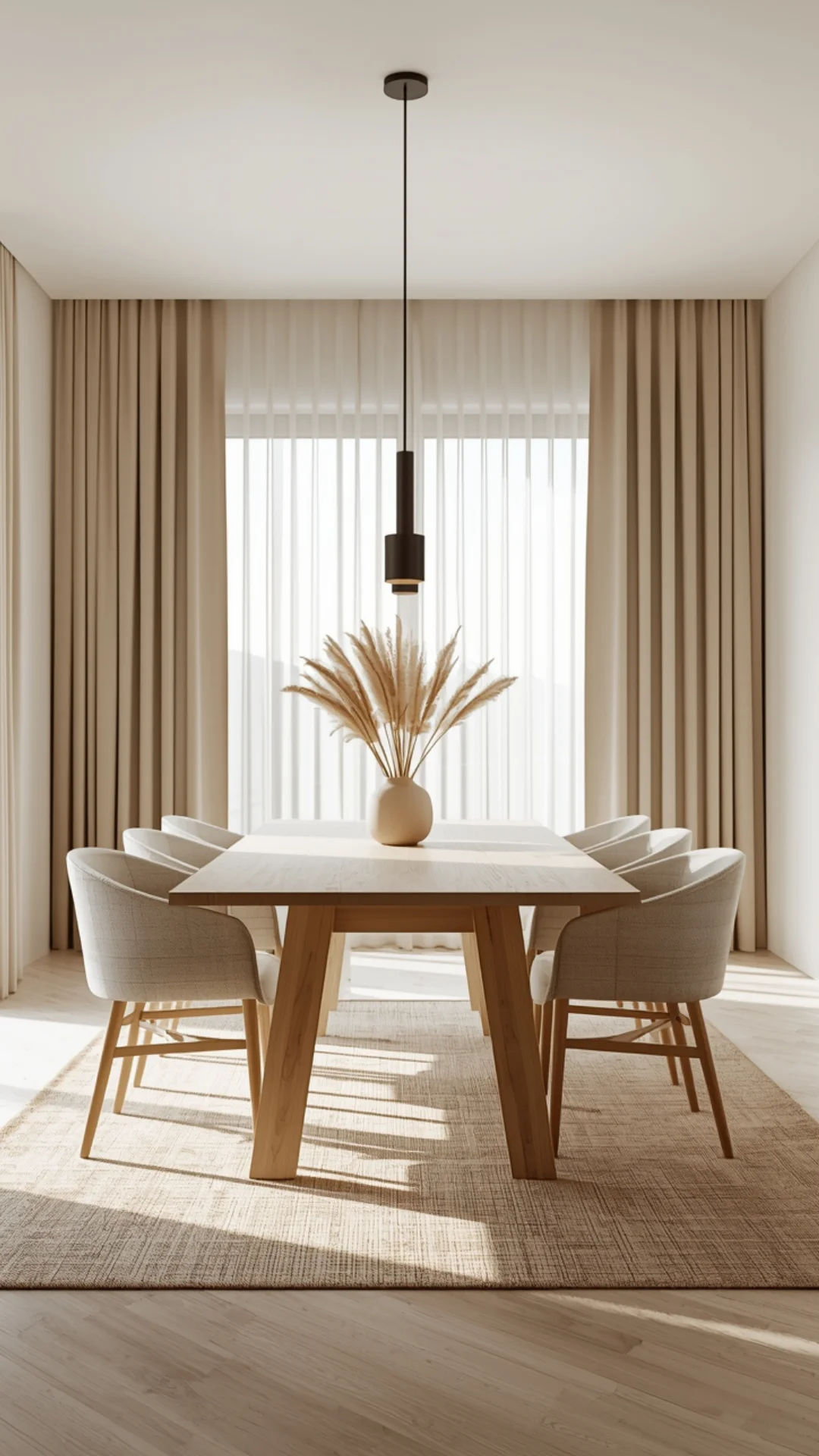
A soft neutral color palette serves as the perfect foundation for a modern dining room, offering a serene and inviting atmosphere. Shades such as warm whites, soft beiges, greige, and gentle taupes reflect light beautifully, helping to create a sense of openness and airiness in the space. These colors not only make rooms feel larger and brighter but also provide a timeless backdrop that withstands shifting design trends.
Utilizing a variety of tones and finishes within a neutral scheme can prevent the space from feeling bland. For example, pairing warm white walls with beige drapes, greige upholstered seating, and a light taupe area rug can create a sophisticated ambiance that feels both cohesive and inviting. Such thoughtful layering of colors adds depth and interest to the overall design.
Designer Pro Tip: When selecting white paint, opt for whites that feature warm undertones. This choice ensures that your dining area remains inviting rather than feeling cold or sterile.
2. Statement Dining Table
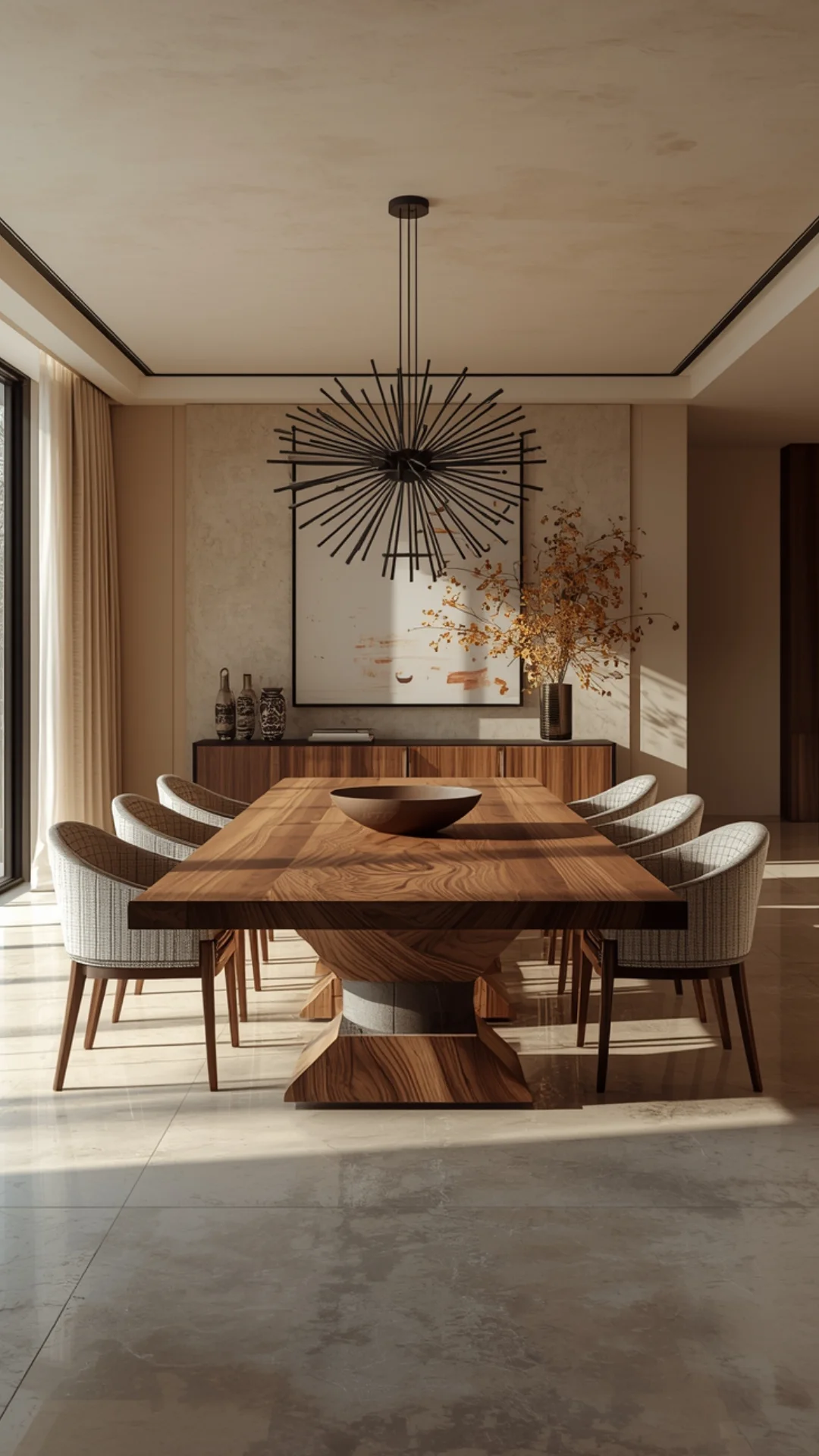
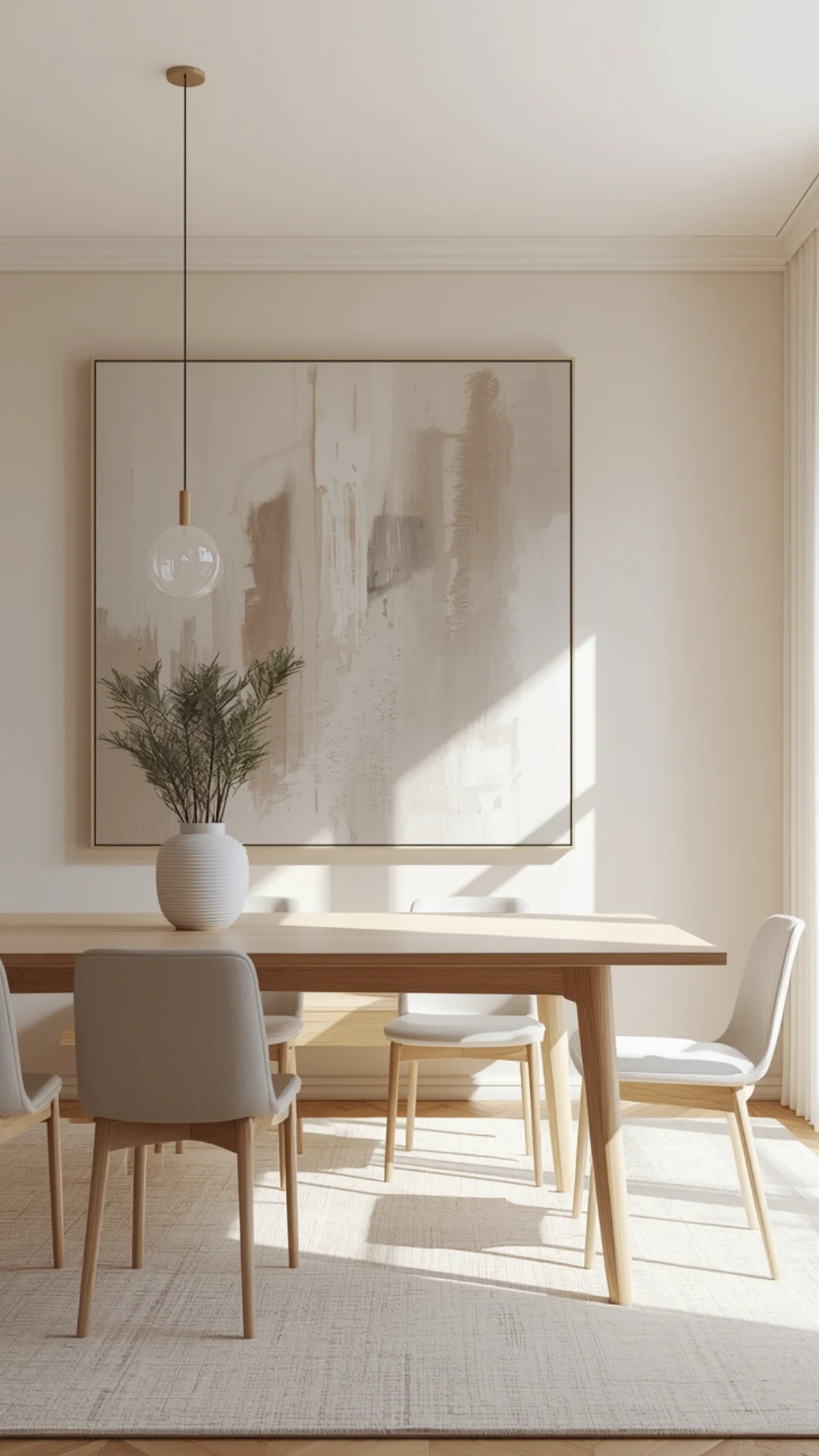
The dining table is often the focal point of the room, making its design crucial to the overall aesthetic of your dining area. In modern dining room design, a well-chosen table serves as both a functional piece and a visual anchor that can elevate the entire space. A table that is substantial yet proportionate to the room creates a sense of balance and harmony.
When selecting a table, consider materials that resonate with your personal style and the space’s overall feel. Solid wood tables provide warmth and texture, marble tables exude luxury, and glass tables can enhance the perception of space in smaller areas. A distinctive table design can instantly uplift a simple room, creating a polished look.
Designer Pro Tip: If you’re working with a compact dining area, a round pedestal table is an excellent option. It maximizes seating while facilitating movement around the space.
3. Comfortable Yet Minimal Dining Chairs
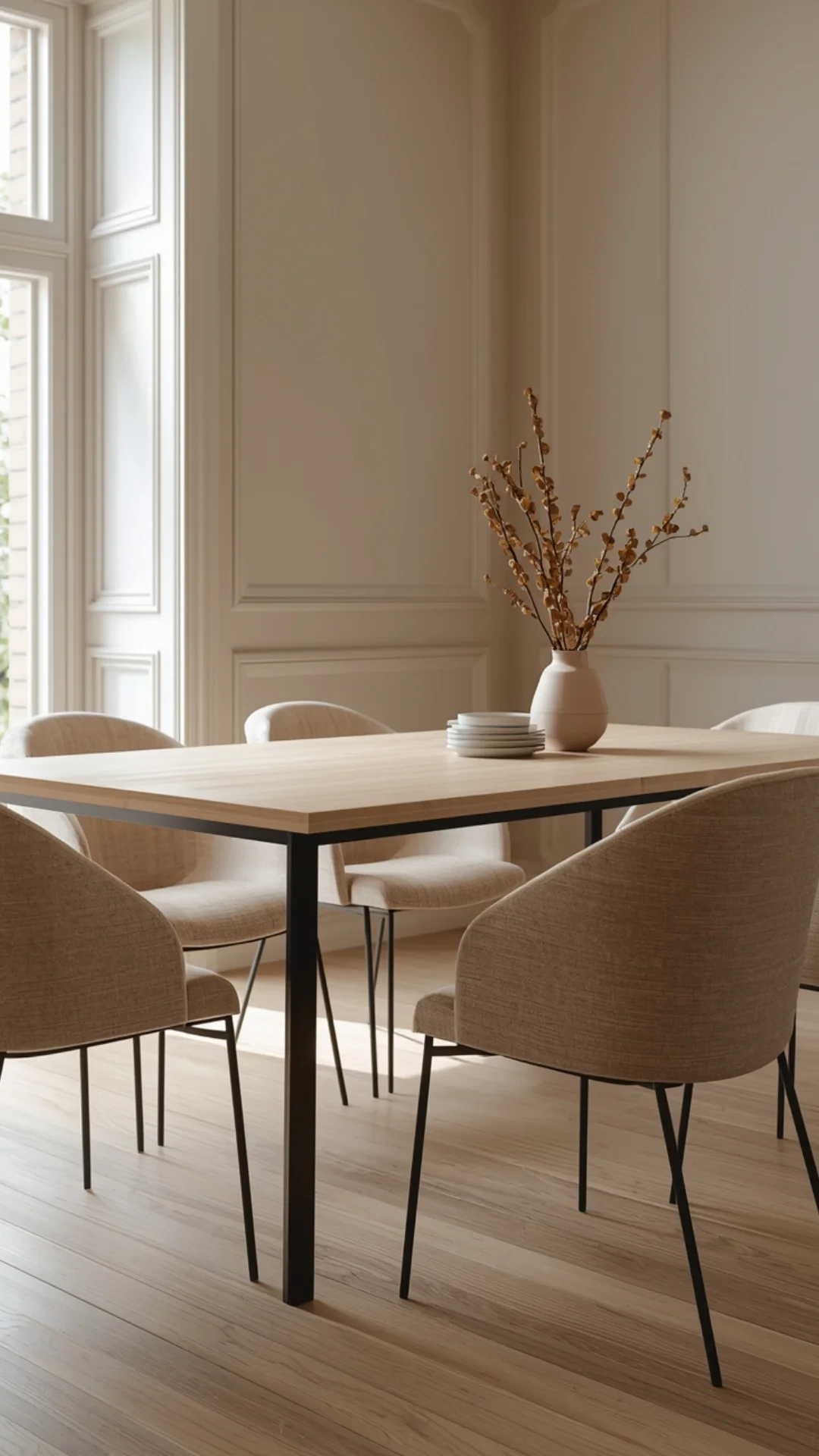
Comfort is paramount in any dining room, especially when it comes to seating. No matter how stunning your table looks, if the chairs are uncomfortable, the dining experience can suffer. Modern dining chairs should provide ample support while maintaining a visually light and uncluttered appearance.
This consideration is particularly vital in smaller homes or open-plan layouts, where bulky furniture can overwhelm the space. Choosing the right chair design can add comfort without disrupting the clean lines that characterize modern dining areas. Look for chairs with slim legs and open bases to keep the environment feeling airy and spacious.
Designer Pro Tip: Avoid oversized chairs in tight dining spaces. Opt for designs that are sleek and streamlined to maintain an open atmosphere.
4. Warm Ambient Lighting
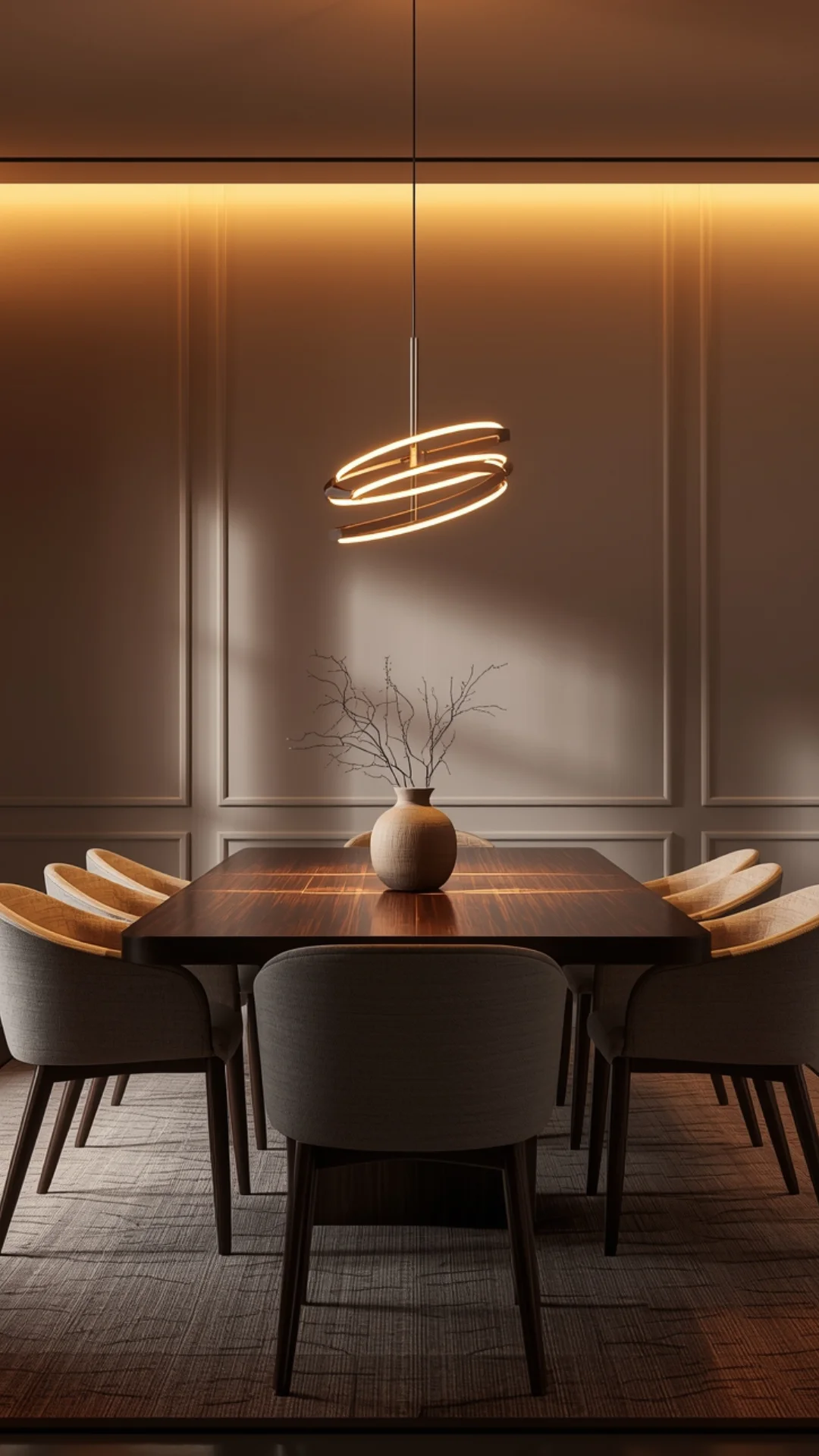
Lighting plays a significant role in shaping the ambiance of your dining room. It influences mood, highlights design elements, and can render the space warm and inviting or stark and unwelcoming. In modern dining rooms, lighting should be soft, layered, and thoughtfully curated to enhance the overall aesthetic.
Proper lighting helps delineate the dining area, especially in open-concept homes where the dining space shares visual territory with the kitchen or living room. A statement light fixture can serve as a distinguishing feature, making the dining zone feel distinct and welcoming. Warm light enhances neutral tones, wooden finishes, and textiles, creating a richer, cozier environment.
Designer Pro Tip: To achieve perfect proportions, hang your dining light fixture between 30 to 36 inches above the table surface.
5. Large Area Rug Under the Table
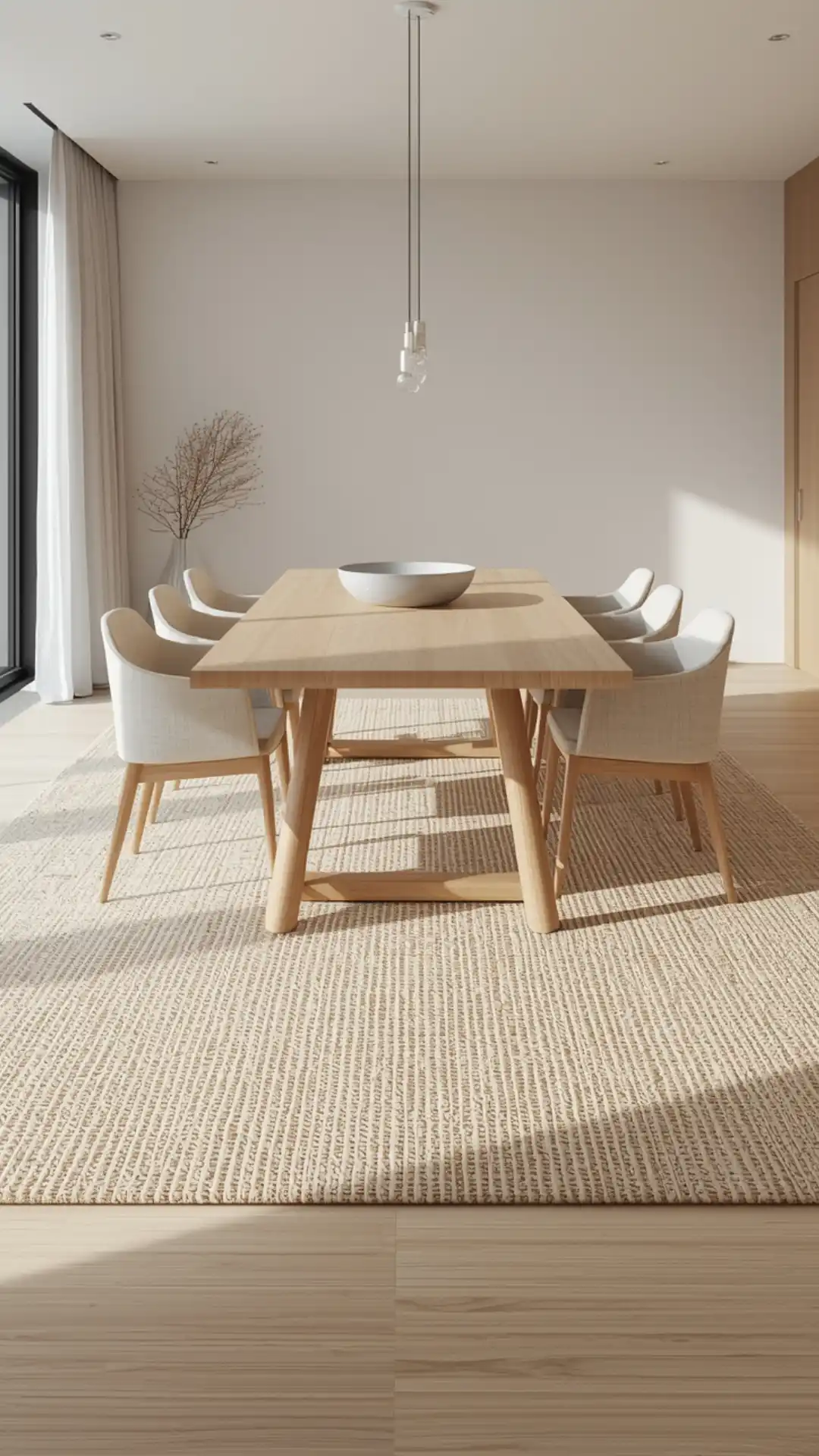
A large area rug serves as an anchor for your dining space, visually defining the area and providing structure, especially in open-plan living environments. Without a rug, a dining table might seem to float within the room, lacking a cohesive presence. A well-chosen rug brings the entire setup together, enhancing the room’s overall feel.
The size of the rug is crucial; opting for a rug that is too small can disrupt the balance of the space. A properly sized rug allows chairs to move freely while still keeping the dining area visually grounded. It creates an inviting atmosphere that encourages gatherings.
Designer Pro Tip: Always measure carefully. A rug that is too small can make the whole room feel cramped and uninviting.
6. Minimalist Storage Solutions
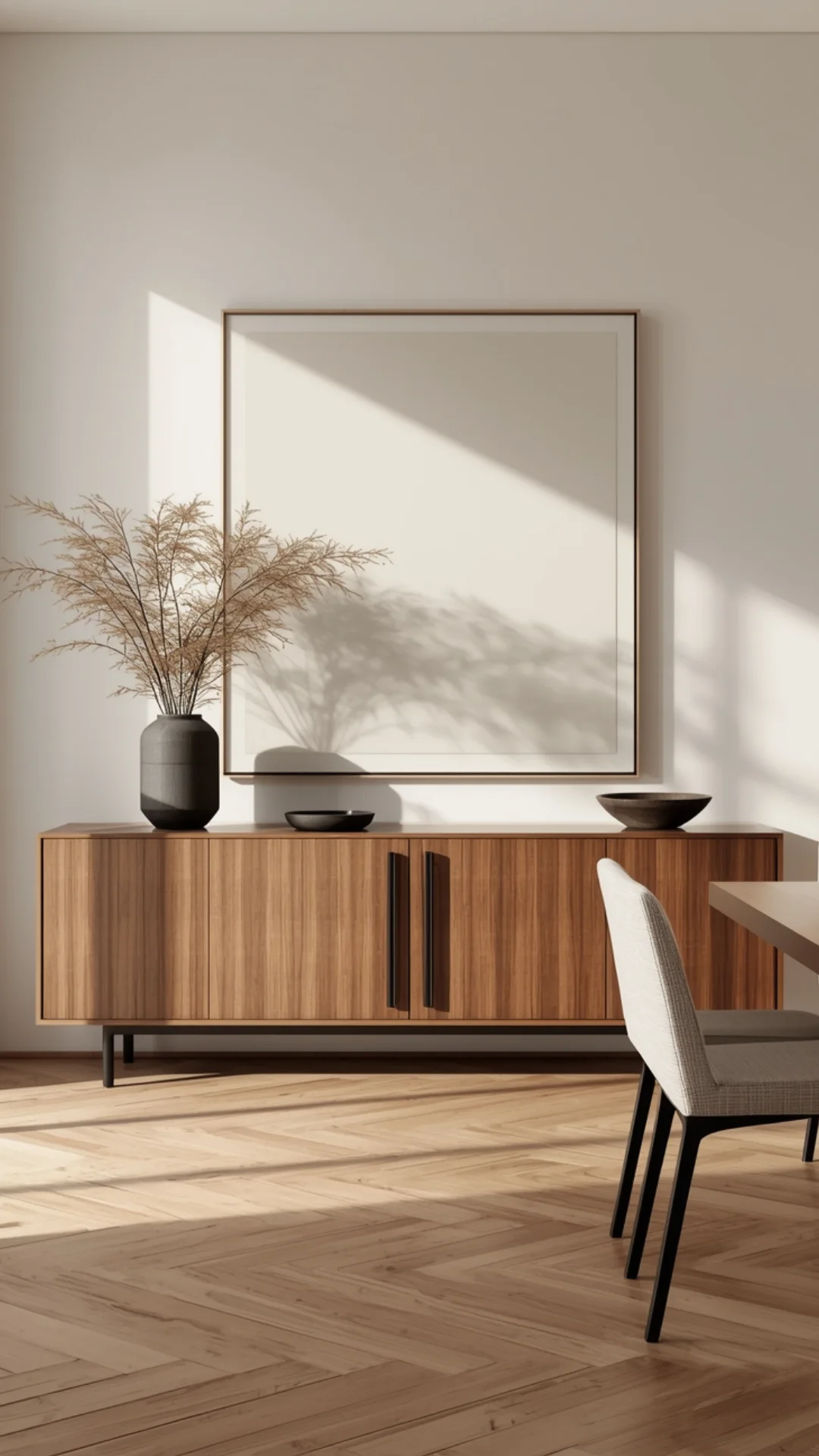
Effective storage solutions are essential for maintaining a functional dining room. A beautifully styled space can quickly lose its charm if clutter accumulates from tableware, papers, and miscellaneous items. In modern design, clutter detracts from the serene and organized look that homeowners strive to achieve.
Modern storage should be simple, practical, and visually streamlined. Opt for pieces that feature clean lines and subtle finishes while providing adequate interior organization for your dining essentials. This approach not only keeps the dining area tidy but also facilitates entertaining, allowing easy access to serving pieces and linens.
Designer Pro Tip: When styling your sideboard, limit the decor to a single large vase and one piece of artwork to avoid overcrowding the visual space.
7. Statement Wall Art
Wall art is a fantastic way to inject personality and visual interest into your dining room without taking up valuable floor space. In contemporary interiors, art often serves as a focal point, adding color, movement, and depth to the room with a subtle yet sophisticated touch.
The ideal artwork for a modern dining room should evoke calmness while still being expressive. Consider abstract pieces, minimalist prints, or muted landscape art that complements the room’s color palette. The choice of frame should also align with the overall aesthetic, whether you prefer natural wood, thin black metal, or an unframed canvas look.
Designer Pro Tip: Hang artwork at eye level, typically between 57 to 60 inches from the floor, to ensure it is visually accessible and engaging.
8. Natural Materials and Textures
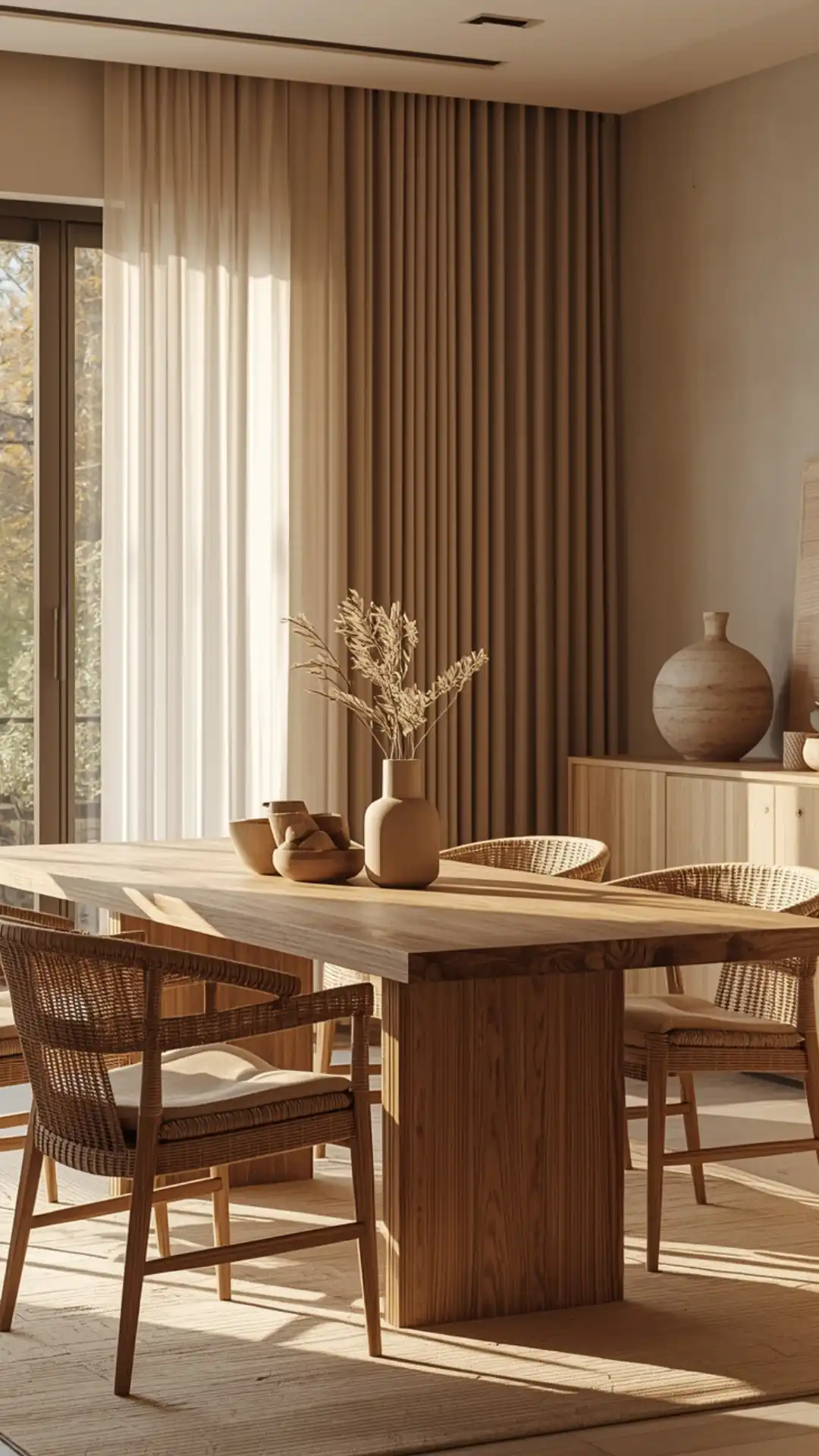
Incorporating natural materials and textures into your dining room design is an effective way to foster warmth and balance. Modern dining rooms benefit from these elements, as they help create a grounded and inviting atmosphere while connecting the space to everyday life.
Natural materials pair beautifully with a neutral color palette. Light oak, walnut, rattan, jute, and matte ceramics can enhance the decor without overwhelming the senses. This approach is particularly important in modern designs, which often rely on subtle contrasts rather than bold statements to create visual interest.
Designer Pro Tip: Combine smooth surfaces like glass and metal with organic textures such as wood and fabric to strike a perfect balance in your dining area.
9. Open and Airy Layout
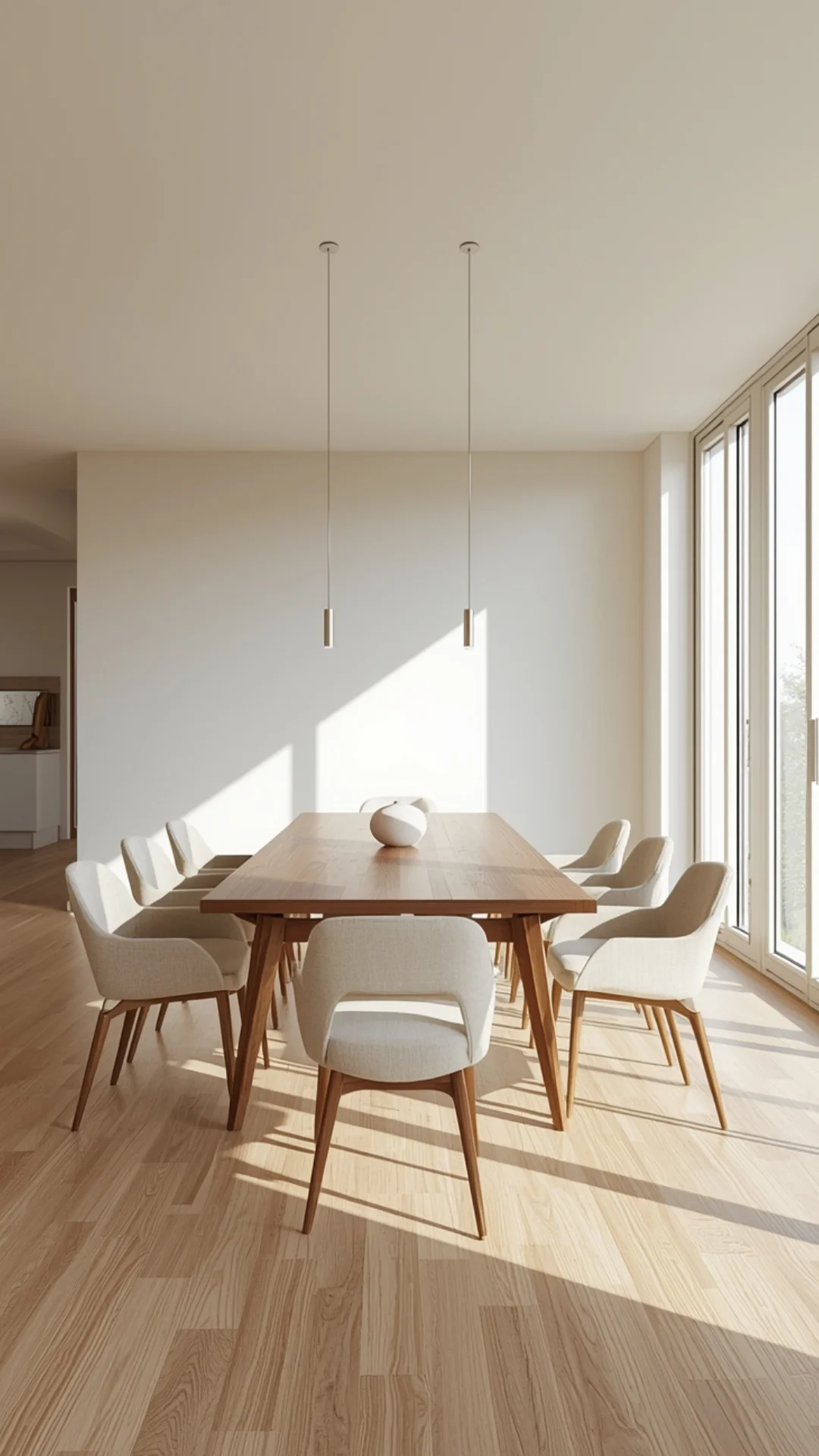
The layout of your dining room significantly influences its functionality and comfort. Even the most aesthetically pleasing furniture can feel awkward if the space is cramped or poorly arranged. In modern dining room design, an open layout is just as vital as the furniture itself.
Creating an airy layout enhances the overall feel of the room, contributing to a calm and refined atmosphere. Ensuring ample space around each piece of furniture makes the room appear more intentional and visually appealing. Resist the urge to fill every empty corner; negative space is a crucial element of modern design.
Designer Pro Tip: If space is limited, consider using benches on one side of the table instead of bulky chairs to maximize seating without overcrowding the area.
10. Subtle Decorative Accents
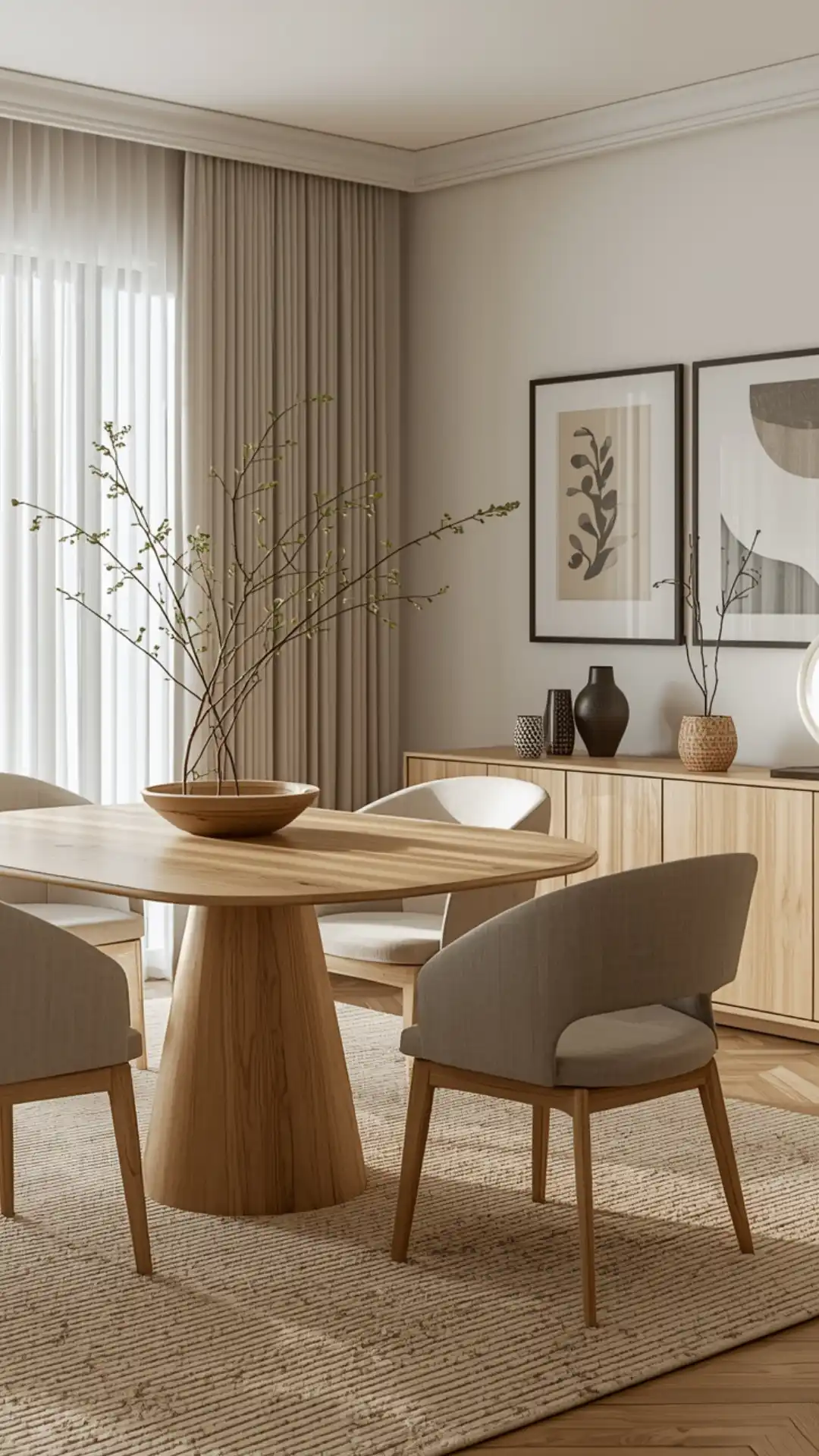
Modern dining rooms thrive on restraint, and the goal is not to clutter the space with excessive decoration. Instead, select a few meaningful accents that can enhance the overall design without overwhelming it. This final layer of styling is what imparts personality and sophistication to the room.
The most effective modern dining room decor feels intentional and effortless. Rather than scattering numerous small accessories, focus on fewer pieces that make a bold visual impact. Seasonal changes in decor can also refresh the space without necessitating a complete overhaul.
Designer Pro Tip: Rotate decor items periodically to keep the space feeling fresh without permanently adding more clutter.
Frequently Asked Questions
Creating a modern dining room does not demand extensive renovations or a hefty budget. By concentrating on clean lines, warm lighting, comfortable seating, practical storage, and a clutter-free design, you can transform your dining space into a beautiful and functional area.
What makes a dining room modern?
A modern dining room design is characterized by clean lines, neutral colors, minimal decor, and functional furniture that emphasizes simplicity and elegance. Integrating layered lighting, quality materials like marble or solid wood, and maintaining a minimal yet intentional decor approach are key components.
How do I make my dining room look more luxurious?
To enhance the luxury of your dining room, choose a rug that extends at least 24 inches beyond all sides of the table, allowing for comfortable chair movement. Additionally, consider using high-quality materials and finishes, along with layered lighting that creates a soft and inviting atmosphere.
What size rug should I use under a dining table?
For optimal functionality and aesthetics, select a rug that extends at least 24 inches beyond the dining table on all sides. This allows enough space for chairs to slide in and out comfortably while visually grounding the dining area.
Are round dining tables better for small spaces?
Yes, round dining tables are advantageous for smaller spaces as they enhance flow and eliminate sharp corners, making them ideal for compact dining areas.
Should dining room furniture match exactly?
Not necessarily. Coordinating tones and materials can create harmony in the space without requiring identical pieces, allowing for a more eclectic and personalized design.