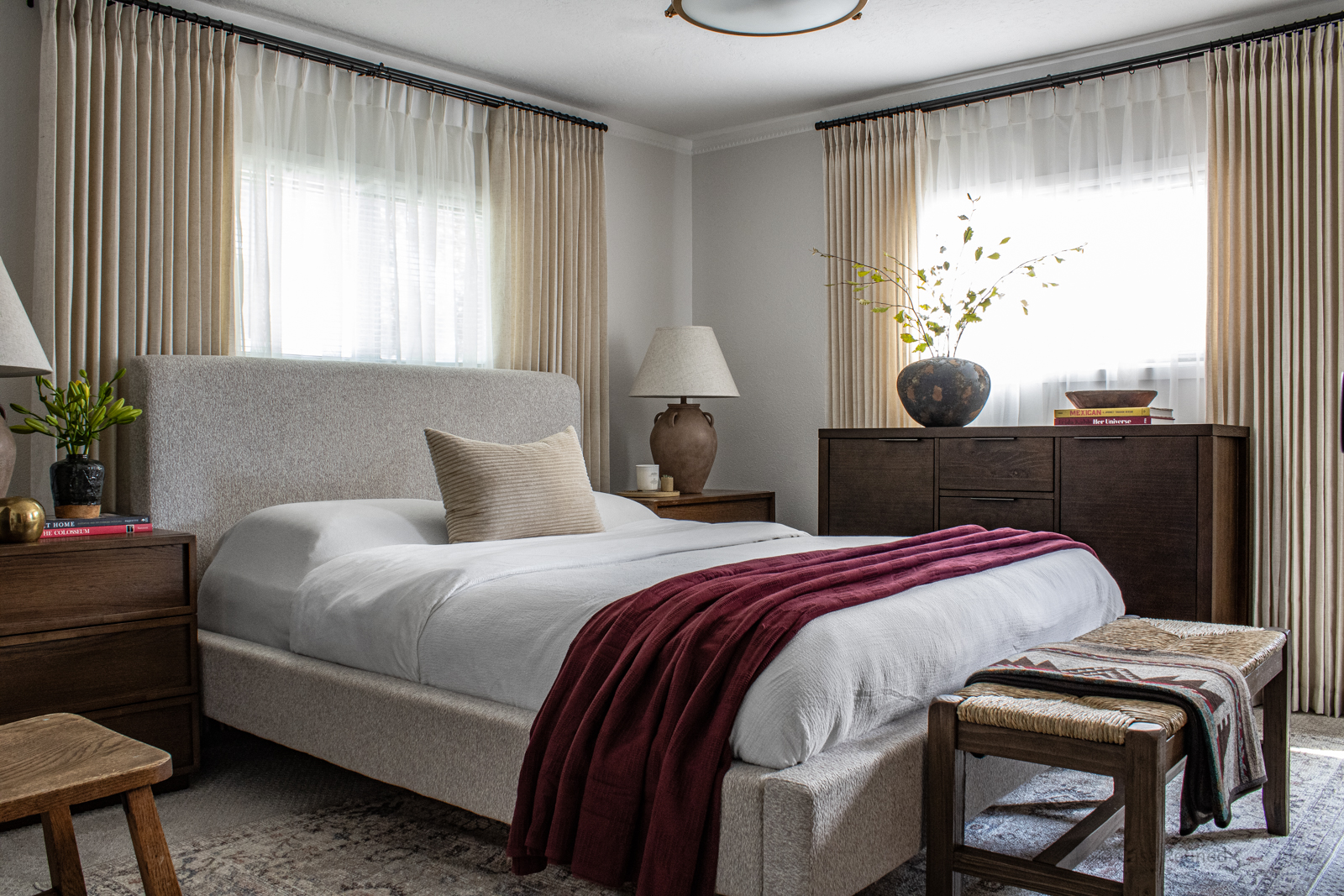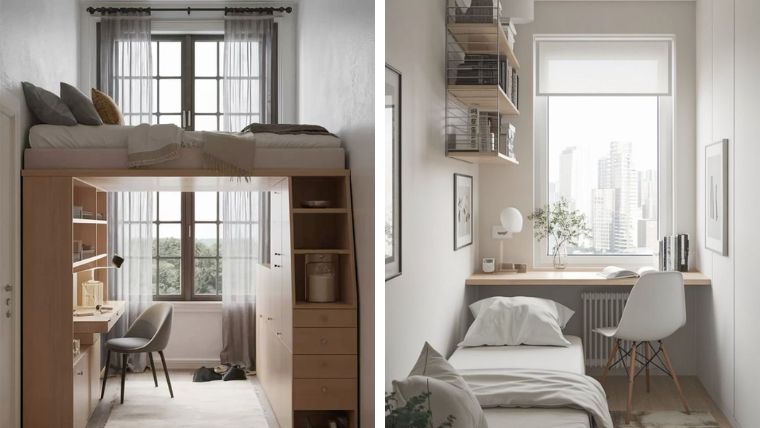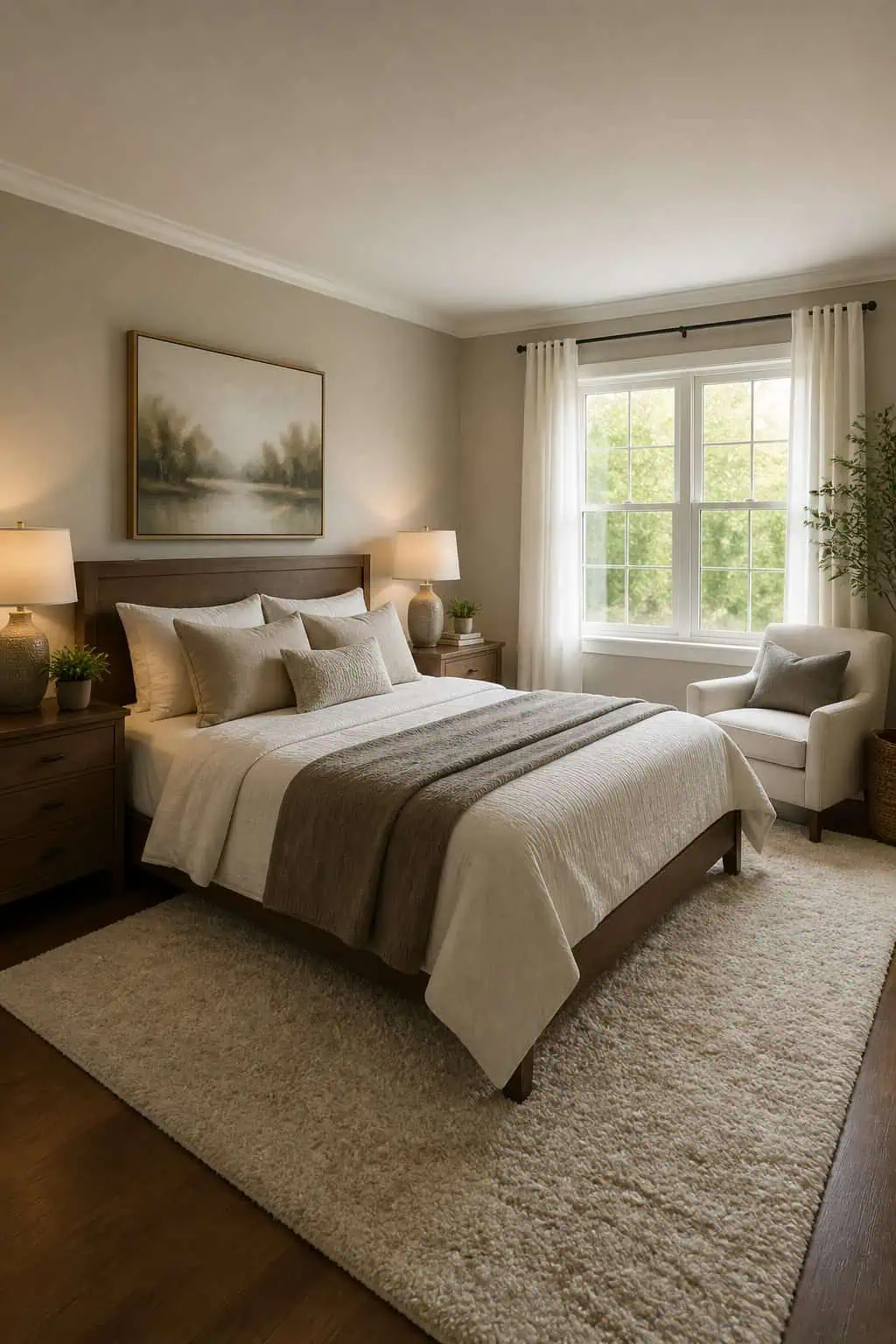
Are you ready to transform your bedroom into a space that feels both stylish and functional? The right bed placement can significantly enhance the flow and ambiance of the room, making it a cozy retreat. Rather than treating the bed as an afterthought, prioritizing its position can help the rest of the room fall into place seamlessly. By carefully considering aspects such as room size, decor style, and budget, you can create an inviting sanctuary that feels perfectly curated.
Looking for a stylish bedroom layout?
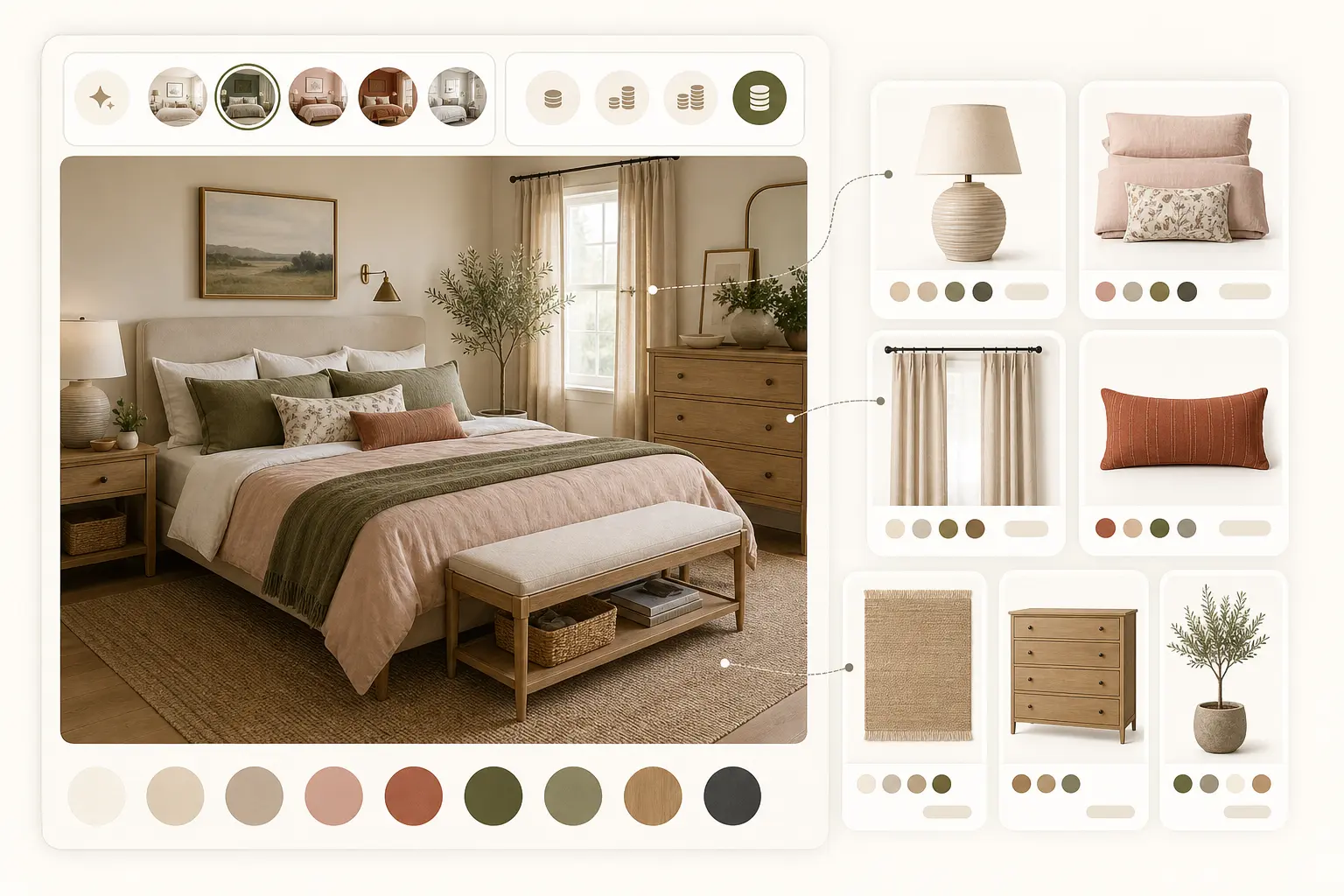
Designing a bedroom that is not only aesthetically pleasing but also functional can be a challenge. To simplify this process, consider collaborating with design experts who can help you select the right pieces that work together harmoniously. By utilizing resources like curated product boards, you can visualize how each item complements the others, leading to a cohesive and well-designed space.
This article presents a variety of seventeen effective layout strategies to address common bedroom design dilemmas. Whether you’re dealing with awkward room proportions, sloped ceilings, or compact spaces, each suggestion comes with practical reasoning that explains why the proposed arrangement works effectively.
For a straightforward and accessible option, enter your email to receive this guide directly in your inbox. This way, you can easily refer back to it as you embark on your bedroom planning journey.
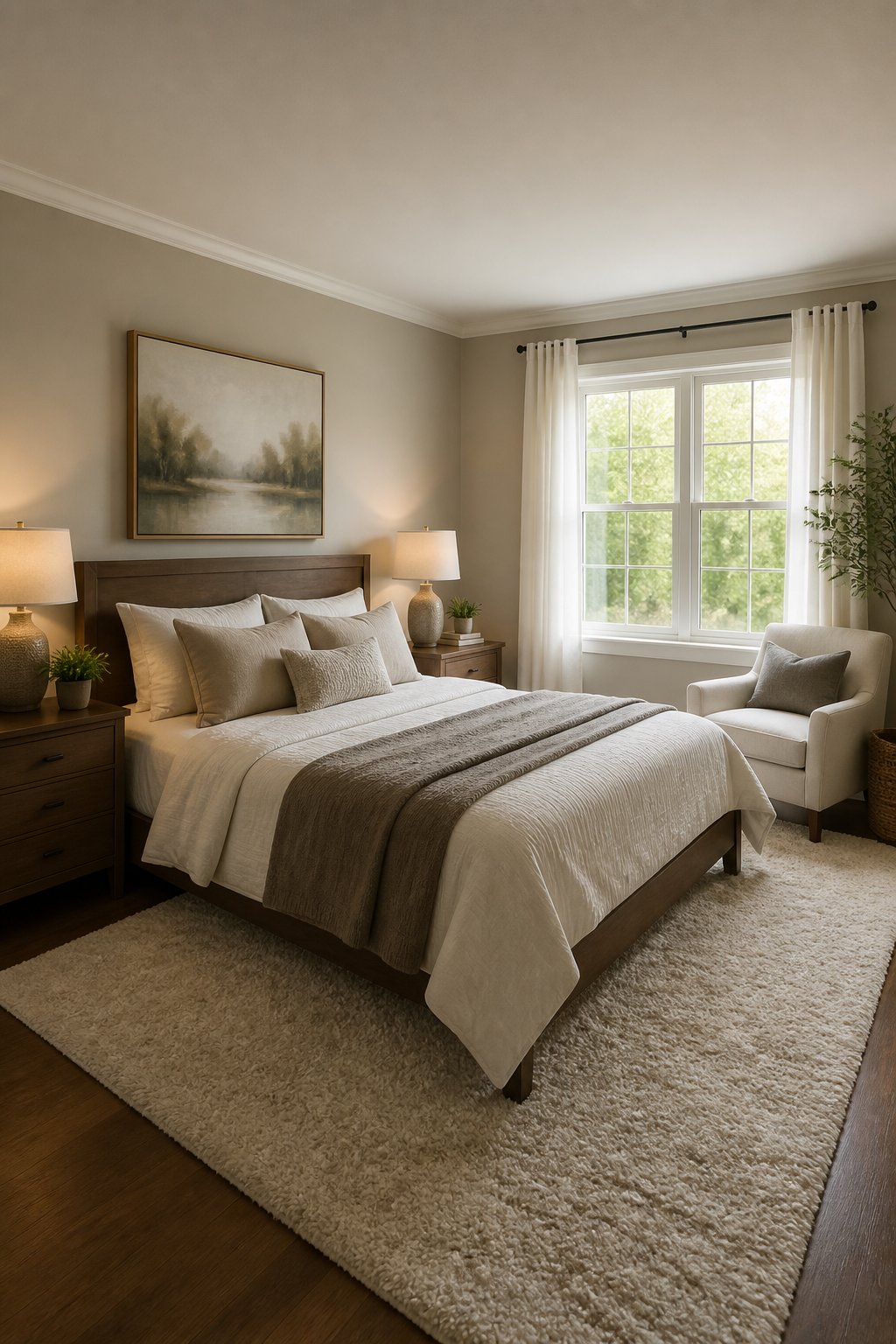
1) Position the Bed Centrally on the Main Wall With Floating Nightstands
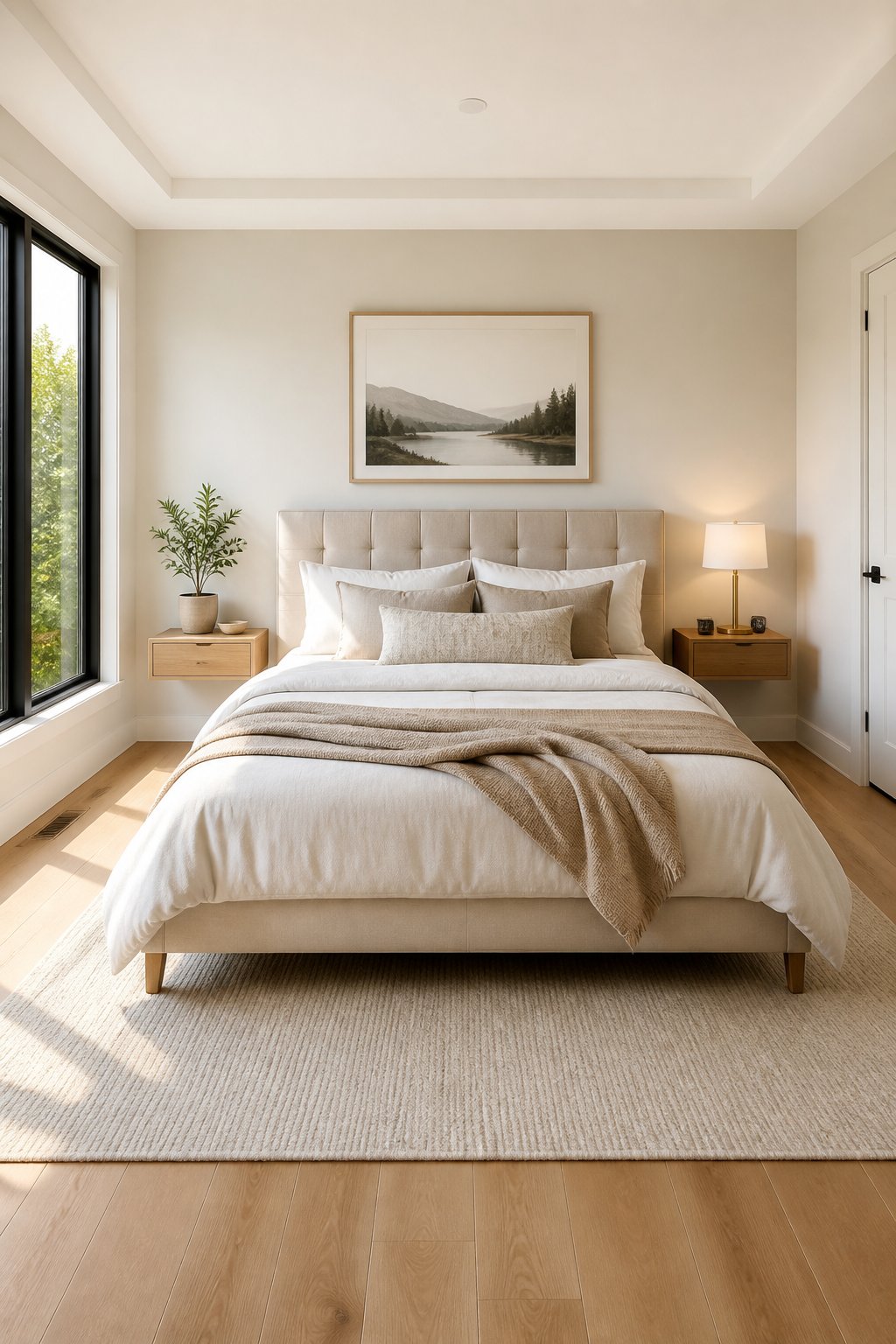
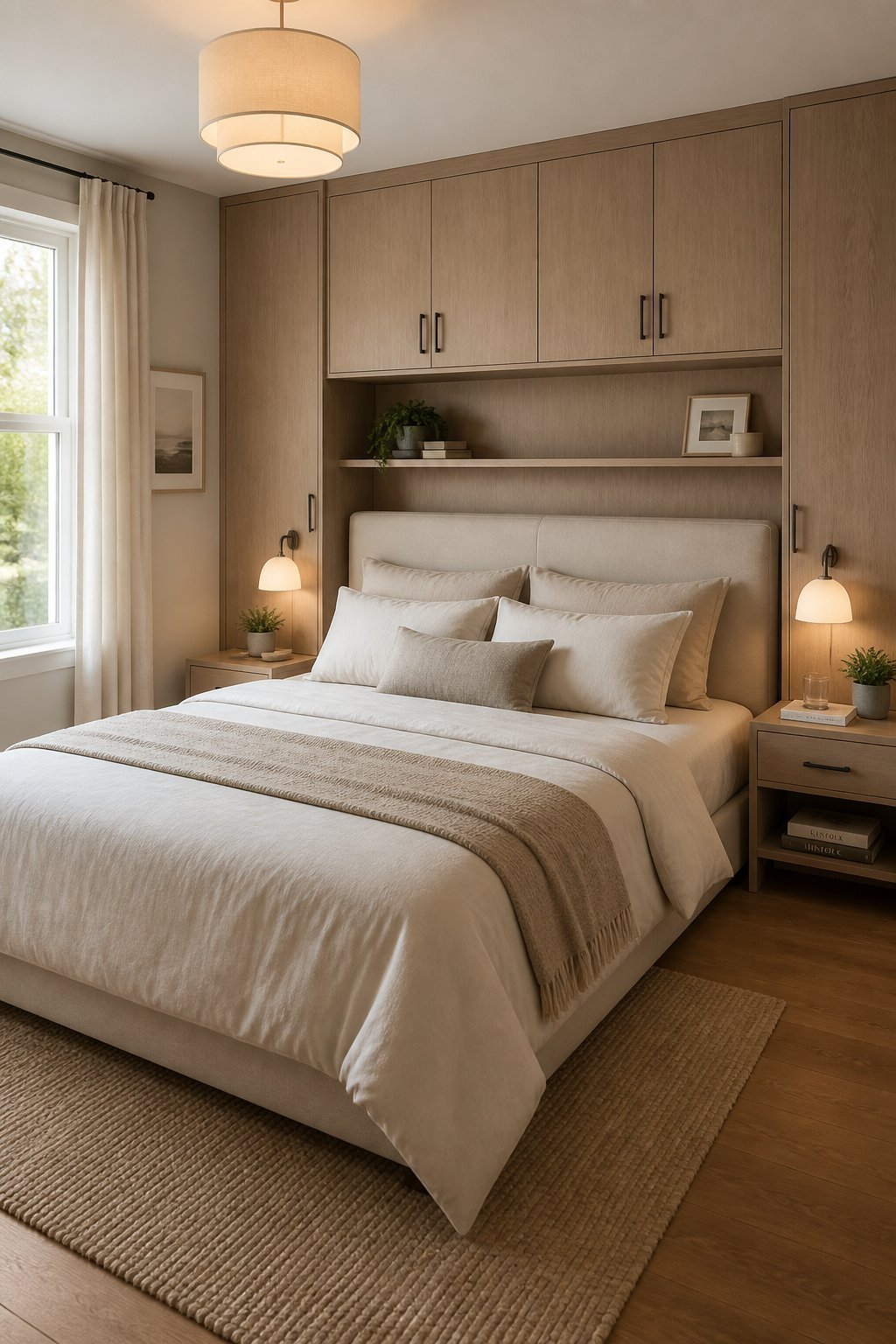
Centering the bed on the main wall creates a striking focal point in the room, while floating nightstands on either side help maintain an open and airy feel. This arrangement visually grounds the space and provides balanced sightlines, contributing to an atmosphere that feels calm and orderly as you enter.
By placing the bed in this manner, you ensure equal clearance on both sides, facilitating easy movement around the room. This not only enhances the perception of space but also makes the area feel larger than it is. The floating nightstands allow light to flow uninterrupted to the floor, which can be particularly beneficial if you have baseboard heaters or simply desire more open floor space.
To elevate this setup, consider adding wall sconces or swing-arm lights above the nightstands. This will free up surface space while ensuring you have adequate lighting at hand. Aim for a clear walkway of at least 24 inches from the bed edge to any closet or door, and incorporate a runner or narrow rug at the foot of the bed for added symmetry without encroaching on pathways.
Don’t miss out on this guide.
Remember, the bed is a central element of your bedroom, and its placement can dramatically influence the overall feel of the space. By utilizing these expert tips, you can create a layout that not only looks fantastic but also functions well in your daily life.
2) The 45-Degree Corner Angle That Opens Up the Middle
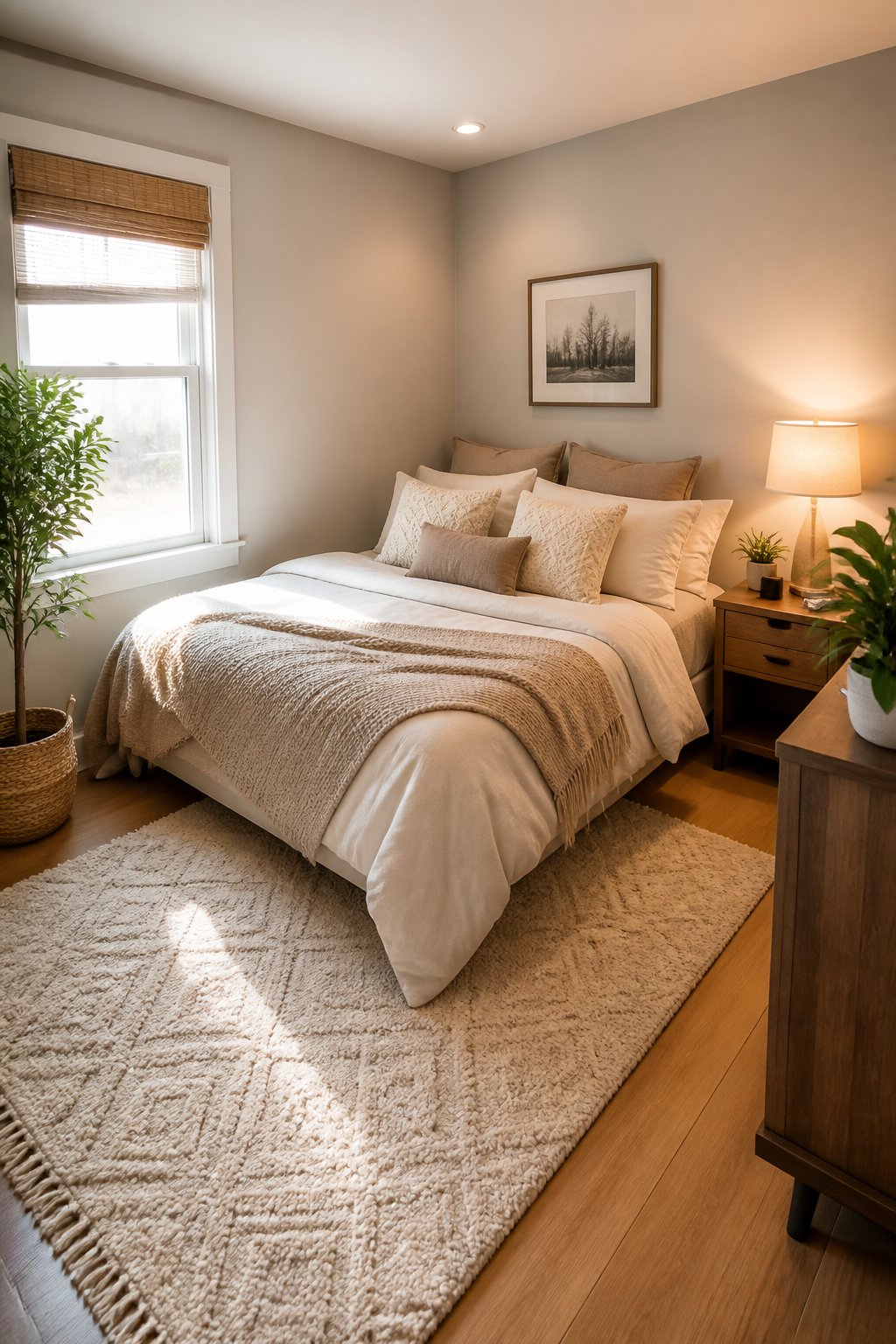
Placing the bed at a 45-degree angle against the room’s corner can break the monotony of a boxy layout, making the space feel more dynamic and inviting. This angled configuration draws the eye toward the corner and creates a sense of intentionality as you approach the bed, transforming what could feel like a cramped area into a cozy retreat.
Visually, the diagonal orientation enhances the sense of space, making the room feel larger than it actually is. By leaving one side open, this approach allows for smooth circulation, which is especially advantageous in smaller rooms. The diagonal placement works well when the room’s dimensions do not support a standard centered arrangement.
To complement this layout, keep a slim nightstand on the open side along with a wall sconce mounted above it. This way, you can save valuable floor space while maintaining functionality. A small rug angled beneath the lower corner of the bed can further anchor the arrangement, signaling that the area is intentionally designed for relaxation.
3) Low Platform Beds in Rooms With High Ceilings
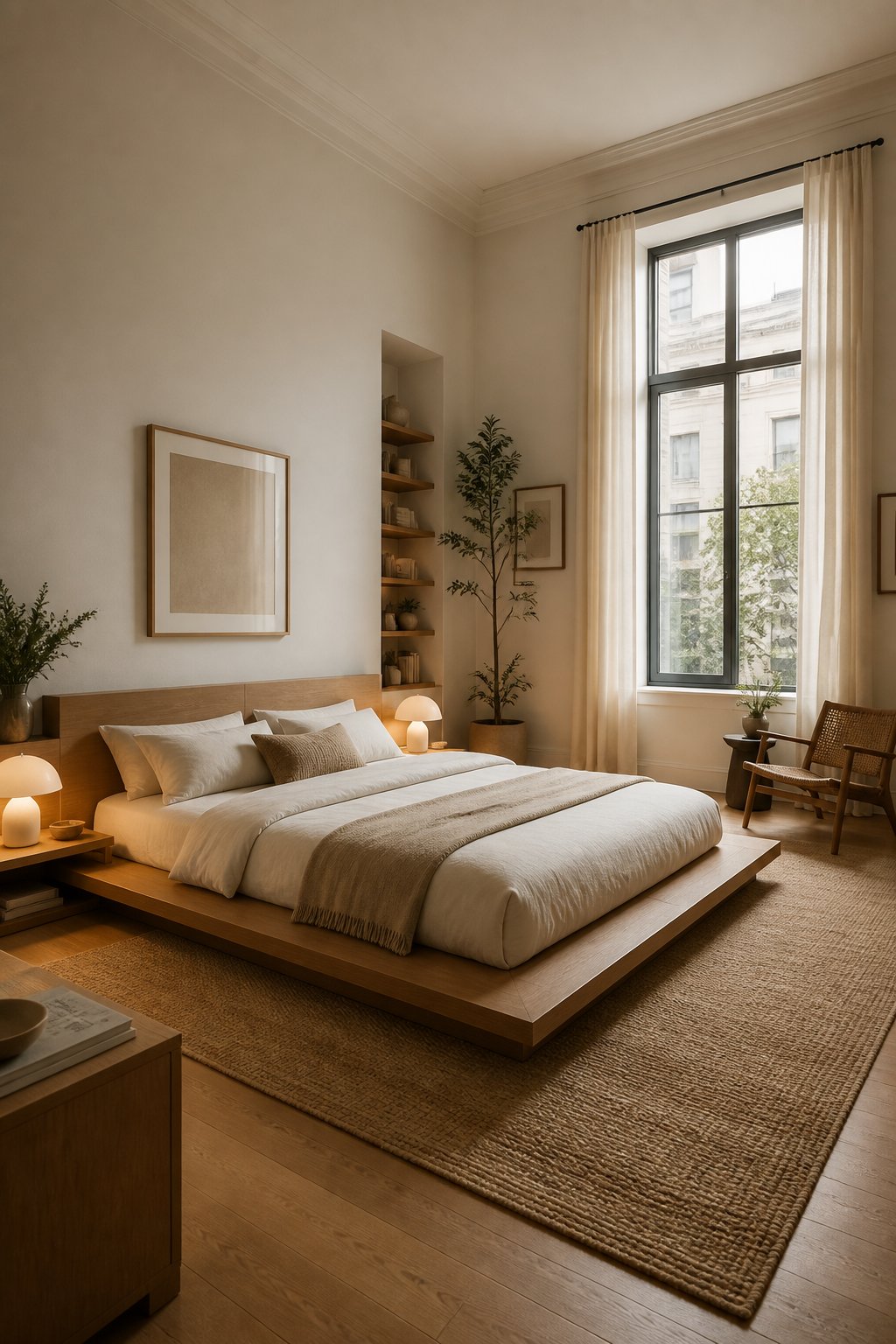
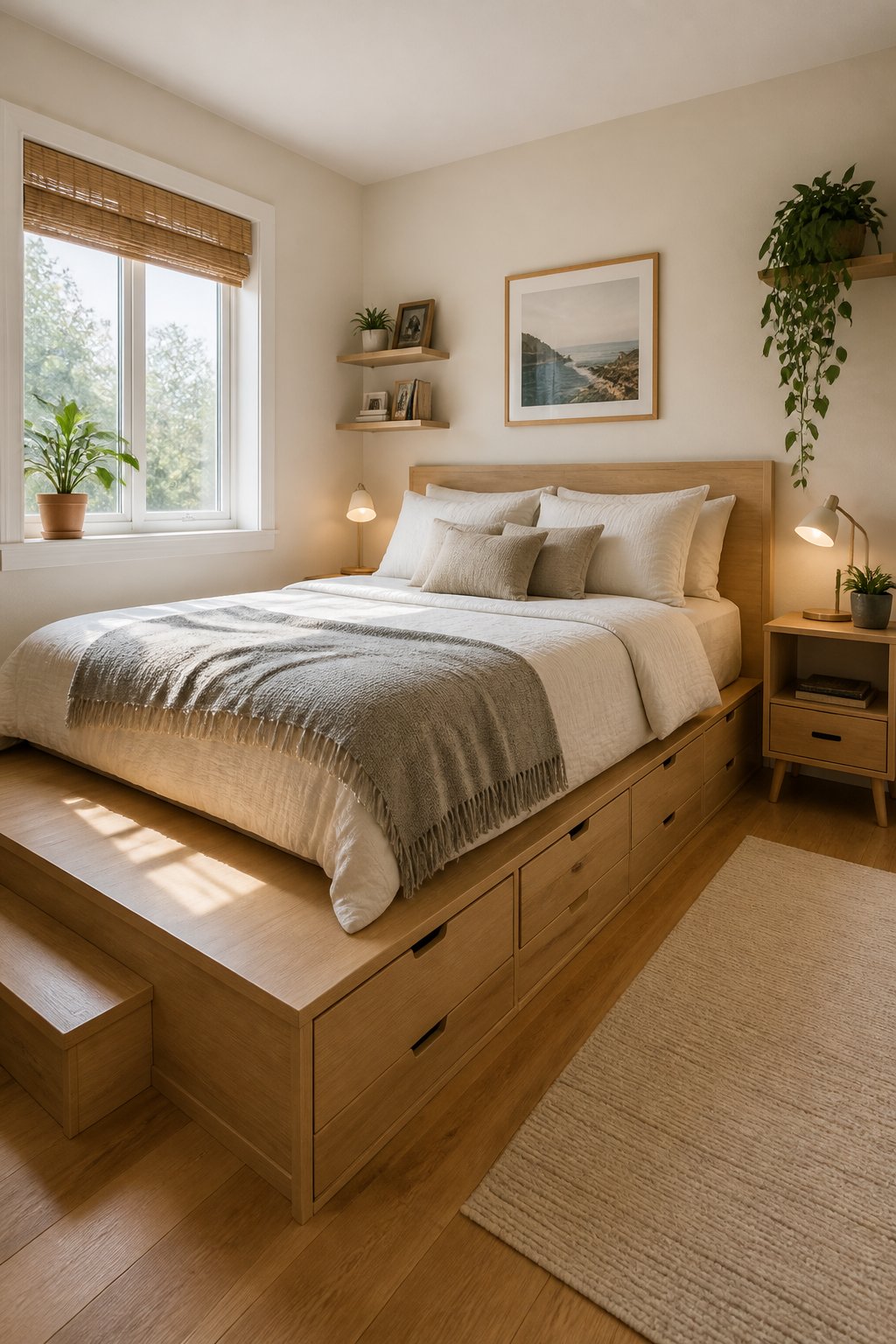
Rooms with high ceilings can often feel sparse if not furnished thoughtfully. A standard bed may seem dwarfed by the vertical space, leaving the room feeling unbalanced. Introducing a low platform bed can effectively counteract this issue by bringing visual weight downwards, creating a more intimate and inviting atmosphere.
With a low platform bed, the focal point is brought closer to eye level, making the space feel more grounded and livable. Sightlines are improved as they naturally terminate lower, thereby enhancing the overall perception of the room. Pairing this bed with a modest or no headboard allows the wall above to remain uncluttered, further emphasizing the spaciousness of the vertical area.
Position narrow nightstands close to the bed’s edge and opt for wall-mounted sconces to keep the floor open and airy. Additionally, selecting a rug that extends well beyond the footprint of the platform bed helps to visually unify the space, making the sleeping area feel distinctly defined without adding bulk.
4) Float the Bed in the Middle of a Studio and Use a Console to Define Zones
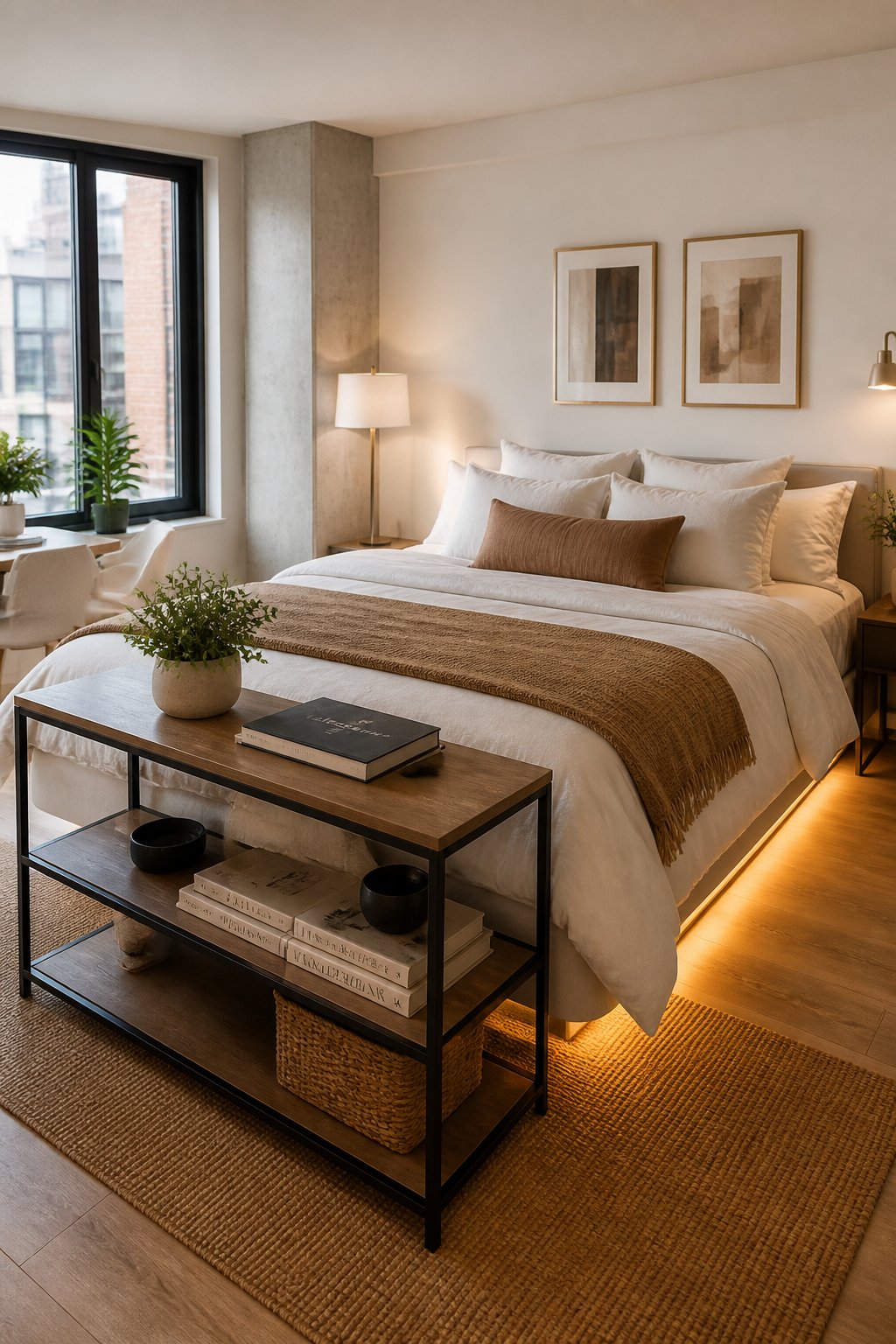
In studio apartments, where every square inch counts, floating the bed in the center of the space can create a sense of separation between sleeping and living areas. By placing a slim console table at the foot of the bed, you can establish a soft boundary that delineates different zones without blocking natural light or disrupting the open floor plan.
This layout not only enhances circulation on both sides of the bed but also allows for unobstructed sightlines throughout the studio, making the entire area feel more organized and spacious. The console acts as a visual anchor, ensuring that the bed does not appear to be adrift in the middle of the room.
To maintain functionality, allow for 30 to 36 inches of clearance on either side of the bed and keep the console narrow to avoid overwhelming the space. Low-profile bedside lighting on each side will keep pathways clear, and incorporating a rug that runs beneath the bed and extends past the console can visually tie both areas together.
5) Anchor the Bed Under a Full-Width Tall Headboard
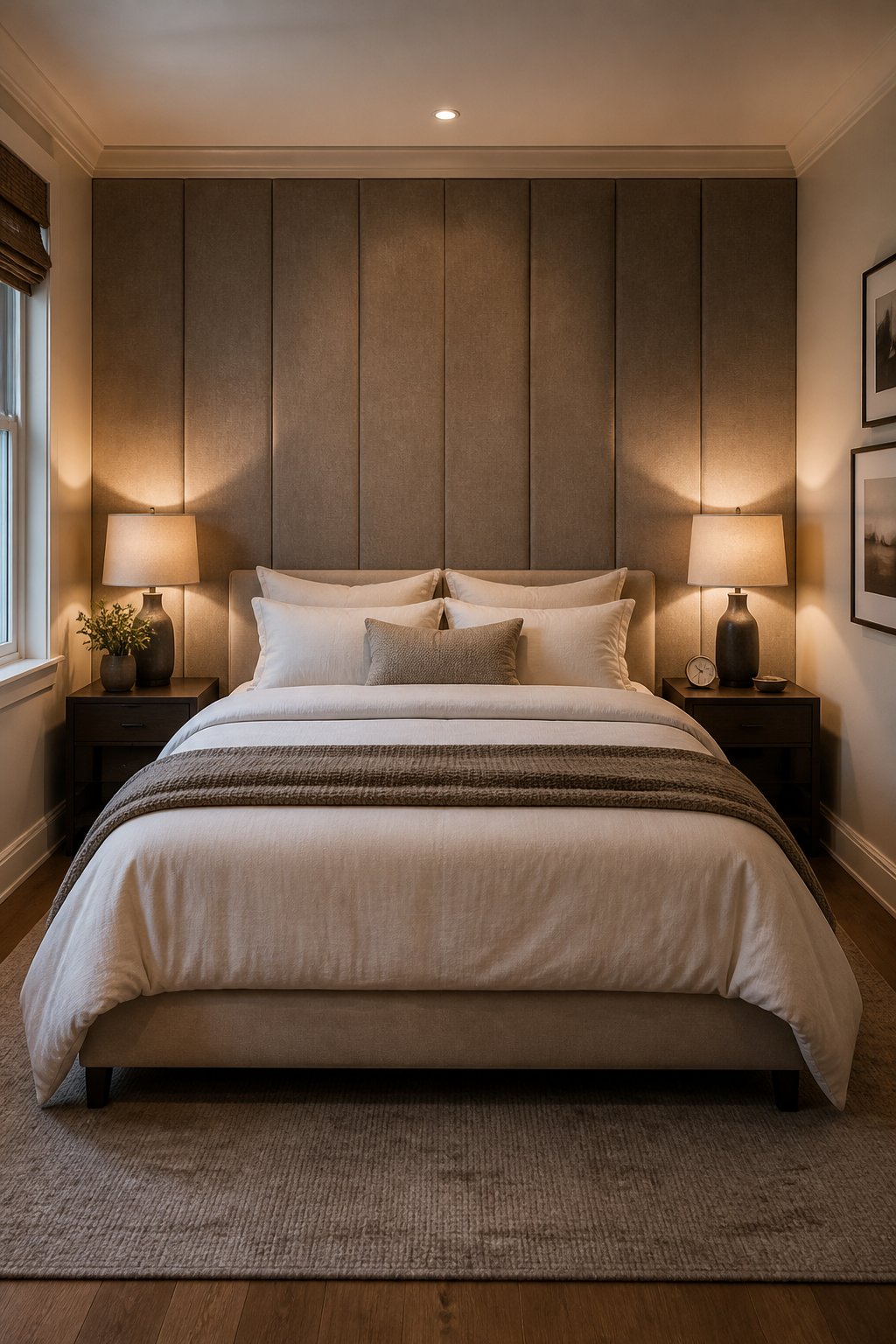
Using a full-width headboard can transform uneven room proportions into a cohesive design feature. This layout is particularly effective in spaces with awkward window placements or slightly mismatched dimensions. A tall headboard that spans the width of the wall not only adds visual interest but also creates a sense of balance between the ceiling and floor.
By drawing attention to the headboard, you can shift focus away from any architectural imperfections, establishing a strong focal point that anchors the room’s layout. Pairing this with low, slim nightstands tucked neatly beneath the headboard helps keep the composition clean and uncluttered.
Consider mounting lamps on the headboard itself or on the wall above to free up floor space and maintain open sightlines. A rug that extends beyond the foot of the bed and reaches under each nightstand will help ground the entire arrangement, ensuring that the layout feels balanced and intentional. Remember to leave at least 24 inches of clearance on the main walking side to facilitate easy movement throughout the room.
6) Tuck a Twin Bed Perpendicular to a Window for a Light-Filled Reading Nook
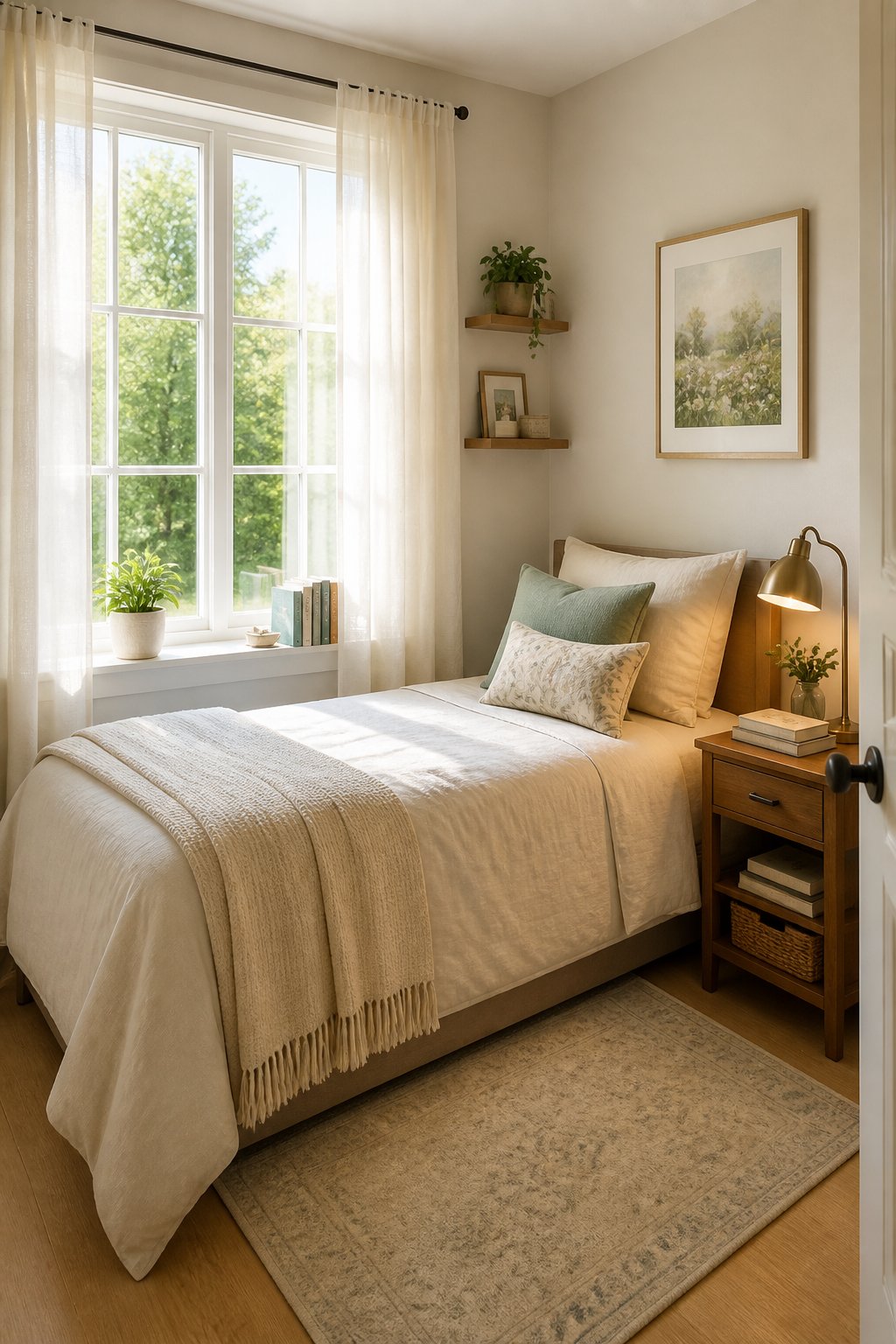
In small bedrooms, a twin bed can serve multiple purposes when placed strategically. Positioning the bed sideways against a wall, with the head close to a window and the foot extending into the room, creates a practical dual-use space. During the day, this arrangement can serve as a cozy window seat, while at night, it provides a restful sleeping area.
This layout allows the long axis of the bed to complement narrow room dimensions, making the window a focal point that enhances the overall aesthetic. Natural light entering from the side is softer and more conducive for activities like reading, while the main floor area remains open for movement.
To enhance usability, consider placing a slim nightstand or narrow console at the head of the bed, providing a surface for a lamp or personal items. A small adjustable wall lamp can save surface space and direct light exactly where it’s needed. Additionally, a rug that extends under the bed by at least a third will help to visually anchor the arrangement while ensuring 24 to 30 inches of clearance along the outer side for easy access to the window.
7) Sleep Under a Dormer or Sloped Ceiling
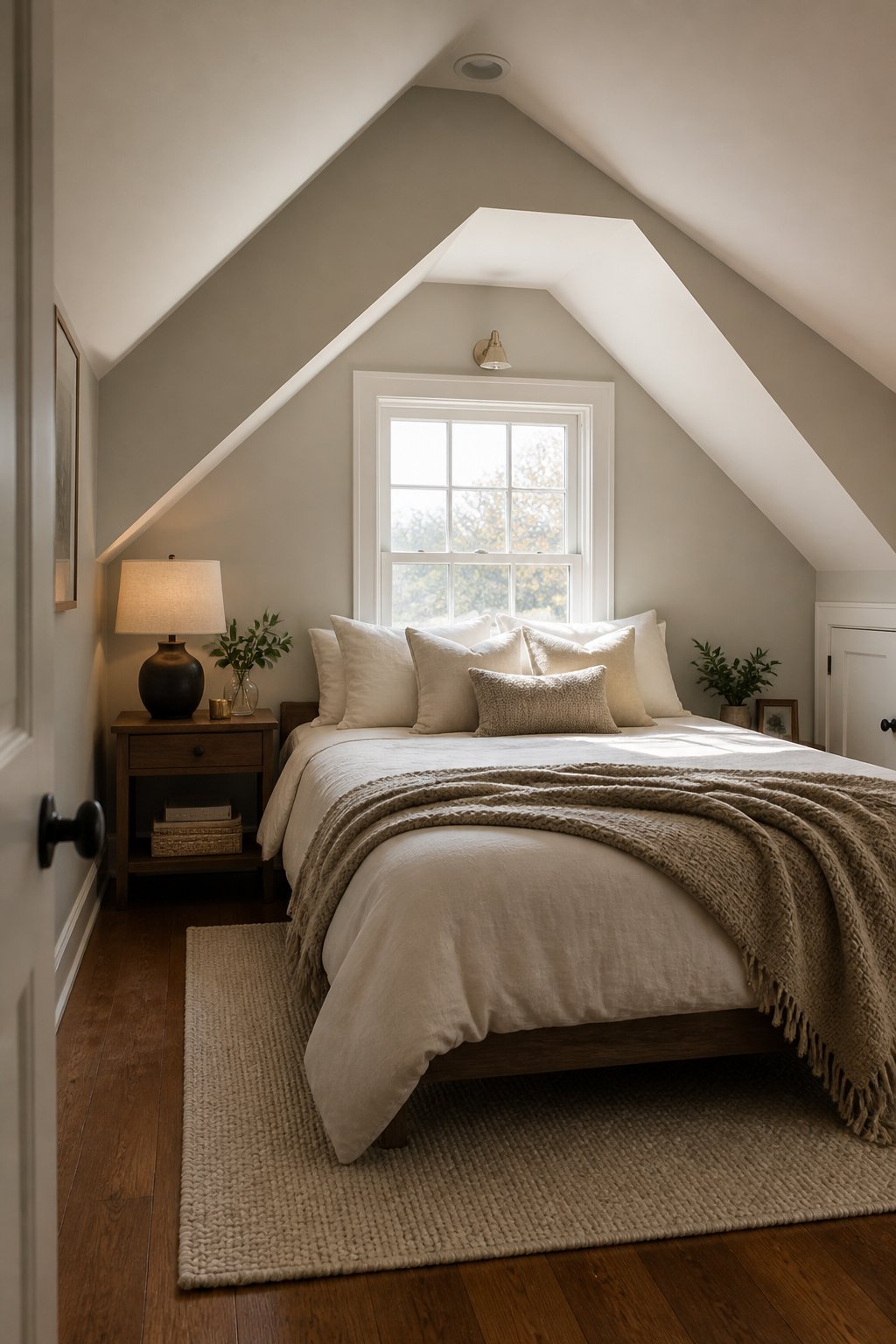
While sloped ceilings may initially seem daunting, they offer a unique opportunity for creative bed placement. Instead of attempting to fight against the slope, consider positioning the bed directly beneath it. This approach transforms the low area into a cozy nook rather than a design limitation.
By placing the headboard under the lower side of the slope, the ceiling appears as an intentional design element that enhances the room’s character. The visual weight of the bed is complemented by the roofline, and the taller side of the room can remain open for additional furniture or movement.
To optimize this layout, keep clearance minimal on the sloped side while allowing for more space on the taller side to promote natural circulation. A low nightstand or wall-mounted lamp on the sloped side helps to maintain headroom while adding functionality. A narrow rug running along the length of the bed further anchors the sleeping zone and guides movement toward the taller side, ensuring the space feels balanced and purposeful.
8) Position the Bed Between Two Windows
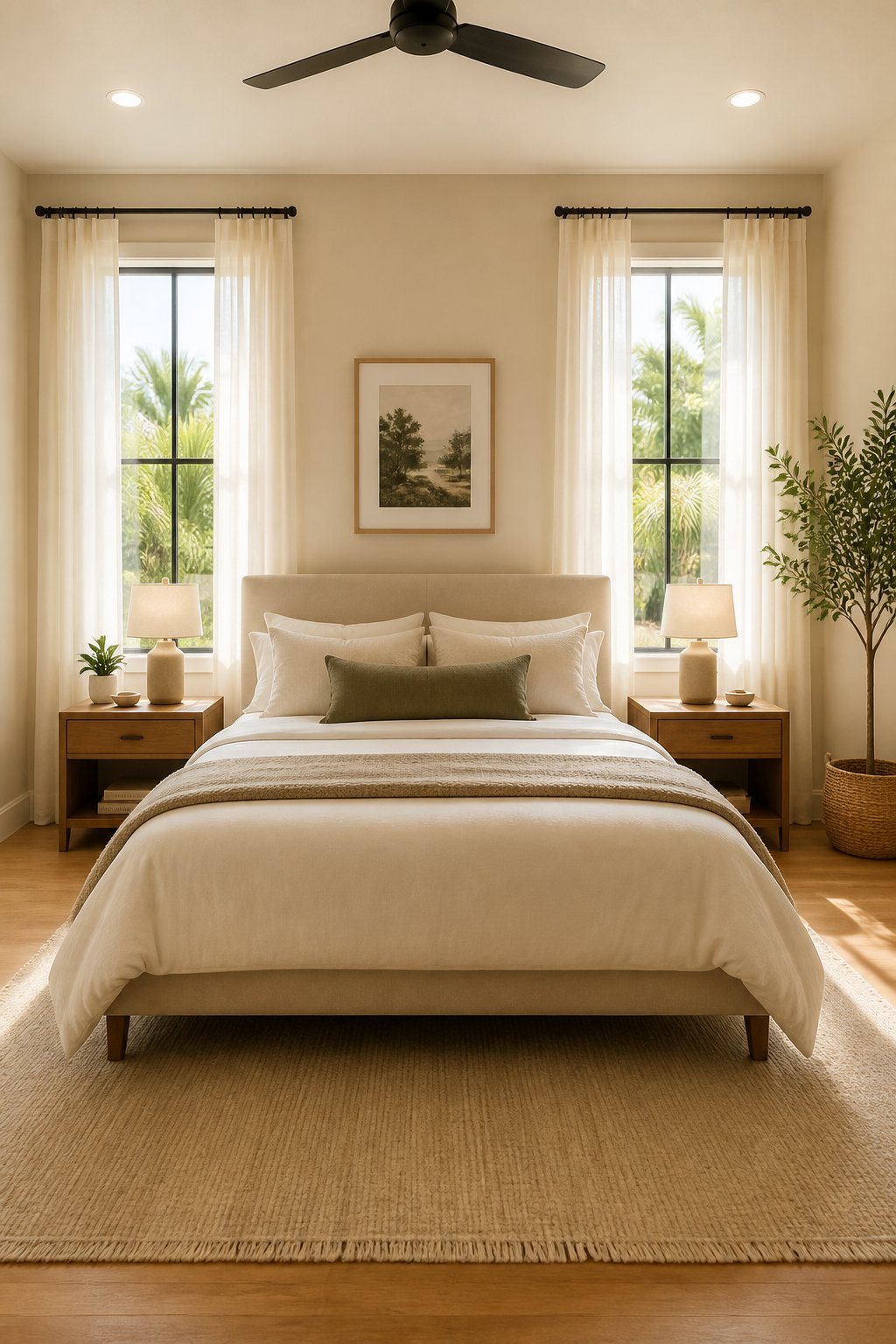
Creating symmetry in a bedroom can significantly enhance its aesthetic appeal. Placing the bed between two windows establishes a clear focal point that ties the space together beautifully. The symmetry created by the windows offers a visual resting place, while the natural light flowing in from both sides creates an airy and refreshing atmosphere.
This layout effectively anchors the bed visually, providing equal light exposure and reducing harsh shadows often associated with off-center arrangements. The remaining wall space can be utilized for storage or decorative artwork, ensuring the sleeping area remains uncluttered.
Low-profile nightstands positioned beneath each window maintain open sightlines and allow curtains to fall evenly, enhancing the room’s overall tranquility. Additionally, matching lamps or wall sconces mounted just above the headboard provide balanced lighting, while a rug that extends under the lower two-thirds of the bed ties the whole setup together, creating a harmonious arrangement that feels intentional.
9) Using a Half-Wall or Low Divider to Create a Sleeping Alcove
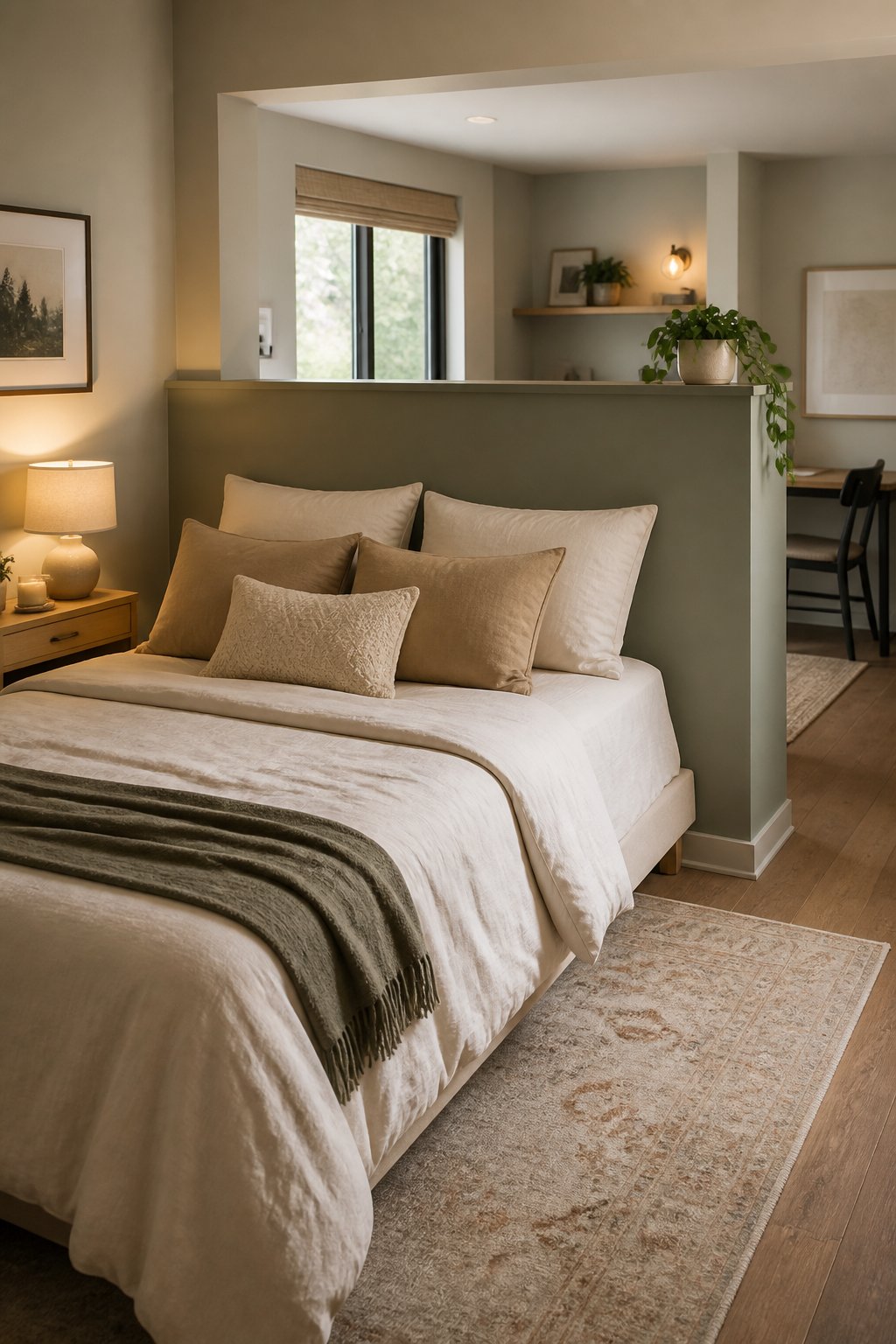
For those looking to define their sleeping area without closing off the space completely, a half-wall or low divider can be a brilliant solution. This type of arrangement creates an intimate sleeping nook that remains visually connected to the rest of the room, allowing for natural light and open sightlines.
This layout not only provides a clear backdrop for the bed but also gives the area a sense of separation, making the space feel organized rather than cluttered. The low barrier visually defines the sleeping zone while keeping walking paths clear on at least two sides, which is crucial for rooms that require openness during the day.
To enhance this setup, place a slim nightstand on the open side with a wall sconce above it to maintain an uncluttered look. A narrow runner or small rug extending past the foot of the bed can help anchor the alcove, while ensuring at least 24 inches of clearance on the open side for easy movement.
10) Raised Platform Bed With Storage Drawers
Platforms are a great way to elevate your bed while simultaneously providing much-needed storage. By raising the bed a few inches on a platform, you can create hidden storage for linens, off-season clothing, and other items that typically clutter the under-bed area. The platform visually anchors the room and keeps the floor clear, contributing to a calm and organized atmosphere.
The storage drawers tucked beneath the sleeping area make it easy to keep walkways open and prevent furniture from competing for floor space. A low platform also ensures that sightlines remain steady, allowing the room to read as tidy even in a limited footprint.
For added convenience, place a slim nightstand flush with the platform edge or opt for a small wall shelf to keep nighttime essentials close at hand without obstructing drawer access. A wall sconce or small lamp can softly illuminate the platform edge, while a small rug partially tucked under the platform will help define the sleeping zone while ensuring that drawer fronts are easily reachable.
11) Parallel to the Longest Wall for Maximum Walking Space
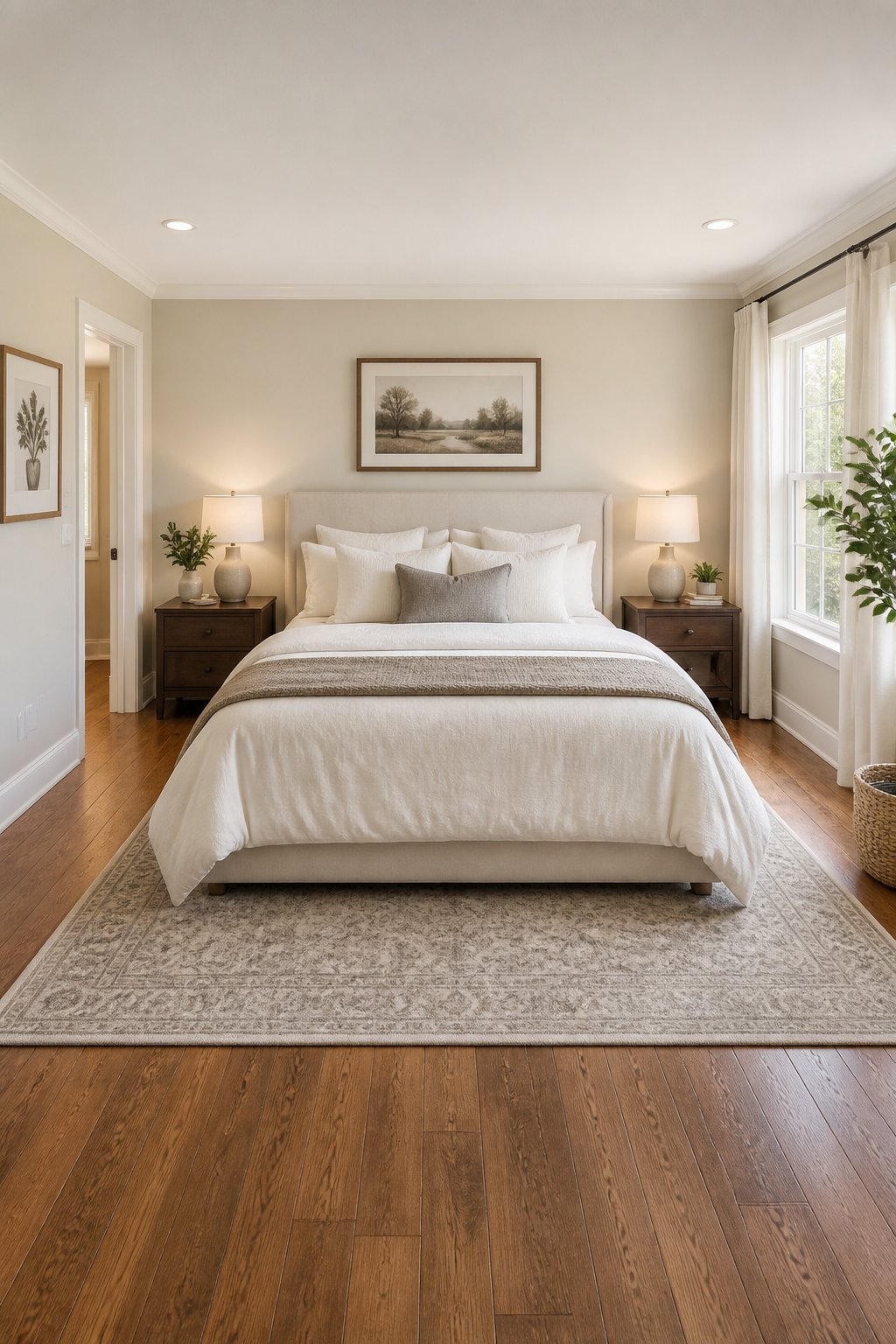
When arranging your bedroom, positioning the bed parallel to the longest wall can maximize walking space and create a sense of stability in the layout. This orientation allows for clear paths on both sides of the bed, making movement feel effortless and ensuring that other furniture pieces, such as dressers or chairs, can be easily integrated into the design.
A bed placed in this manner distributes visual weight evenly across the room, giving each piece of furniture a defined role. Aim for at least 24 inches of clearance on both sides, and consider floating narrow nightstands close to the headboard for added convenience.
Mounted wall lamps or slim table lights can help free up surface area while maintaining an open feel. Center a rug beneath the bed that extends evenly on both sides, creating a pulled-together look that feels cohesive without excessive effort.
12) Set the Bed on the Center of a Rug to Anchor a Compact Room
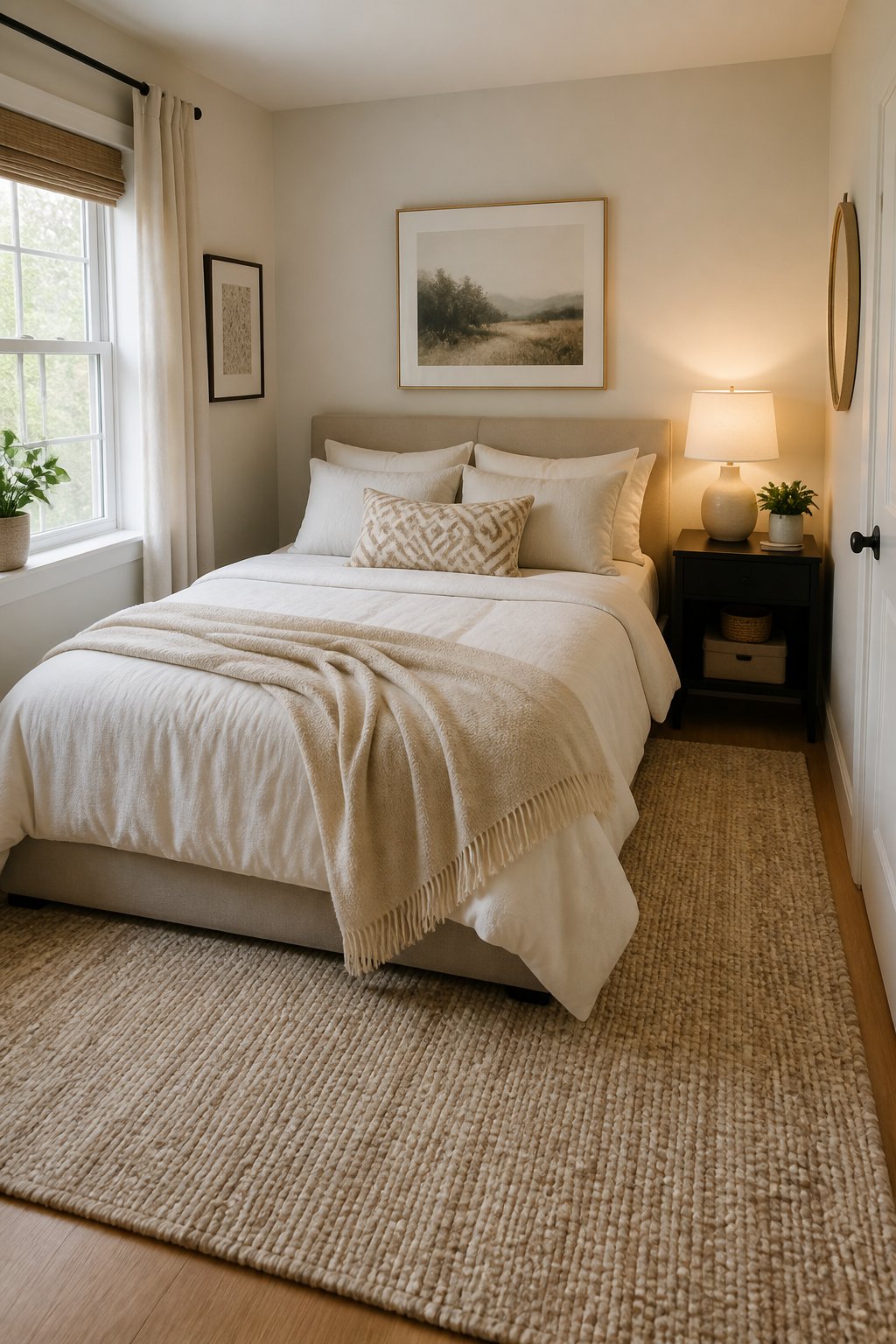
In smaller bedrooms, using a rug to anchor the bed can create a sense of space that feels larger than it actually is. Positioning the bed so its legs sit on the rug while the foot and sides extend beyond it helps define a designated area that visually pulls the furniture composition together.
The rug provides a clear place for the bed to reside, thereby reducing visual clutter that may stem from awkwardly positioned furniture. It also directs the eye across the floor, making narrow walkways feel more intentional and functional.
When selecting a rug, aim for a design that leaves at least 18 inches of visible floor around the edges whenever possible. Center the rug beneath the bed so that the nightstands sit partly on it, and incorporate low-profile bedside lamps to frame the bed, ensuring that the arrangement feels thoughtfully designed rather than cramped.
13) Head Against the Closet Wall With Slim Nightstands
Utilizing the closet wall as a backdrop for the bed can effectively reduce visual clutter while providing a cohesive anchor for the room’s design. By placing the headboard against this existing vertical plane, you allow the rest of the floor area to breathe, creating a calm sleeping environment.
This approach integrates the bed into the overall design while hiding any unsightly wiring or storage seams, thus presenting a coordinated aesthetic. You’ll also gain clearance on the opposite side for additional furnishings like a chair or narrow dresser.
Opt for slim nightstands that tuck tightly against the headboard. Choose models with one drawer or an open shelf to accommodate a lamp and personal items without crowding the walkway. Ensure there’s at least 24 inches of clearance from the foot of the bed to any opposite furniture; this distance is critical for creating a purposeful versus merely full-feeling room.
14) Footboard Toward the Door, Bench at the Foot
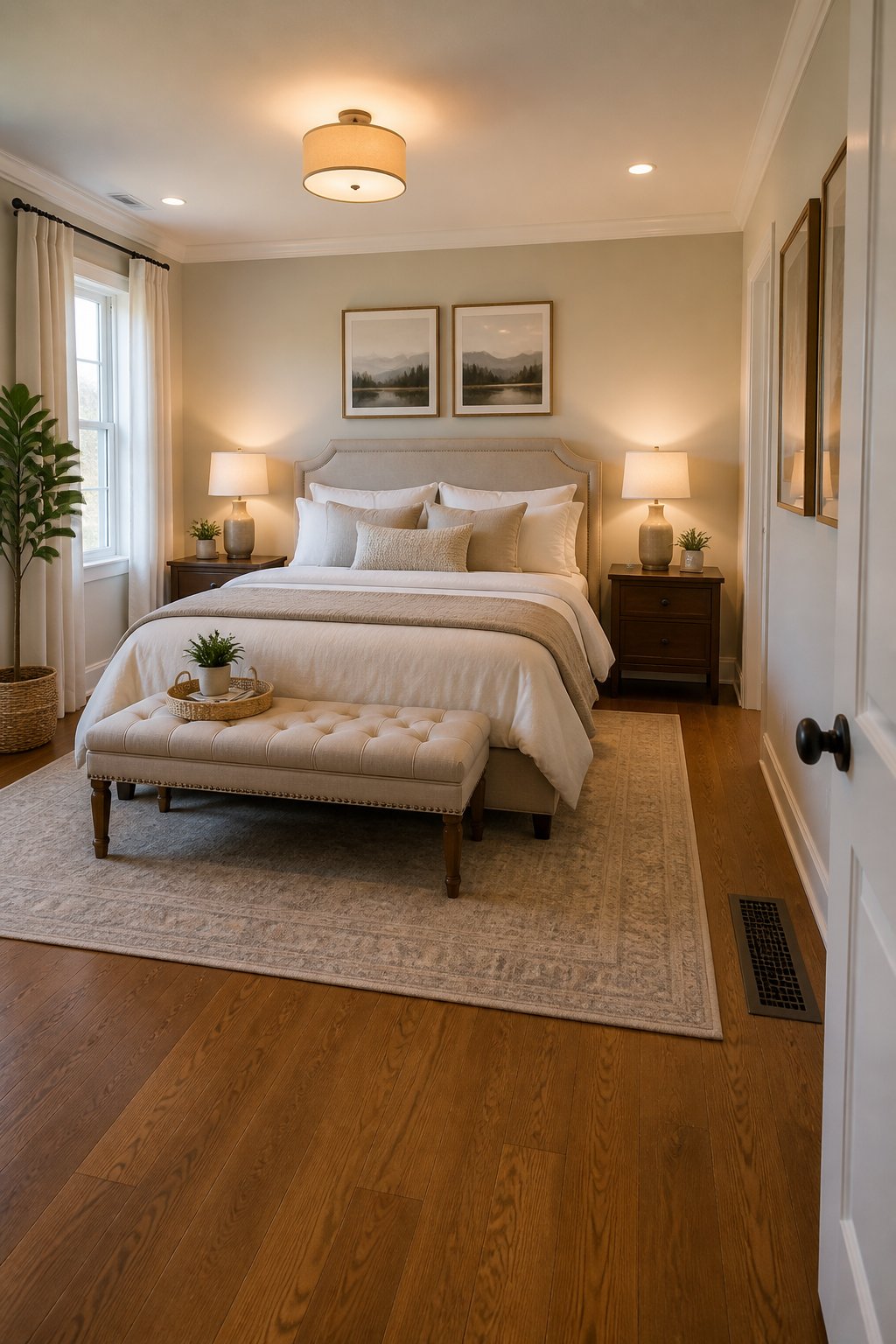
When entering a bedroom, positioning the bed so the footboard faces the doorway can create an immediate focal point that enhances orientation within the space. This thoughtful arrangement establishes a confident atmosphere, even in smaller rooms.
Adding a low bench at the foot of the bed breaks the sightline from the door without obstructing movement. Choose a slim bench that sits approximately 12 to 18 inches from the footboard to allow for easy navigation around it. This piece also provides a convenient spot for sitting while putting on shoes, a minor detail that can significantly improve functionality.
Offset the nightstands slightly toward the headboard to ensure they remain accessible from either side. A narrow rug extending under the lower two-thirds of the bed ties the bench and bed together, while keeping the floor space between the bench and door clear for easy entry into the room.
15) Bed Under Shelving or a Built-In Headwall
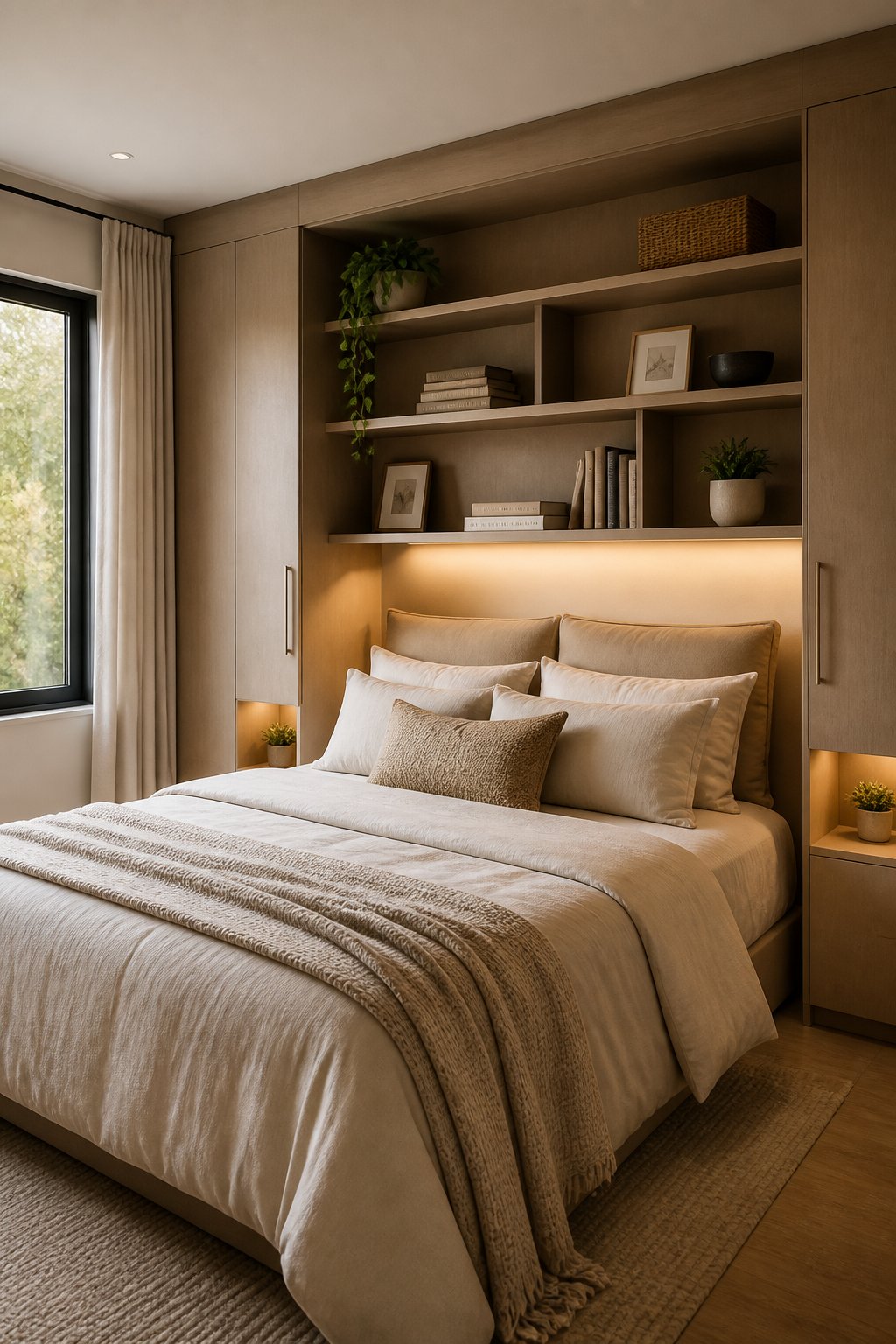
Integrating the bed beneath a built-in wall of shelves can create a beautifully cocooned sleeping area while maximizing vertical space without overcrowding the floor. This arrangement effectively frames the bed, drawing the eye inward and creating a restful silhouette that enhances the overall design.
In small or uniquely shaped rooms, this setup offers added storage and display opportunities without the need for freestanding furniture, making it an efficient solution. The shelving can house books, plants, or decorative objects, contributing to the room’s character while keeping surfaces clear.
Low-profile bedside lighting mounted under the shelf or on the side of the recess ensures the setup remains functional while preserving the calm and cohesive feel of the space. Choose narrow nightstands or wall-mounted floating shelves that maintain clear walking paths and allow the bed to remain the tranquil centerpiece of the room.
16) Perpendicular to the Radiator, With a Narrow Shelf for Airflow
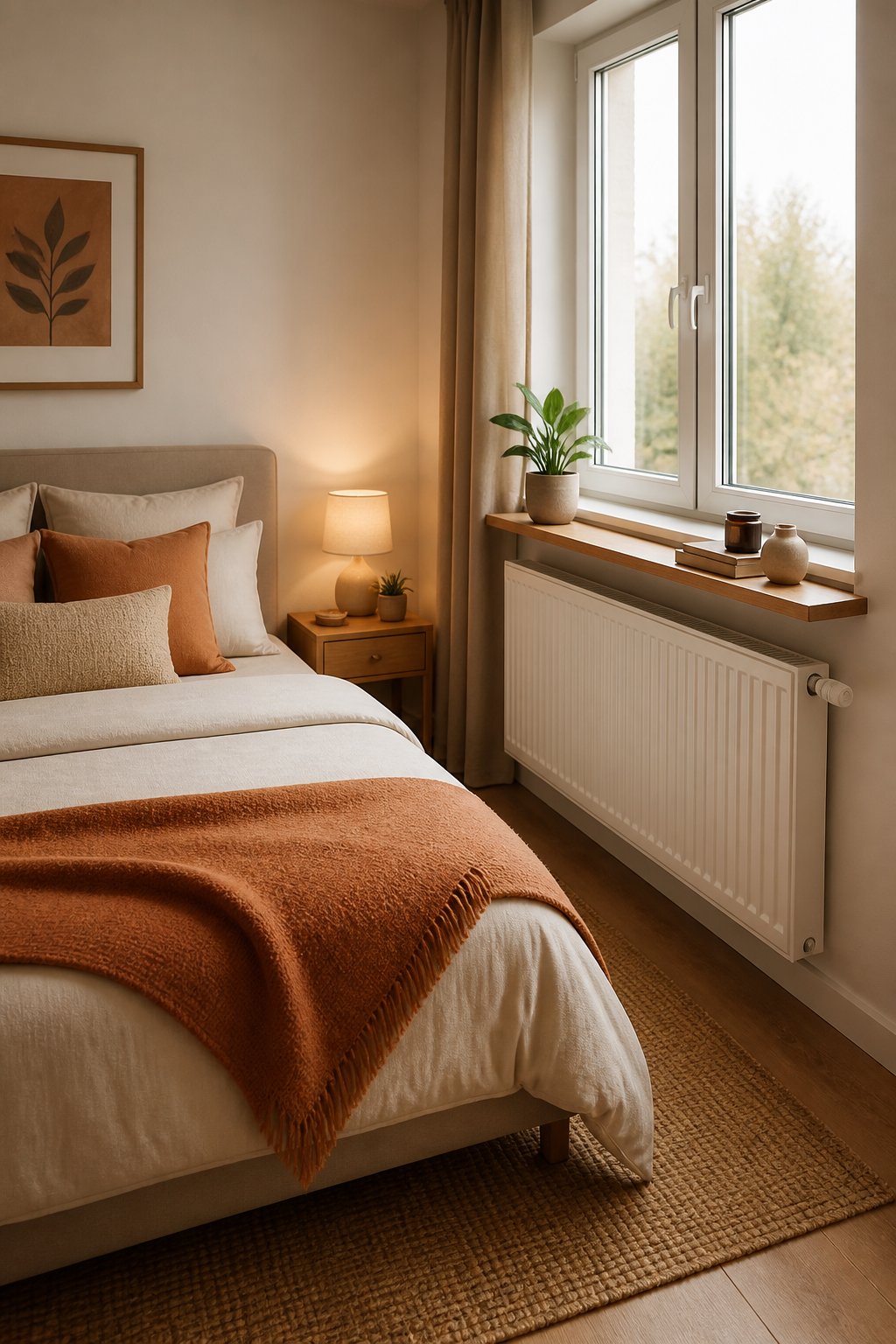
When dealing with radiators, it’s essential to place the bed in a way that allows for proper airflow while maintaining the room’s aesthetic. Positioning the bed perpendicularly to the radiator keeps warm air circulating without blocking it, ensuring that the space remains comfortable year-round.
To enhance this layout, add a slim shelf above the radiator to hold decorative items or plants, creating an intentional design feature rather than an afterthought. This arrangement allows for easy access to the bed without compromising the functionality of the radiator.
Leave at least 6 to 8 inches between the shelf and the radiator surface to prevent heat damage. On the open side of the bed, a narrow nightstand can accommodate a lamp, while a low-pile rug beneath the bed protects the floor and enhances the overall design without trapping warmth near the heater.
17) Float the Bed Near a Window and Angle a Reading Chair Beside It
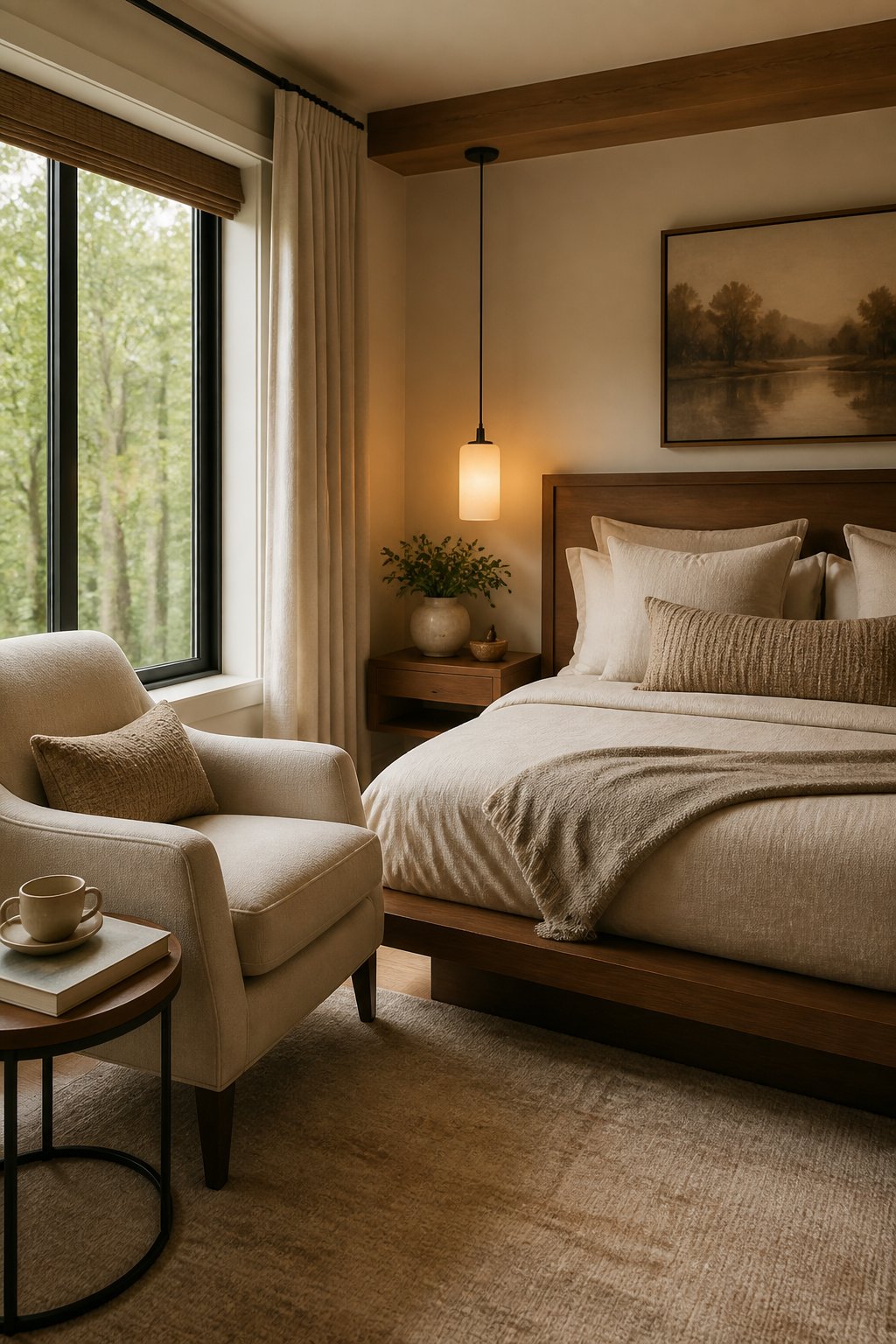
Creating a reading nook in your bedroom can enhance both functionality and comfort. Positioning the bed a few feet from the window opens up the arrangement, allowing light to flow freely across the space rather than being obstructed by the headboard.
Angling a reading chair beside the bed creates a cozy triangle of furniture that feels inviting and well-planned. Visually, this arrangement balances the mass of the bed against the light from the window, creating a harmonious space that feels both relaxing and functional.
Ensure there’s about 24 to 30 inches of clearance between the bed and chair for easy movement. A slim nightstand between the two pieces can serve both spots, while a small lamp on that table provides adequate lighting for both reading and nighttime relaxation. This corner can become a serene retreat, inviting you to spend time there even when not in use.
The Relationship Between Flow and Bed Placement
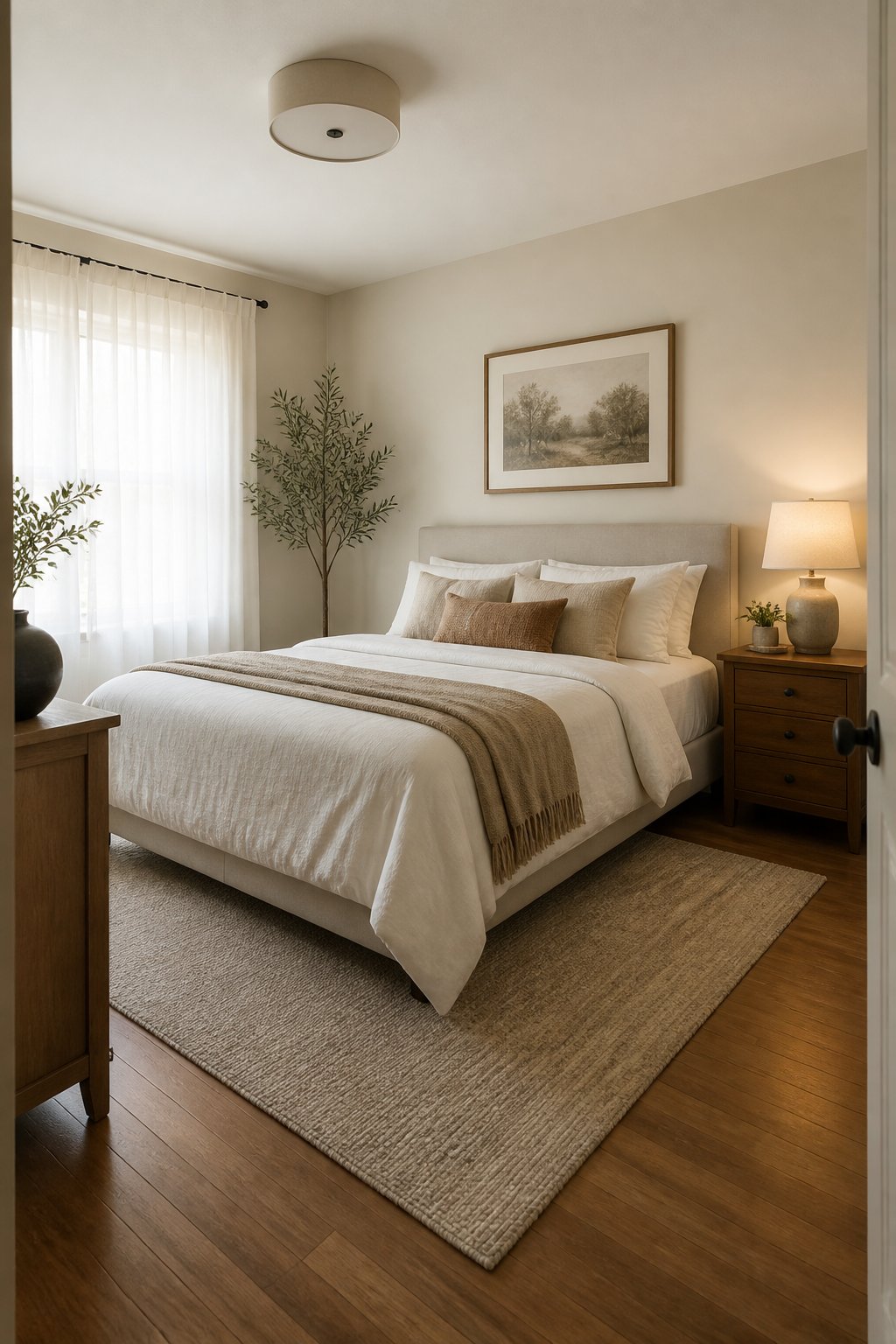
The layouts discussed above demonstrate the importance of bed placement in relation to the surrounding space. Thoughtful positioning can influence how effectively the room flows, creating a more harmonious atmosphere. When pathways are left clear and movement is easy, the room feels more considered and welcoming.
Creating at least 24 to 30 inches of clearance on one side and at the foot of the bed allows for comfortable navigation and enhances the overall usability of the room. This space is essential for daily activities such as entering, dressing, or reaching for items on the nightstand.
It’s crucial to ensure that nightstands don’t disrupt these pathways and to stagger them if space is limited. A low bench at the foot of the bed should only be included if it maintains at least 24 inches of clear floor space in front of it. These small considerations ensure that the room remains functional and that bed placement feels like a deliberate choice rather than a default arrangement.
Maximizing Comfort in Small Spaces
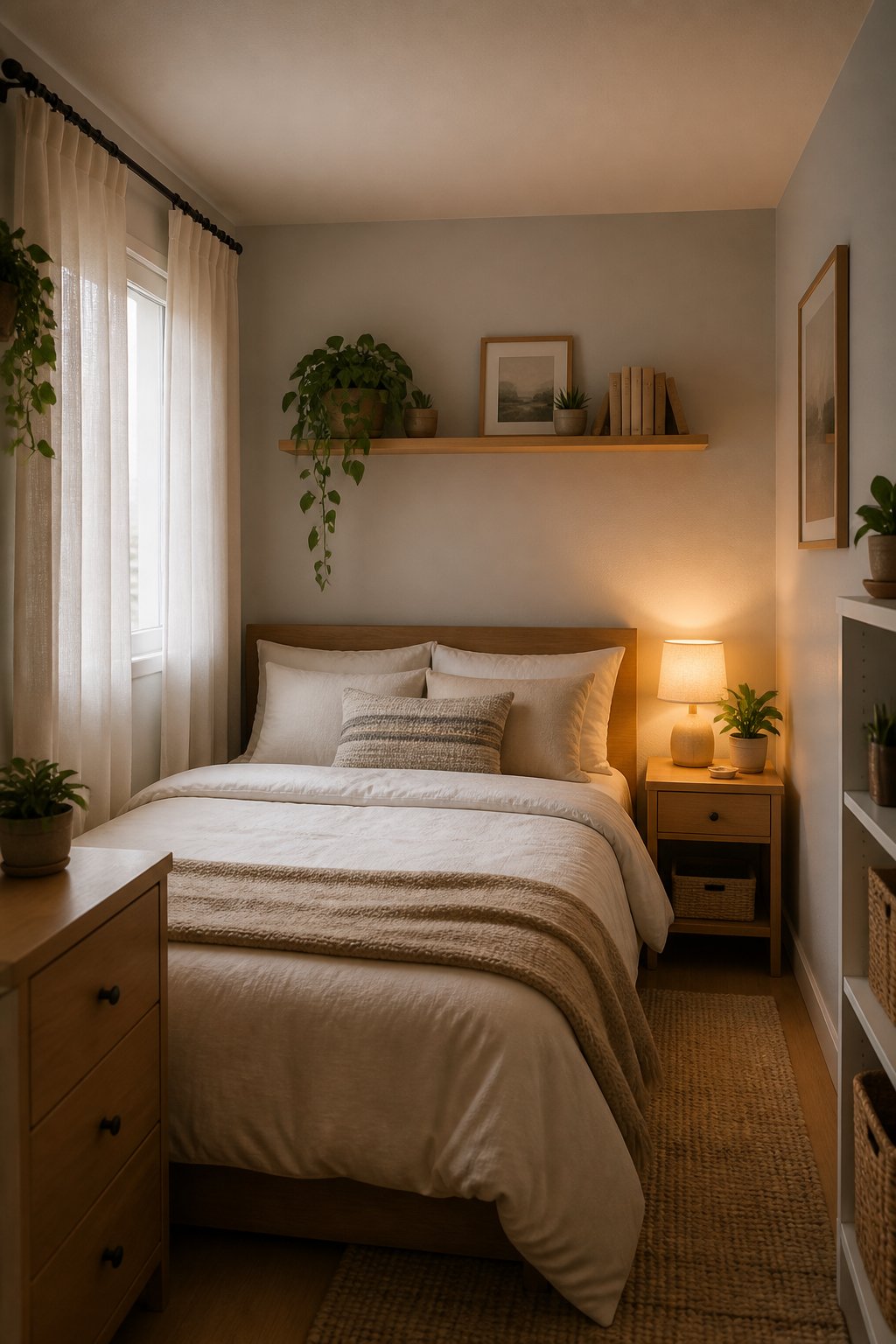
Small bedrooms come with unique challenges, including limited wall space, competing storage needs, and the balance between privacy and openness. Many of these issues stem from layout rather than the size of the room itself, so addressing them through thoughtful design can yield significant improvements.
Placing the bed against the longest uninterrupted wall can help keep traffic paths clear and predictable. This choice opens up the center of the room instead of dividing it, creating a more spacious feel.
Vertical storage solutions, such as slim wardrobes, wall-mounted shelves above the headboard, and peg rails, can help maintain open floor space. For added convenience, a low-profile dresser at the foot of the bed can work well as long as it maintains 18 to 24 inches of clearance between it and the bed frame. This distance allows for easy access to drawers without feeling cramped. Positioning a narrow nightstand on the side of the bed that faces the door ensures that you have reachable surfaces without blocking the natural entrance to the room.
How Circulation Paths Change the Feeling of a Room
Consider how the placement of your bed affects circulation paths within the room. Keeping pathways clear allows for natural movement and enhances the overall spaciousness of the area. An offset bed creates a natural visual buffer, maintaining open sightlines across the rest of the room while allowing for a more settled and private sleeping area.
Low dividers, such as a tall dresser or open shelving, can effectively separate the bed from the entry without closing off the room. To add flexibility, consider lightweight curtains on a ceiling-mounted track that can shield the bed during sleep yet can be drawn back during the day to maintain openness. Layering lighting with a floor lamp near the divider and a wall sconce by the bed creates distinct zones, allowing each area to feel cohesive while remaining individually functional. A thin rug under the front two-thirds of the bed can further anchor the sleeping area and solidify the divider’s purpose.
Visual Anchoring Through Wall Choices
The wall behind the bed carries significant visual weight compared to other walls in the room. A solid wall with a centered headboard creates a clear focal point, helping to maintain equal clearance on both sides. If the bed is situated under a window, consider adding wall sconces or a narrow shelf to free up nightstand surfaces and keep the overall silhouette clean.
Using paint, wallpaper, or a large piece of art can draw attention to the bed wall without overpowering the room’s circulation. The right design choices can enhance the flow rather than hinder it, ensuring that the bed feels like an integral part of the room rather than an afterthought.
Balancing Storage With the Sleeping Zone
Finding the right balance between storage and the sleeping zone in a bedroom can be a delicate task. Aim to position the bed against the longest wall to keep pathways clear and predictable, giving you more room than you’d expect by creating an open center.
Vertical storage solutions, like slim wardrobes, wall-mounted shelves above the headboard, and peg rails, are excellent options to keep floor space available for movement. A low-profile dresser at the foot of the bed can work effectively if you ensure there’s sufficient clearance to open drawers comfortably without contorting. Adding a narrow nightstand on the side of the bed that faces the door offers a reachable surface without blocking the natural pathway into the room.
Creating Privacy Without Extra Walls
When designing a bedroom, it is important to create a sense of privacy while maintaining an open feel. Positioning the bed slightly off-center creates a natural buffer, allowing for an intimate sleeping area while keeping sightlines open across the rest of the room.
Low dividers, such as a tall dresser or open shelving, can achieve this separation without closing off the space. A lightweight curtain on a ceiling-mounted track can shield the bed for sleep while drawing back during the day, preserving openness. Pair any divider with layered lighting to create distinct zones, making it clear that each area serves its function without appearing disjointed. A thin rug under the front two-thirds of the bed anchors the sleeping area, reinforcing the divider’s purpose.
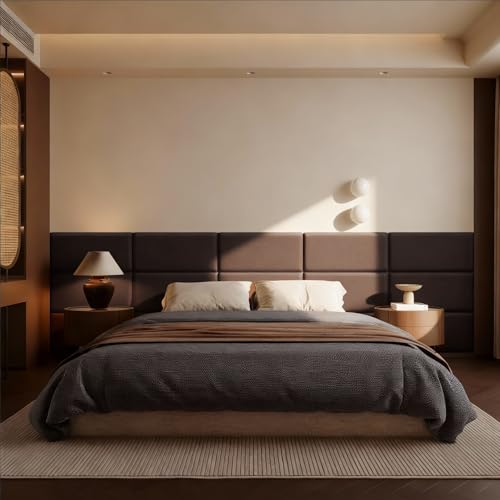
Fromann Upholstered Peel & Stick Headboard Panels
To add a touch of elegance and comfort to your bedroom, consider incorporating upholstered headboard panels. These easy-to-install peel-and-stick options provide a refined backdrop that enhances the overall aesthetic of your space. They create a soft, inviting atmosphere that pairs beautifully with various design styles, from contemporary to traditional.
Whether you choose a bold color or a subtle pattern, these headboard panels can help define the sleeping area while keeping the wall behind the bed visually interesting. Plus, they add a layer of comfort that enhances your experience while reading or relaxing in bed.
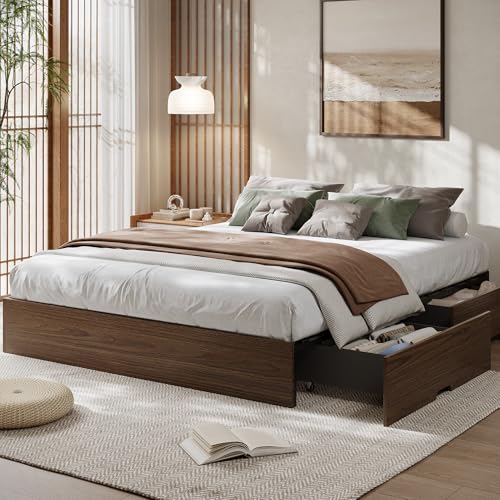
GarveeHome Queen Wood Platform Bed Frame with Storage
For those seeking stylish functionality, the GarveeHome Queen Wood Platform Bed Frame with Storage is an excellent choice. This design not only provides a sturdy foundation for your mattress but also incorporates clever storage solutions that help keep your bedroom organized and clutter-free.
With built-in drawers that allow you to store linens, clothes, and other essentials, this bed frame maximizes your space without sacrificing style. Its sleek design complements various decor styles, making it a versatile option for any bedroom.